
UPSC Mapping
| Prelims | Economy & Taxation |
|---|---|
| Mains | GS Paper 3 (Economic Development & Taxation) |
| Appeal Body | GST Appellate Tribunal (GSTAT) |
|---|---|
| Issue | Appeals below expectations |
Article
What is GSTAT Appeals?
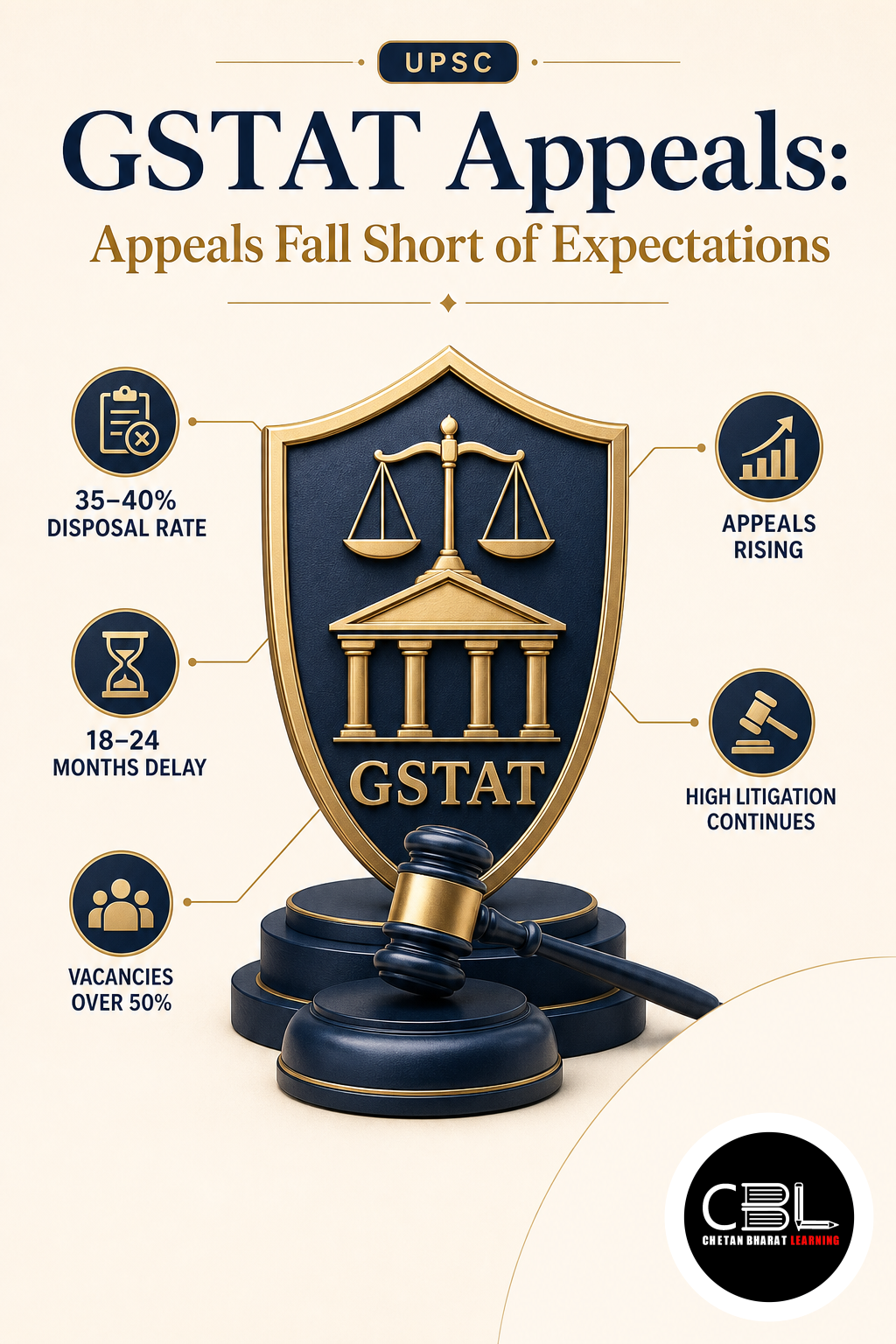
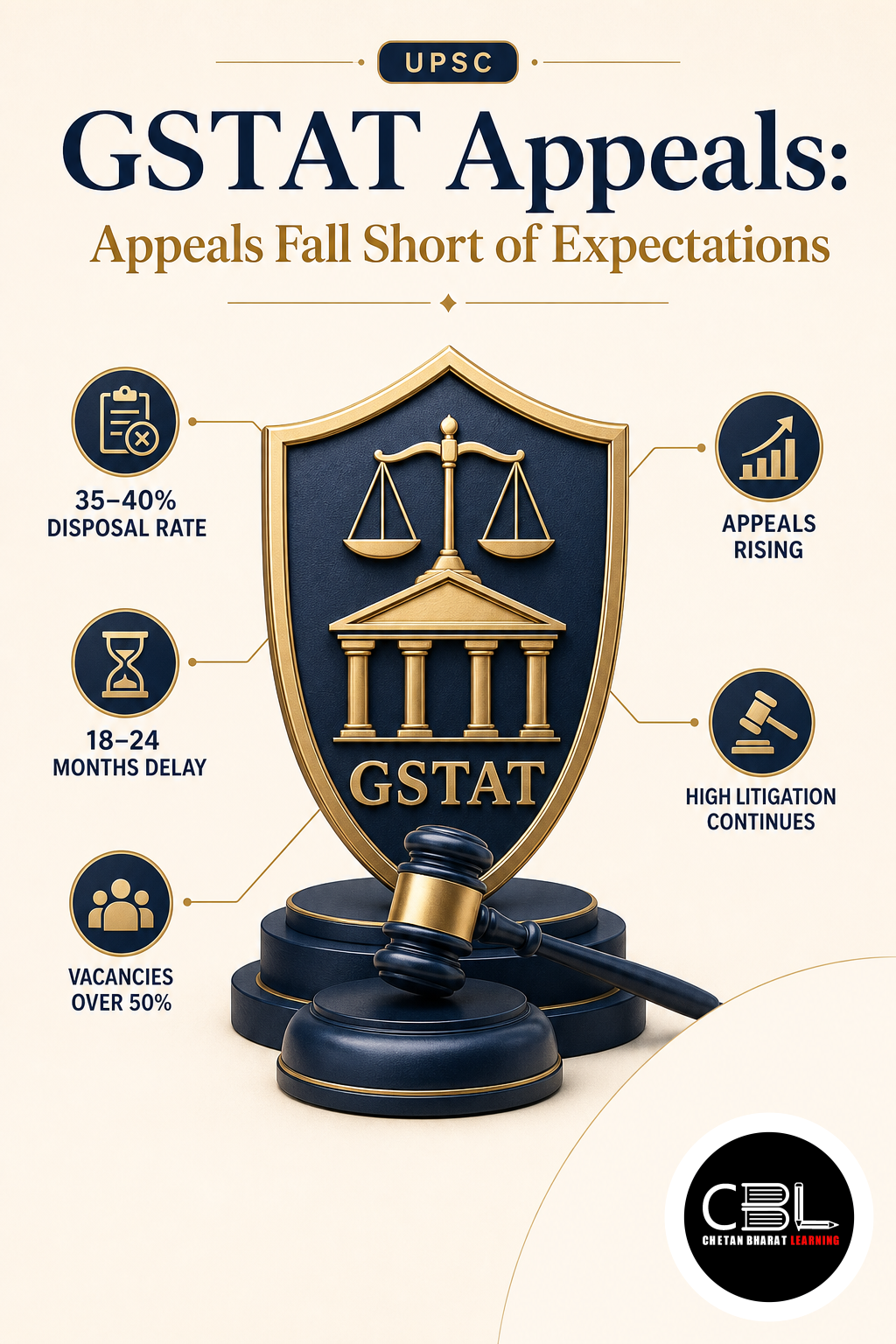
GSTAT Appeals refer to appeals filed before the Goods and Services Tax Appellate Tribunal (GSTAT), which was established as a specialised forum for resolving disputes arising under GST. The tribunal is intended to provide an effective and efficient mechanism for taxpayers to appeal against orders of GST authorities. However, reports indicate that the number of appeals filed has fallen well short of expectations, indicating systemic issues in tax dispute resolution.
The underutilisation of the appellate mechanism suggests that taxpayers may be avoiding the tribunal due to delays, procedural complexities, or lack of confidence in the forum. This is a significant concern for the GST system, as effective dispute resolution is crucial for taxpayer confidence and compliance.
Why is GSTAT Appeals in News?
GSTAT Appeals is in the news because the tribunal has not been as effective as anticipated, with appeals falling well short of expectations. This has raised concerns about the efficiency of the GST dispute resolution mechanism and the need for reforms. The government may need to address issues such as vacancies, infrastructure, and procedural bottlenecks to improve the tribunal’s functioning.
The shortfall in appeals also indicates that many taxpayers may be choosing to pay disputed amounts or approach higher courts, which undermines the purpose of having a specialised tribunal. For more details, refer to the PIB release.
Key Features of GSTAT Appeals
- Specialised Tribunal: GSTAT is a dedicated forum for GST disputes.
- Appellate Mechanism: Provides a channel for taxpayers to challenge GST orders.
- Expected Volume: Appeals were expected to be high given the complexity of GST.
- Reality: Actual appeals filed are much lower than expected.
- Concern: Indicates potential issues with the tribunal’s functioning.
Challenges in GSTAT Appeals
- Vacancies: Lack of adequate members and benches.
- Infrastructure: Insufficient courtrooms and support staff.
- Delays: Slow disposal of cases, leading to pendency.
- Complexity: GST laws are complex, making litigation challenging.
- Awareness: Many taxpayers may not be aware of the appellate mechanism. For more on tax reforms, visit the economy section.
Way Forward for GSTAT Appeals
To improve GSTAT Appeals, the government should expedite the appointment of members and ensure adequate infrastructure. Simplifying procedural rules and leveraging technology for case management can reduce delays. Awareness campaigns about the appellate mechanism can encourage taxpayers to use it.
Regular monitoring of the tribunal’s performance and addressing bottlenecks can restore confidence in the dispute resolution system. For international best practices, refer to the OECD.
Prelims Practice Corner
-
Q1. What is GSTAT?
(a) GST Council; (b) GST Appellate Tribunal; (c) GST Authority; (d) GST Network
Answer: (b) GST Appellate Tribunal
-
Q2. Why are GSTAT appeals below expectations?
(a) Low taxes; (b) Delays and procedural issues; (c) High tax rates; (d) Lack of taxpayers
Answer: (b) Delays and procedural complexities have reduced the number of appeals.
-
Q3. What is the purpose of GSTAT?
(a) To collect GST; (b) To resolve GST disputes; (c) To frame GST rules; (d) To audit taxpayers
Answer: (b) GSTAT is for resolving GST disputes.
-
Q4. What is a key challenge for GSTAT?
(a) High taxpayer compliance; (b) Vacancies and infrastructure; (c) Low tax revenue; (d) Simple tax laws
Answer: (b) Vacancies and infrastructure are key challenges.
-
Q5. How can GSTAT be improved?
(a) Increase taxes; (b) Fill vacancies and use technology; (c) Reduce taxpayer rights; (d) Close the tribunal
Answer: (b) Filling vacancies and leveraging technology can improve GSTAT.
Mains Practice Questions
-
Q1. Discuss the role of the GST Appellate Tribunal (GSTAT) in India’s tax dispute resolution framework and the challenges it faces. (250 words, 15 marks)
Answer Structure:
- Intro: Introduce GSTAT and its mandate.
- Body: Discuss the importance of an effective appellate mechanism for GST. Analyse reasons for low appeals (delays, vacancies, complexity). Suggest reforms for improvement.
- Conclusion: Emphasise the need for a robust dispute resolution system for taxpayer confidence.
-
Q2. What is the significance of a specialised tribunal like GSTAT in the GST regime? (150 words, 10 marks)
Answer Structure:
- Intro: Highlight the complexity of GST and the need for a specialised forum.
- Body: Explain that GSTAT provides expertise and speed in resolving tax disputes, reducing the litigation burden on courts. Effectiveness depends on adequate staffing and infrastructure.
- Conclusion: Conclude that GSTAT is essential for the GST system’s credibility.
FAQs on GSTAT Appeals
What is GSTAT?
The Goods and Services Tax Appellate Tribunal is a specialised forum for GST dispute resolution.
Why are GSTAT appeals low?
Due to delays, vacancies, procedural complexities, and lack of awareness.
How can GSTAT be improved?
By filling vacancies, improving infrastructure, and simplifying procedures.
Related Current Affairs
Preparing for UPSC, PCS or HCS?
Talk to a mentor at Chetan Bharat Learning, Chandigarh. Free guidance on choosing the right exam and building a study plan.
Chat on WhatsAppCall 97793 53345UPSC / IAS / PCS coaching in Chandigarh · Trusted by aspirants across Punjab & Haryana
Leave a Reply
You must be logged in to post a comment.