
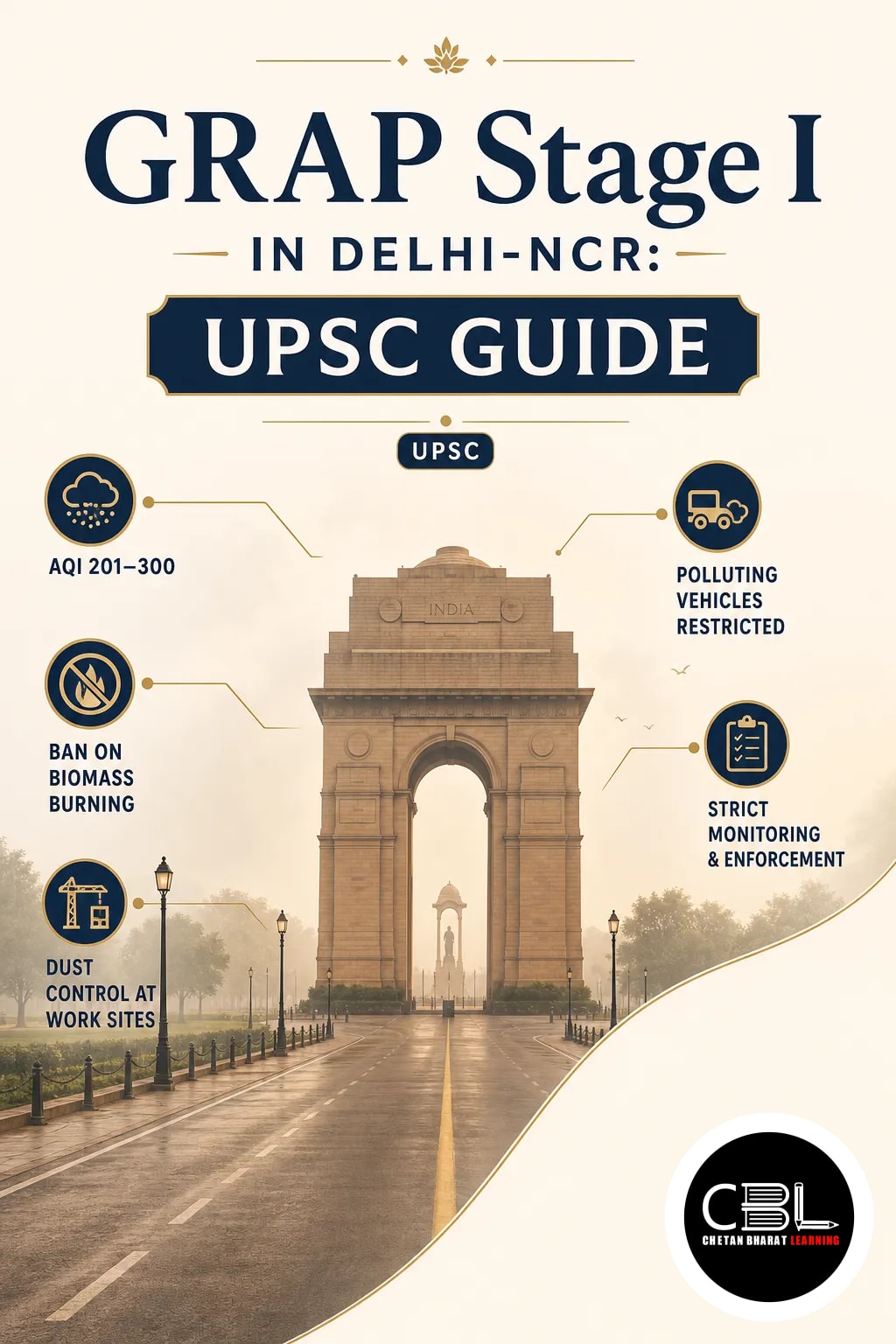
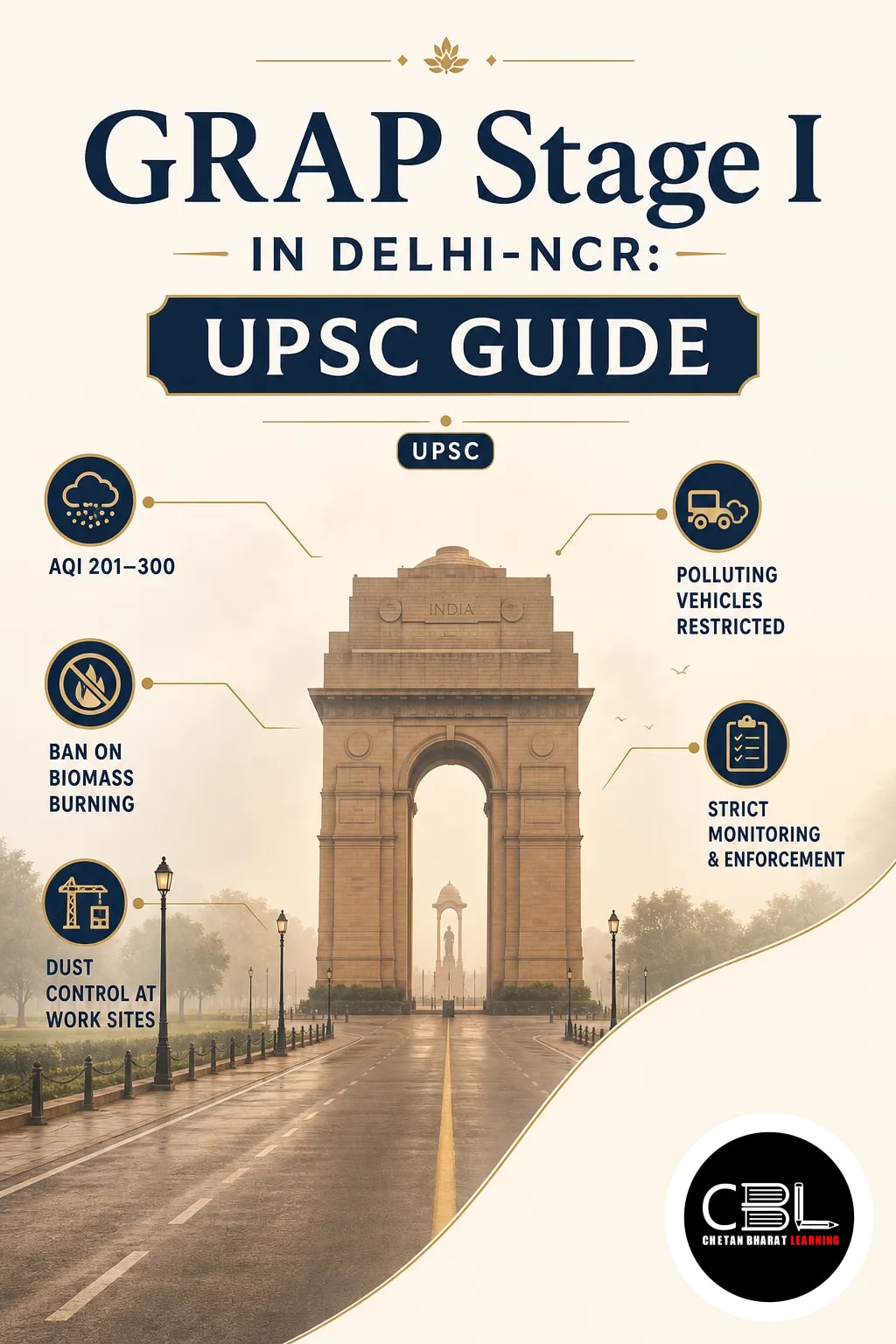
GRAP Stage I has been invoked in Delhi-NCR, bringing low-intensity pollution controls back into force. For a quick civics link, see how environment topics connect with current affairs coverage and administrative action.
What is GRAP Stage I?
GRAP Stage I is the first response level under the Graded Response Action Plan for air pollution in the NCR. It uses precautionary restrictions when air quality begins slipping into a poor range.
The system is designed to activate short-term control measures before pollution worsens further. In practice, agencies apply it through enforcement drives, dust control, traffic regulation, and close monitoring of local emissions sources.
Why in News?
The Delhi-NCR authorities have invoked GRAP Stage I after pollution conditions required early intervention. This step signals that the administration is trying to prevent a sharper deterioration in air quality.
The move also matters because the NCR region often faces multiple pollution sources at the same time. Seasonal weather patterns, road dust, vehicles, and construction activity can all add to the burden.
Key Features
- Preventive action It places light but immediate checks on pollution-causing activities before the situation turns severe.
- Dust management Authorities typically intensify controls on road dust, open burning, and construction-site violations.
- Inter-agency coordination Pollution control boards, municipal bodies, and traffic authorities must work together.
- Compliance focus The plan depends on enforcement, inspections, and penalties for visible violations.
- Localized response Measures are aimed at NCR conditions rather than a blanket national rule.
Challenges
- Multiple pollution sources Air quality worsens because several sectors emit together, making control uneven and complex.
- Enforcement gaps Rules may exist on paper, but field-level compliance can remain weak.
- Seasonal stress Weather conditions can trap pollutants and reduce the impact of ordinary control steps.
- Urban scale Delhi-NCR’s density makes monitoring difficult across roads, sites, and industrial pockets.
Way Forward
GRAP Stage I works best when local bodies act early and consistently. Cleaner construction practices, better dust suppression, and strict action against open waste burning can reduce pressure on the air.
Long-term improvement needs sustained changes in transport, urban planning, and emissions monitoring. In UPSC terms, the issue links environment governance with cooperative administration and public compliance.
Source: Indian Express Explained, 2026-10-21
- Mahanadi Water Dispute: Federalism and River Sharing (9 Oct 2026)
This topic is relevant for state PCS papers on environment, urban governance, and administrative coordination. It also helps in understanding how district administrations and pollution-control institutions respond to public health emergencies.
FAQ
What does GRAP Stage I aim to do?
It aims to stop pollution from rising further by enforcing early, low-intensity restrictions. The focus is on prevention, not emergency shutdown.
Which sectors are usually targeted under Stage I?
Typical targets include dust-emitting construction activity, open burning, road dust, and visible non-compliance. Authorities also step up inspections and coordination.
Why is GRAP important for UPSC preparation?
It connects environment policy, governance, and public health. It is also useful for questions on institutional response to urban environmental crises.
Related Current Affairs
Preparing for UPSC, PCS or HCS?
Talk to a mentor at Chetan Bharat Learning, Chandigarh. Free guidance on choosing the right exam and building a study plan.
Chat on WhatsAppCall 97793 53345UPSC / IAS / PCS coaching in Chandigarh · Trusted by aspirants across Punjab & Haryana
Leave a Reply
You must be logged in to post a comment.