

UPSC Mapping
| Exam | Topics |
|---|---|
| Prelims | DNA Base Editing, CRISPR-Cas9, AlphaFold3, ContactSeek |
| Mains | GS Paper III – Science & Technology; Biotechnology and Healthcare |
Article
What is DNA Base Editing?
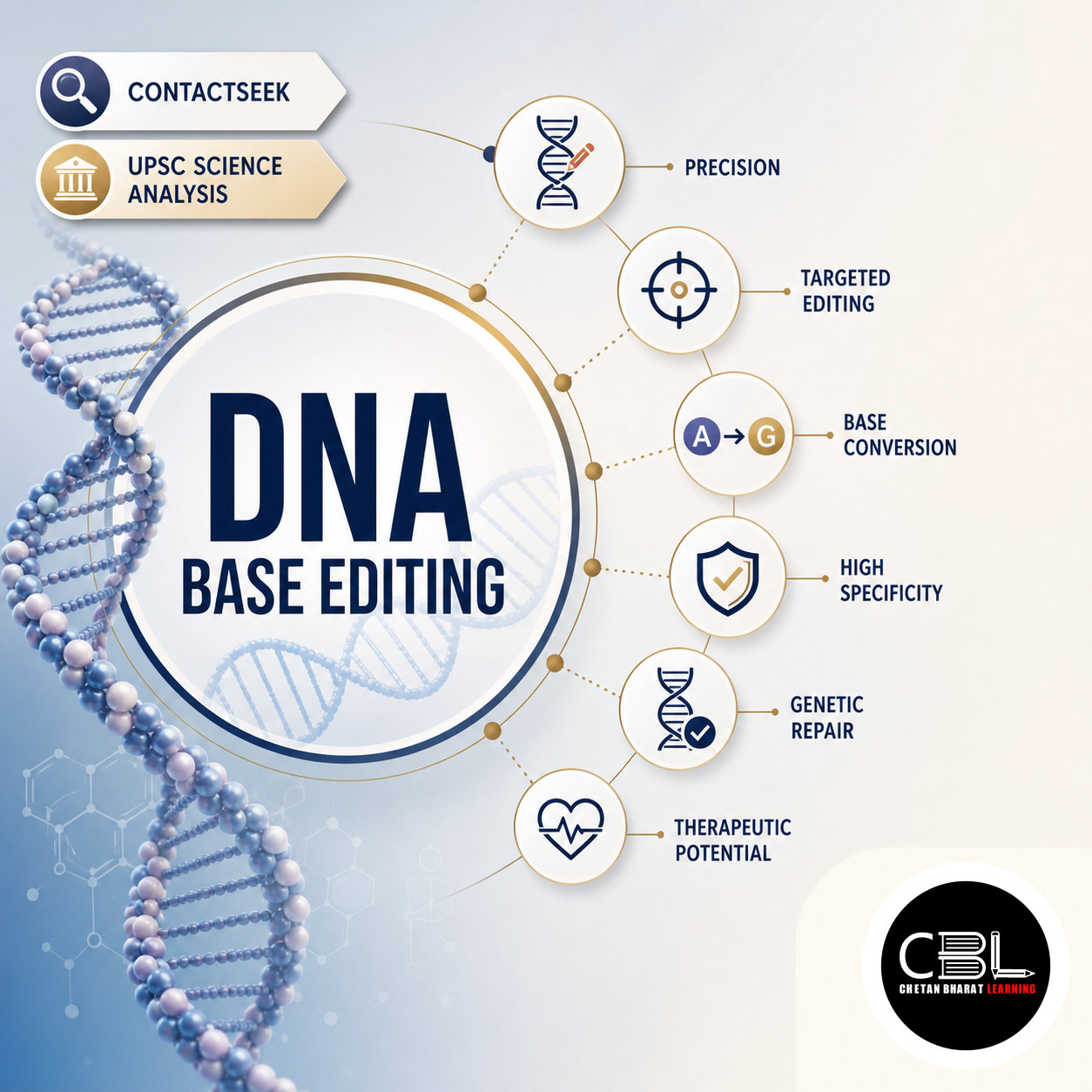
DNA Base Editing is a next-generation genome-editing technology that directly converts one DNA base (A, T, G or C) into another without creating double-stranded DNA breaks. Unlike conventional gene editing, it changes individual nucleotides through chemical conversion, making the process more precise and potentially safer.
Traditional CRISPR-Cas9 technology cuts both strands of DNA before repair, whereas base editing modifies a specific nucleotide without introducing double-stranded breaks. This reduces unintended mutations and improves the safety profile of genome editing.
Why is DNA Base Editing in News?
Researchers have developed ContactSeek, an AI-powered computational tool that significantly improves the precision of DNA base editing. The system uses AlphaFold3 to predict protein-DNA interactions and identify structural regions responsible for unwanted or off-target editing.
Using ContactSeek, scientists engineered improved versions of widely used CRISPR-based base editors, including Cas9, reducing off-target DNA modifications while maintaining editing efficiency. This advancement has significant implications for future gene therapies.
Key Features
- AI-driven Analysis: ContactSeek uses AlphaFold3 to accurately predict protein-DNA interactions.
- Reduced Off-target Effects: The tool identifies amino acid residues responsible for unintended DNA modifications.
- Improved CRISPR Editors: Researchers enhanced Cas9-based editors without reducing editing efficiency.
- High Precision: Base editing changes individual DNA bases without causing double-stranded DNA breaks.
- Therapeutic Potential: The technology could help treat monogenic disorders such as sickle cell disease, beta-thalassemia and cystic fibrosis.
Challenges
- Residual Off-target Editing: Complete elimination of unintended mutations remains challenging.
- Delivery Mechanisms: Efficient delivery of gene-editing tools into target cells requires further improvement.
- Ethical Concerns: Human genome editing raises ethical and regulatory questions.
- Long-term Safety: Researchers must evaluate long-term biological effects through clinical studies.
- Regulatory Framework: Robust oversight is essential before large-scale therapeutic applications.
Way Forward
Artificial intelligence combined with genome editing can significantly improve the safety and precision of future genetic therapies. Continued investment in biotechnology research, ethical oversight and regulatory mechanisms will be essential for responsible clinical applications.
DNA Base Editing has the potential to transform treatment strategies for inherited genetic disorders while reducing unwanted genomic alterations. Continued collaboration between AI researchers, molecular biologists and healthcare institutions will accelerate innovation.
Prelims Practice Corner
- Q1. DNA Base Editing differs from conventional CRISPR-Cas9 because it:
- a) Eliminates DNA completely
- b) Converts one DNA base into another without double-stranded breaks
- c) Only edits RNA
- d) Uses viruses exclusively
- Answer: (b)
- Q2. ContactSeek primarily improves:
- a) Vaccine storage
- b) DNA sequencing speed
- c) Precision of DNA base editing
- d) Protein synthesis
- Answer: (c)
- Q3. ContactSeek leverages which AI model?
- a) Gemini
- b) AlphaFold3
- c) ChatGPT
- d) DeepMind AlphaGo
- Answer: (b)
- Q4. Which disease can potentially be treated using DNA Base Editing?
- a) Sickle Cell Disease
- b) Malaria
- c) Tuberculosis
- d) Cholera
- Answer: (a)
- Q5. Off-target editing refers to:
- a) Editing intended DNA sequences only
- b) Unintended modifications at non-target DNA sites
- c) RNA translation
- d) Protein degradation
- Answer: (b)
Mains Practice Questions
- Q1. Explain the working of DNA Base Editing and discuss how artificial intelligence can improve the safety and precision of genome editing technologies. (10 Marks)
- Answer Structure:
- Intro: Define DNA Base Editing.
- Body: Working mechanism, ContactSeek, AlphaFold3, therapeutic applications, challenges.
- Conclusion: Highlight responsible innovation in biotechnology.
- Answer Structure:
- Q2. Evaluate the opportunities and ethical concerns associated with genome editing technologies in healthcare. (15 Marks)
- Answer Structure:
- Intro: Introduce genome editing.
- Body: Benefits, disease treatment, ethical issues, regulation and future prospects.
- Conclusion: Stress the need for safe and ethical implementation.
- Answer Structure:
FAQs on DNA Base Editing
What is DNA Base Editing?
DNA Base Editing is a genome-editing technology that directly converts one DNA base into another without creating double-stranded DNA breaks, making it more precise than conventional CRISPR-Cas9 editing.
What is ContactSeek?
ContactSeek is an AI-based computational tool that uses AlphaFold3 to predict protein-DNA interactions and reduce off-target effects during DNA base editing.
Why is DNA Base Editing important for UPSC?
The topic is relevant because it combines biotechnology, artificial intelligence and healthcare innovations, making it important for both UPSC Prelims and GS Paper III.
Related Current Affairs
Preparing for UPSC, PCS or HCS?
Talk to a mentor at Chetan Bharat Learning, Chandigarh. Free guidance on choosing the right exam and building a study plan.
Chat on WhatsAppCall 97793 53345UPSC / IAS / PCS coaching in Chandigarh · Trusted by aspirants across Punjab & Haryana
Leave a Reply
You must be logged in to post a comment.