
UPSC Mapping
| Prelims | Mains |
|---|---|
| Art and Culture | GS Paper 1 (Culture) |
| New Observance Date | 23 September (Autumnal Equinox) |
|---|---|
| Nodal Institute | All-India Institute of Ayurveda |
| Core Objective | Global promotion of traditional medicine |
Article
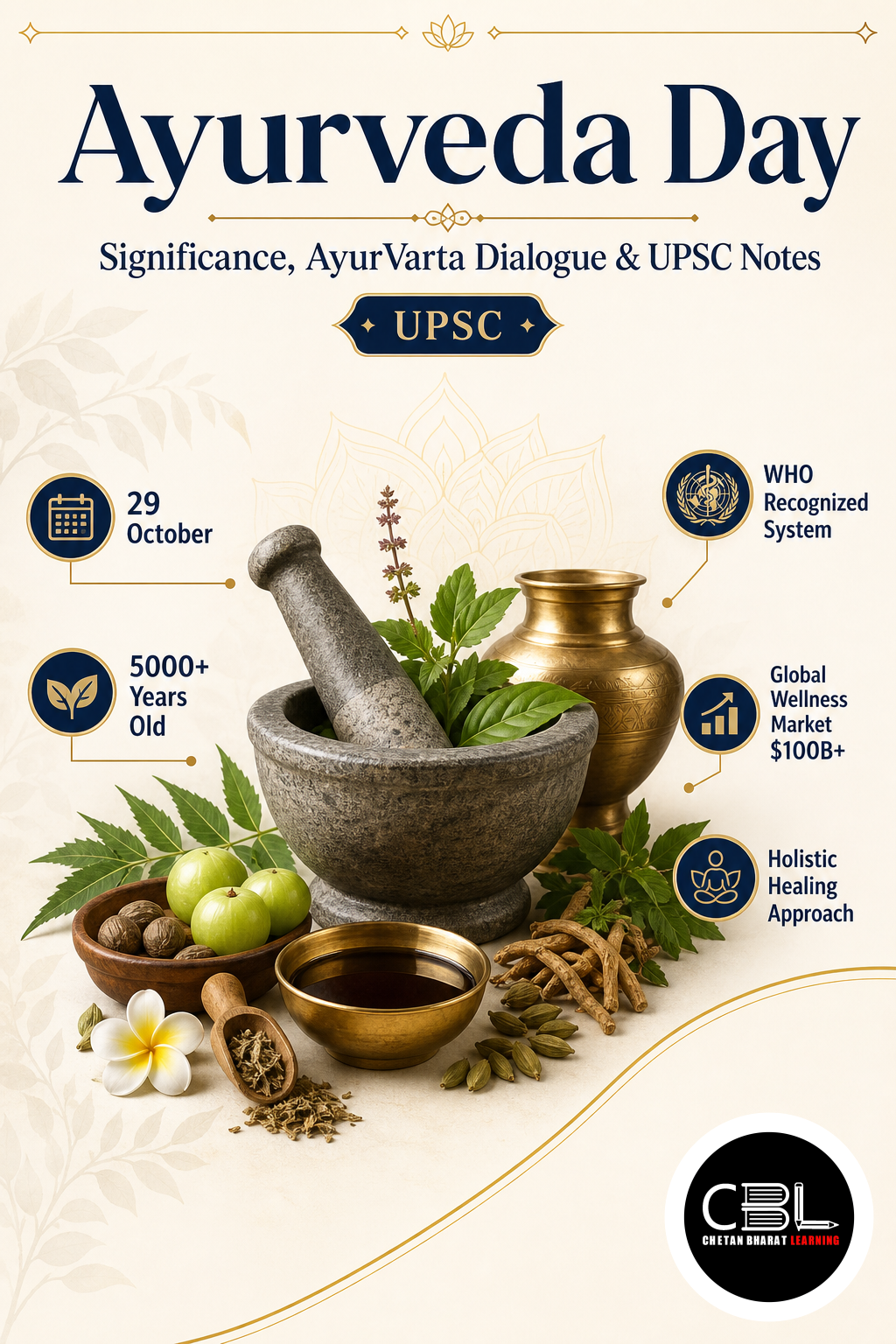
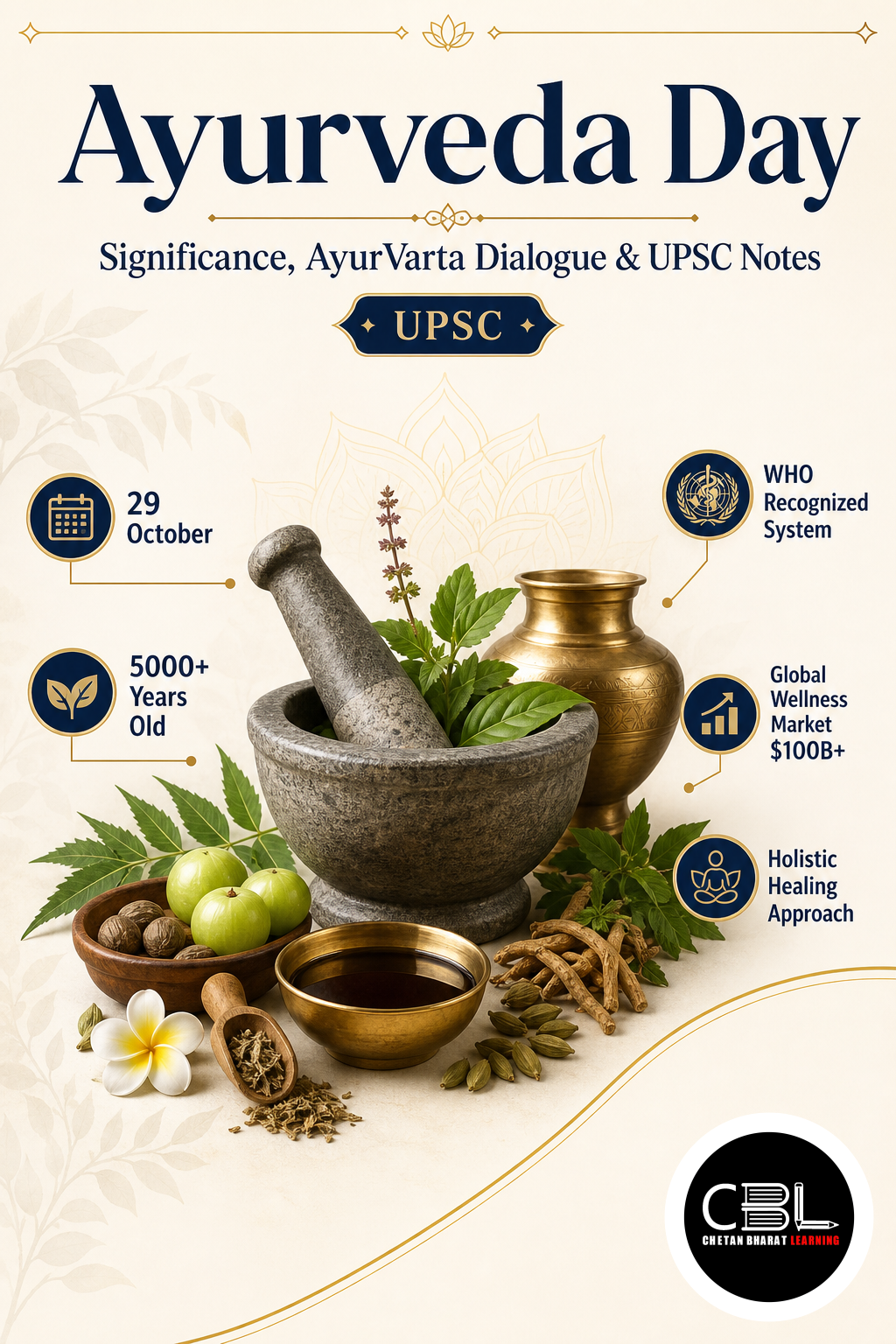
The celebration of Ayurveda Day represents a significant milestone in promoting India’s traditional healthcare systems globally. Aspirants must thoroughly understand its cultural and scientific implications for the upcoming civil services examination. This annual observance highlights the growing integration of ancient wellness practices with modern scientific validation. It also underscores the government’s commitment to holistic health paradigms.
What is Ayurveda Day?
Ayurveda Day is an annual observance dedicated to celebrating the ancient Indian system of medicine and its contemporary relevance. Historically, this day coincided with Dhanvantari Jayanti, honoring the divine physician of Hindu mythology. However, starting from 2025, the observance has been strategically shifted to the 23rd of September. This new date aligns with the Autumnal Equinox, a period traditionally considered highly conducive to balancing the body’s doshas and rejuvenating health.
The All-India Institute of Ayurveda spearheads initiatives to mark this occasion, emphasizing evidence-based research and global outreach. The shift in date reflects a deeper astronomical and physiological understanding embedded within traditional texts. It aims to harmonize human health with natural seasonal cycles, promoting preventive healthcare over curative interventions. This institutional backing ensures that ancient wisdom is translated into actionable, modern health policies.
Why is Ayurveda Day in News?
The discourse around Ayurveda Day recently gained prominence with the launch of the AyurVarta Digital Dialogue Series by the All-India Institute of Ayurveda in New Delhi. This initiative aims to take India’s traditional healthcare knowledge, scientific research, and contemporary applications to a global audience. You can verify the latest official announcements and thematic details on the PIB release portal.
Furthermore, this digital dialogue underscores a broader governmental push to integrate traditional medicine into the global health architecture. By leveraging digital platforms, the initiative bridges the gap between ancient practitioners and modern international audiences. It highlights India’s soft power potential in the wellness and pharmaceutical sectors. The focus remains on validating traditional practices through rigorous scientific methodologies.
Key Features
- Equinox Alignment: The shift to the 23rd of September leverages the Autumnal Equinox for optimal physiological balance and seasonal rejuvenation.
- Digital Global Outreach: Initiatives like the AyurVarta Digital Dialogue Series utilize technology to disseminate traditional knowledge to international audiences.
- Evidence-Based Validation: The All-India Institute of Ayurveda prioritizes rigorous scientific research to validate ancient therapeutic claims.
- Preventive Healthcare Focus: The observance emphasizes holistic wellness, lifestyle modifications, and disease prevention rather than mere curative treatments.
- Cultural Heritage Promotion: It serves as a platform to celebrate India’s rich intangible cultural heritage and its contribution to global medicine.
Challenges
- Scientific Validation Gaps: Many traditional formulations lack large-scale, randomized controlled clinical trials required by international regulatory bodies.
- Standardization Issues: Variability in raw material quality and preparation methods complicates the standardization of Ayurvedic products.
- Global Regulatory Hurdles: Stringent drug approval processes in Western nations often classify Ayurvedic medicines as unproven supplements rather than legitimate therapeutics.
- Misinformation and Commercialization: The unregulated proliferation of unverified wellness products risks diluting the authenticity and credibility of genuine practices.
- Skill Shortages: There is a pressing need for more trained professionals who possess expertise in both traditional medicine and modern research methodologies.
Way Forward
To maximize the global impact of Ayurveda Day, the government must prioritize the establishment of internationally recognized research protocols. Collaborating with the World Health Organization to develop standardized guidelines for traditional medicine is vital. Strengthening the technical capabilities of domestic research institutions will ensure that ancient formulations meet modern safety and efficacy benchmarks. The government must actively promote public-private partnerships to scale up evidence-based clinical trials.
Additionally, digital platforms should be leveraged to create comprehensive, multilingual databases of validated Ayurvedic knowledge. Policymakers should establish clear guidelines to mandate transparent reporting of adverse events and therapeutic outcomes. A robust, transparent, and scientifically rigorous system will ultimately drive India’s leadership in global holistic health.
Prelims Practice Corner
Q1. With reference to Ayurveda Day, consider the following statements:
- Starting from 2025, it is celebrated on the Autumnal Equinox (23 September).
- It was traditionally observed on Dhanvantari Jayanti.
- The AyurVarta Digital Dialogue Series is an initiative by the Ministry of Health and Family Welfare.
Answer: (b) Statement 3 is incorrect because the AyurVarta Digital Dialogue Series is launched by the All-India Institute of Ayurveda (AIIA).
Q2. The All-India Institute of Ayurveda (AIIA), which spearheads initiatives for Ayurveda Day, is located in:
- Mumbai
- New Delhi
- Bengaluru
- Kolkata
Answer: (b) New Delhi.
Q3. The shift of Ayurveda Day to 23 September is primarily based on its alignment with:
- The Summer Solstice
- The Autumnal Equinox
- The Winter Solstice
- The Vernal Equinox
Answer: (b) The Autumnal Equinox.
Q4. Which of the following is a major challenge in the global integration of traditional medicine systems like Ayurveda?
- Lack of historical texts
- Stringent international regulatory hurdles and standardization issues
- Complete absence of government funding
- Prohibition by the World Health Organization
Answer: (b) Stringent drug approval processes and variability in raw material quality complicate global standardization and acceptance.
Q5. Consider the following objectives of the AyurVarta Digital Dialogue Series: 1. Global outreach of traditional knowledge 2. Promoting evidence-based research 3. Replacing modern medicine entirely. Which of the above are correct?
- 1 and 2 only
- 2 and 3 only
- 1 and 3 only
- 1, 2 and 3
Answer: (a) Statement 3 is incorrect; the goal is integration and validation, not replacement.
Mains Practice Questions
Q1. Discuss the significance of shifting the observance of Ayurveda Day to the Autumnal Equinox. How does the AyurVarta Digital Dialogue Series contribute to this goal? (150 words, 10 marks)
Answer Structure:
- Intro: Define Ayurveda Day and its recent shift.
- Body: Discuss physiological balance, seasonal rejuvenation, and the role of digital dialogue series in global outreach and scientific validation.
- Conclusion: Emphasize the need for robust scientific validation to integrate traditional medicine into global health frameworks.
Q2. The global integration of traditional medicine systems faces significant scientific and regulatory challenges. Critically analyze these challenges and suggest a comprehensive way forward. (250 words, 15 marks)
Answer Structure:
- Intro: Contextualize the global interest in traditional medicine versus modern scientific skepticism.
- Body: Analyze challenges (lack of RCTs, standardization, regulatory hurdles, commercialization risks) and suggest WHO collaboration, public-private clinical trials, strict quality control norms, and digital knowledge databases.
- Conclusion: Bridge the gap between ancient wisdom and modern scientific rigor for global acceptance.
FAQs on Ayurveda Day
Why was the date of Ayurveda Day changed to 23 September?
Starting from 2025, the observance was shifted to the Autumnal Equinox (23 September) instead of Dhanvantari Jayanti to balance the body’s doshas and promote seasonal rejuvenation.
What is the AyurVarta Digital Dialogue Series?
It is an initiative launched by the All-India Institute of Ayurveda (AIIA) to take India’s traditional healthcare knowledge, scientific research, and contemporary applications to a global digital audience.
What are the main challenges in globalizing Ayurveda?
Major challenges include the lack of large-scale clinical trials, standardization issues in raw materials, stringent international regulatory hurdles, and the risk of misinformation due to unregulated commercialization.
Related Current Affairs
Preparing for UPSC, PCS or HCS?
Talk to a mentor at Chetan Bharat Learning, Chandigarh. Free guidance on choosing the right exam and building a study plan.
Chat on WhatsAppCall 97793 53345UPSC / IAS / PCS coaching in Chandigarh · Trusted by aspirants across Punjab & Haryana
Leave a Reply
You must be logged in to post a comment.