
UPSC Syllabus Mapping
GS Paper: GS-II
Subject: International Relations
Topic: India–UK Relations, Comparative Political Systems
Prelims: Parliamentary Democracy, Prime Minister, Constitutional Process
Mains: Political developments in major democracies and their implications for India.
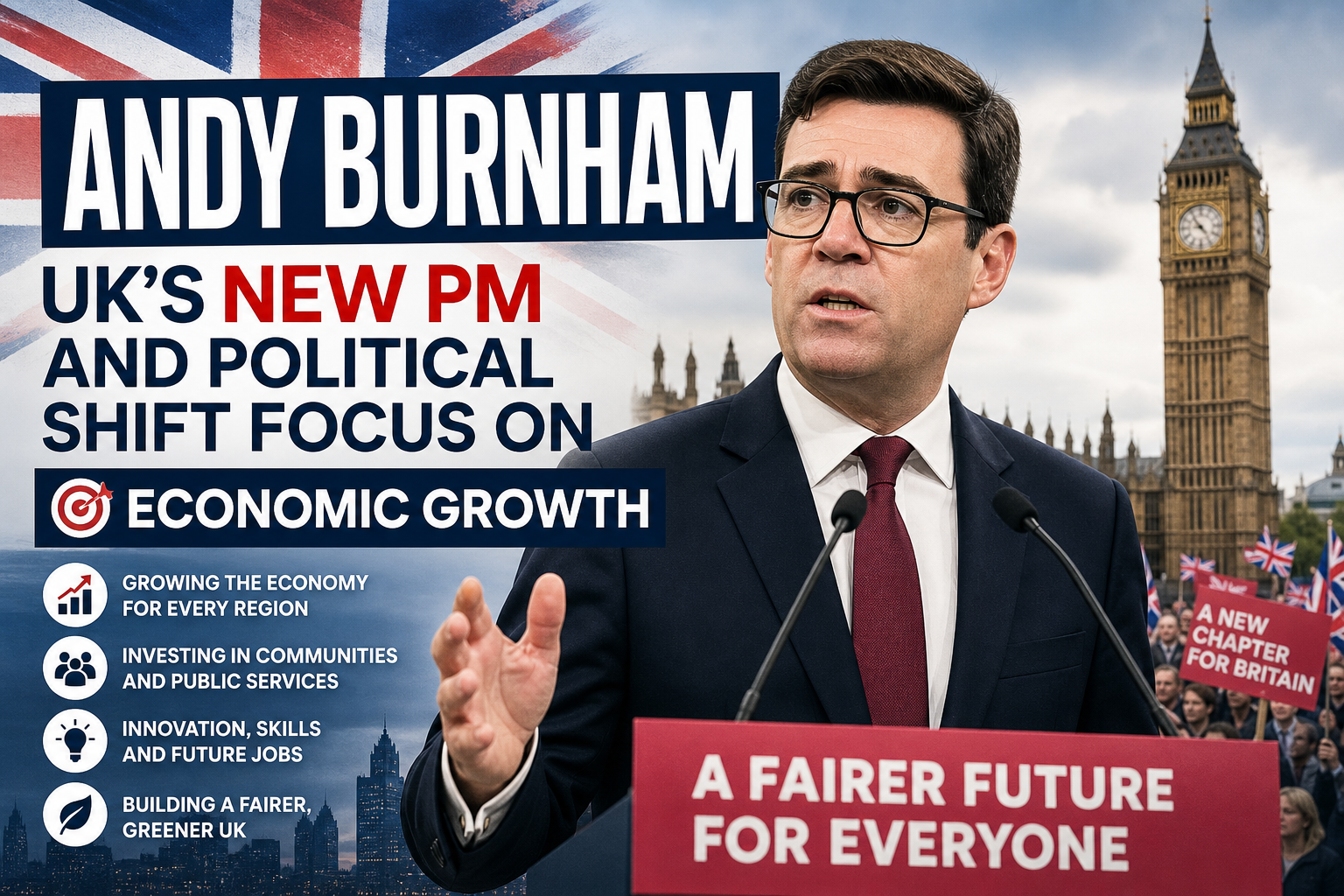
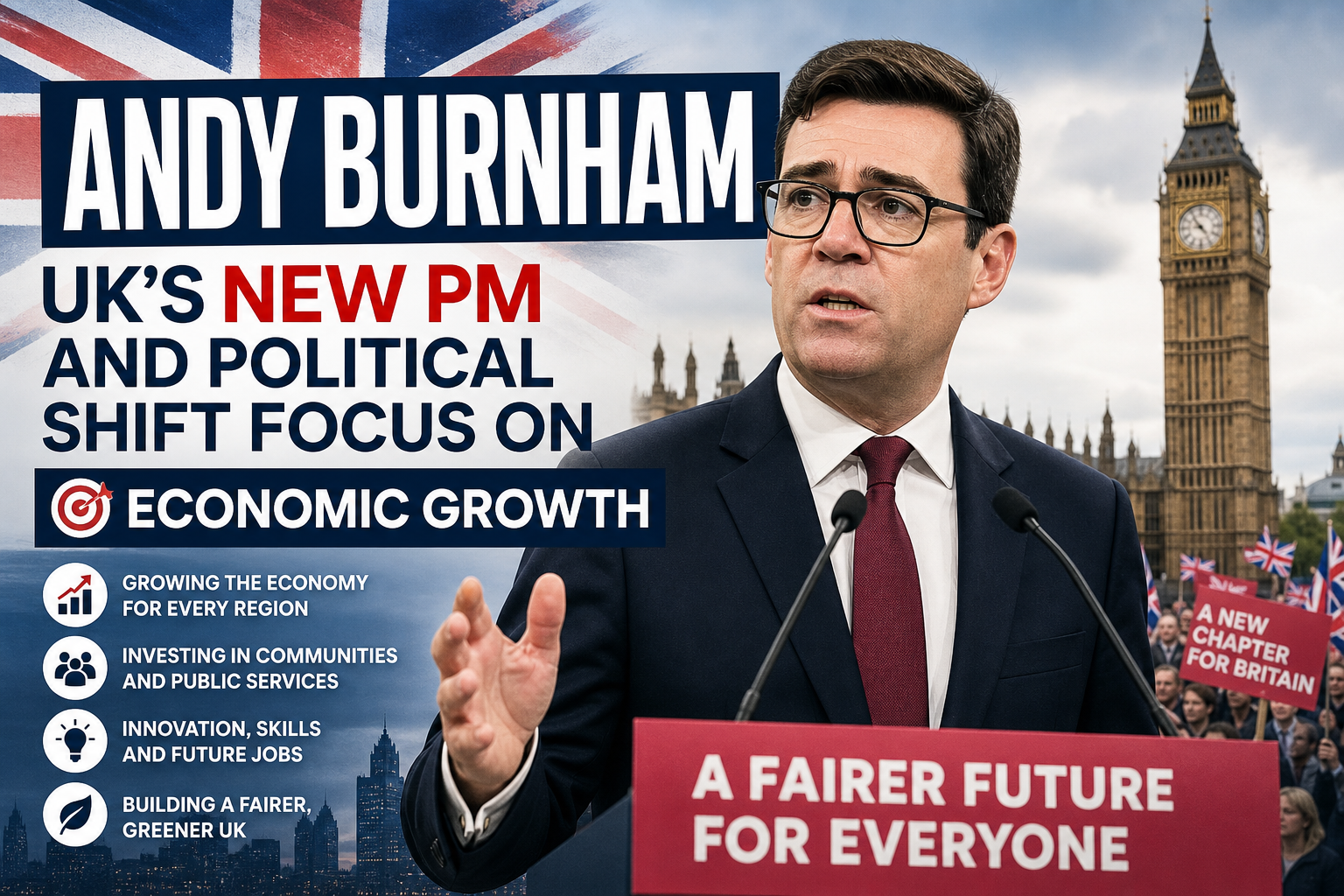
Andy Burnham has become the new Prime Minister of the United Kingdom following a leadership transition in the Labour Party. The development is significant because leadership changes in major democracies influence global politics, economic policies and India’s bilateral relations with the UK.
Why in News?
Andy Burnham has assumed office as the UK’s Prime Minister after succeeding Sir Keir Starmer as Labour Party leader. In his first address from 10 Downing Street, Burnham announced a long-term plan to revive Britain’s economy, improve public services and restore public confidence.
Key Dimensions of Andy Burnham
- Leader of the Labour Party.
- Former Mayor of Greater Manchester.
- Previously served in Cabinet under Gordon Brown.
- Known for reforms in healthcare and public administration.
UK Political System
The United Kingdom follows a Parliamentary Democracy. Citizens elect Members of Parliament (MPs), the party securing a majority in the House of Commons forms the government, and its leader becomes the Prime Minister. Therefore, British citizens elect MPs directly, not the Prime Minister.
Can the UK Get a New Prime Minister Without a General Election?
Yes. If the incumbent Prime Minister resigns, dies or loses the confidence of the governing party, the ruling party elects a new leader. If that leader commands the confidence of the House of Commons, they become Prime Minister without holding a general election.
Constitutional Process
- Prime Minister resigns.
- Ruling party elects a new leader.
- Leader demonstrates majority support.
- The King invites the leader to form the government.
- Prime Minister and Cabinet are sworn in.
Burnham’s Stated Priorities
- Rebuild the British economy.
- Reduce the cost-of-living burden.
- Increase affordable housing.
- End long NHS waiting lists.
- Promote industrial policy and infrastructure.
- Implement a long-term national development plan.
Cost-of-Living Crisis
The UK continues to face persistent inflationary pressures, rising food and energy prices, high housing costs and elevated interest rates, affecting household purchasing power and overall economic growth.
Major Challenges Before the Government
- Slow economic growth.
- High public debt.
- Increasing welfare expenditure.
- Migration management.
- Energy security.
- Managing relations with Europe, the United States and the Ukraine conflict.
India–UK Relations
The leadership change is unlikely to alter the strategic partnership fundamentally. Key areas of cooperation include:
- Free Trade Agreement negotiations.
- Trade and investment.
- Higher education and research.
- Technology, AI and innovation.
- Defence and maritime security.
- Climate change and clean energy.
- People-to-people ties through the Indian diaspora.
UPSC Value Addition
| Topic | Revision Point |
|---|---|
| Government System | Parliamentary Democracy |
| Head of State | The King |
| Head of Government | Prime Minister |
| India Relevance | FTA, Defence, Technology, Education |
Prelims Practice Corner
Q1. In the UK, the Prime Minister is generally:
A. Directly elected by citizens
B. Nominated by the judiciary
C. Leader of the majority party in the House of Commons
D. Appointed by the House of Lords
Answer: C.
Q2. Who is the constitutional Head of State in the United Kingdom?
A. Prime Minister
B. Speaker
C. The King
D. Chief Justice
Answer: C.
Q3. Which form of government exists in the UK?
A. Presidential System
B. Parliamentary Democracy
C. Direct Democracy
D. Federal Presidential System
Answer: B.
Q4. Which area is NOT a major pillar of India–UK cooperation?
A. Trade
B. Defence
C. Artificial Intelligence
D. Antarctic Territorial Claims
Answer: D.
Q5. A new UK Prime Minister may assume office without a general election if:
A. The ruling party elects a new leader commanding majority support.
B. The House of Lords appoints one.
C. NATO approves it.
D. Citizens vote in a referendum.
Answer: A.
Mains Practice Questions
Q1 (10 Marks): Explain the process of appointment of the Prime Minister in the United Kingdom. Compare it briefly with the Indian parliamentary system.
Framework: Introduction → Appointment Process → Similarities → Differences → Conclusion.
Q2 (15 Marks): Examine how political transitions in major democracies influence India’s foreign policy and strategic interests.
Framework: Introduction → Political Change → Economic & Strategic Implications → India–UK Relations → Way Forward.
FAQs
1. Is the UK Prime Minister directly elected?
No. Citizens elect MPs, and the majority party’s leader becomes Prime Minister.
2. Can Britain change its Prime Minister without elections?
Yes. The ruling party can elect a new leader if the previous Prime Minister resigns or loses support.
3. Why is this development important for India?
The UK is a major strategic partner in trade, education, technology, defence and global diplomacy, making leadership transitions relevant for India’s foreign policy.
Related Current Affairs
Preparing for UPSC, PCS or HCS?
Talk to a mentor at Chetan Bharat Learning, Chandigarh. Free guidance on choosing the right exam and building a study plan.
Chat on WhatsAppCall 97793 53345UPSC / IAS / PCS coaching in Chandigarh · Trusted by aspirants across Punjab & Haryana
Leave a Reply
You must be logged in to post a comment.