
Important for:
UPSC, Haryana HCS, Punjab PCS
Prelims: Artificial Intelligence (AI), education reforms
Mains: GS Paper 2 & 3 — Education, Technology, Human Resource Development
Why in News?
The article argues that Artificial Intelligence is not merely disrupting education — it is revealing long-standing flaws in traditional learning systems, especially rote learning and exam-oriented education.
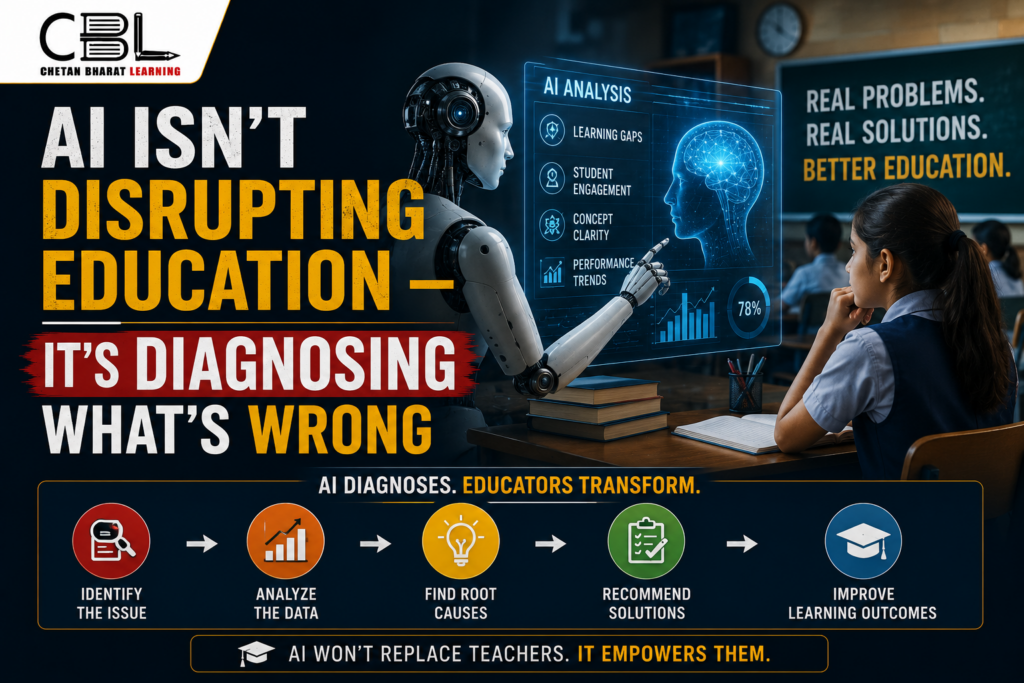
What Is Artificial Intelligence (AI)?
AI refers to:
→ Machines or software capable of performing tasks requiring human intelligence
Such as:
- Learning
- Reasoning
- Problem-solving
- Language understanding
What Problems in Education Is AI Exposing?
1. Rote Learning Culture
Many education systems reward:
➤ Memorisation
➤ Formula-based answers
➤ Repetition
Instead of:
✔ Conceptual understanding
✔ Creativity
✔ Critical thinking
2. Marks Over Learning
Students often focus on:
➤ Scoring marks
Rather than:
➤ Real understanding of subjects
AI tools can now perform repetitive academic tasks easily, exposing weaknesses in current evaluation systems.
3. Lack of Analytical Skills
Traditional systems frequently fail to develop:
✔ Problem-solving ability
✔ Independent thinking
✔ Innovation
4. Outdated Assessment Methods
Exams often test:
➤ Memory recall
Rather than:
➤ Application of knowledge
How AI Can Improve Education
1. Personalised Learning
AI can adapt learning speed according to student needs.
2. Better Skill Development
Focus can shift toward:
✔ Creativity
✔ Communication
✔ Analytical thinking
3. Faster Feedback Systems
AI tools provide immediate feedback and assessment.
4. Smart Learning Resources
AI-powered systems improve accessibility and learning efficiency.
Challenges of AI in Education
- Overdependence on technology
- Ethical concerns
- Data privacy issues
- Reduced human interaction
- Digital divide in rural areas
Global Trend
Countries worldwide are integrating AI into:
➤ Smart classrooms
➤ Online education
➤ Adaptive testing systems
➤ Research and innovation
India-Specific Significance
India’s education reforms increasingly focus on:
✔ Skill-based learning
✔ Digital education
✔ NEP 2020 implementation
✔ Technology-enabled classrooms
Key Insight for UPSC
➤ AI is forcing education systems to move from:
❌ Memorisation-based learning
➡️ Towards
✅ Concept-based and skill-based learning
UPSC Preparation Angle
This topic is highly important for aspirants studying through:
UPSC Coaching Chandigarh
IAS Coaching Chandigarh
Especially relevant for:
✅ GS2 Education
✅ Essay Paper
✅ Ethics & Governance
✅ Interview discussions
PRELIMS PRACTICE QUESTIONS
Q1. AI stands for:
A. Automated Information
B. Artificial Intelligence
C. Advanced Internet
D. Artificial Integration
✅ Answer: B
Q2. AI-based education mainly promotes:
A. Memorisation only
B. Passive learning
C. Personalised learning
D. Manual evaluation
✅ Answer: C
Q3. One major criticism of traditional education systems is:
A. Excess innovation
B. Lack of exams
C. Rote learning culture
D. Excess practical training
✅ Answer: C
Q4. NEP 2020 focuses on:
A. Only board exams
B. Skill-based learning
C. Removal of technology
D. Reducing education access
✅ Answer: B
Q5. AI in education can help improve:
A. Critical thinking
B. Cyber attacks
C. Inflation
D. Pollution
✅ Answer: A
CBL Mains Practice Question
“Artificial Intelligence is exposing the structural weaknesses of traditional education systems.”
Discuss with reference to India’s education reforms.
FAQs
1. What is AI in education?
Use of Artificial Intelligence tools to improve learning, assessment, and teaching methods.
2. Why is AI important in education?
It enables personalised learning and improves analytical skill development.
3. What is rote learning?
Learning through memorisation without conceptual understanding.
4. What is the role of NEP 2020?
It promotes skill-based and holistic learning in India.
5. Which GS papers cover this topic?
GS2 and GS3.
Preparing for UPSC, PCS or HCS?
Talk to a mentor at Chetan Bharat Learning, Chandigarh. Free guidance on choosing the right exam and building a study plan.
Chat on WhatsAppCall 97793 53345UPSC / IAS / PCS coaching in Chandigarh · Trusted by aspirants across Punjab & Haryana
Leave a Reply
You must be logged in to post a comment.