
UPSC Mapping
| Prelims | Science & Technology |
|---|---|
| Mains | GS Paper 3 |
What is Cold allodynia?
Cold allodynia is a specific neurological condition where a sufferer experiences severe pain or distress from normal, harmless cold temperatures. It is a prominent symptom of Chemotherapy-Induced Peripheral Neuropathy (CIPN), a cluster of neural side-effects caused by powerful cancer drugs.
Unlike nociceptive pain, which is triggered by actual tissue damage (like a burn or cut), cold allodynia is a form of neuropathic pain. It occurs when the peripheral sensory nerves and the central nervous system’s processing circuits become abnormally sensitized. Consequently, mild cold stimuli—like a cool breeze or cold water—are amplified and misinterpreted by the brain as sharp, burning pain.
Why is Cold allodynia in News?
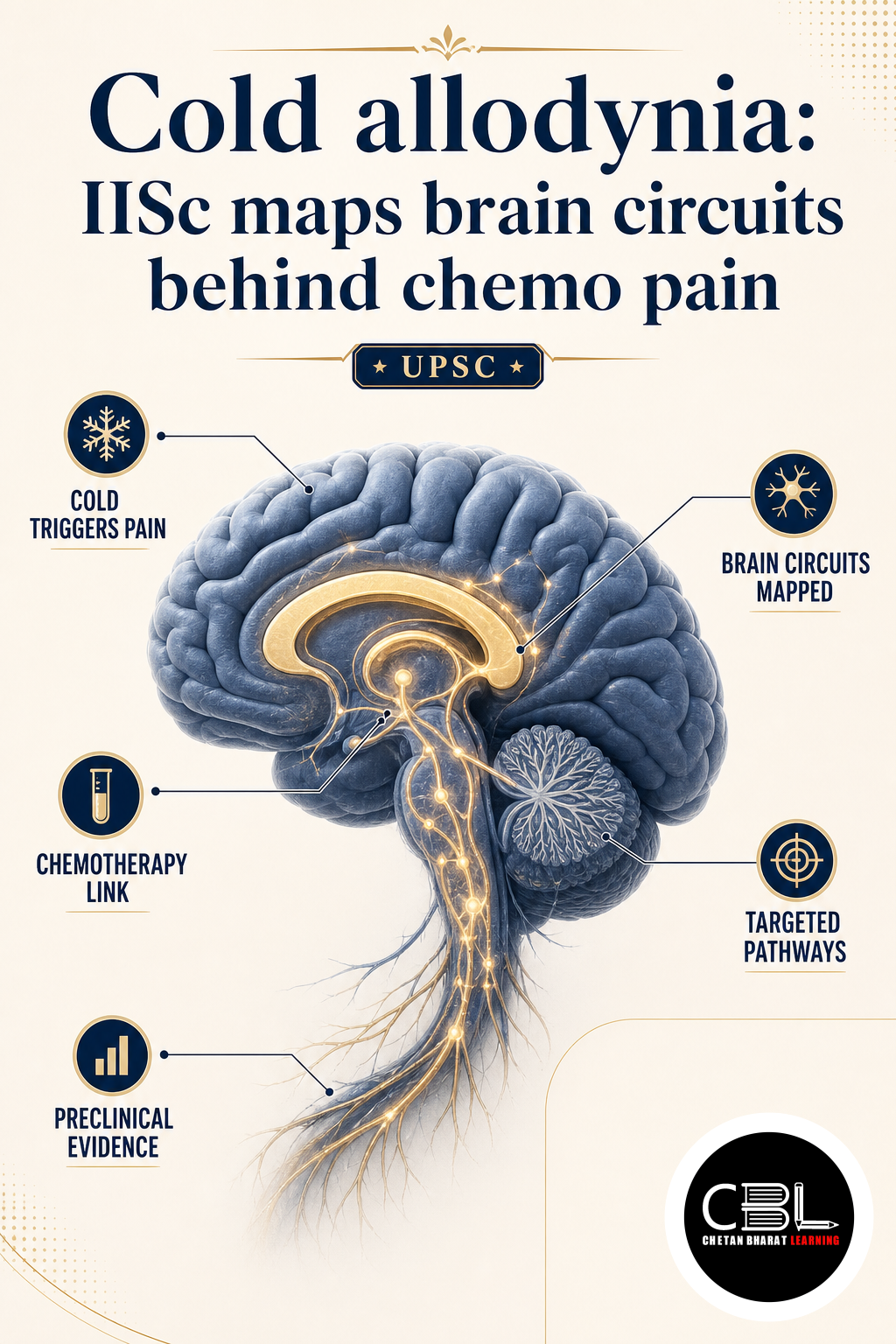
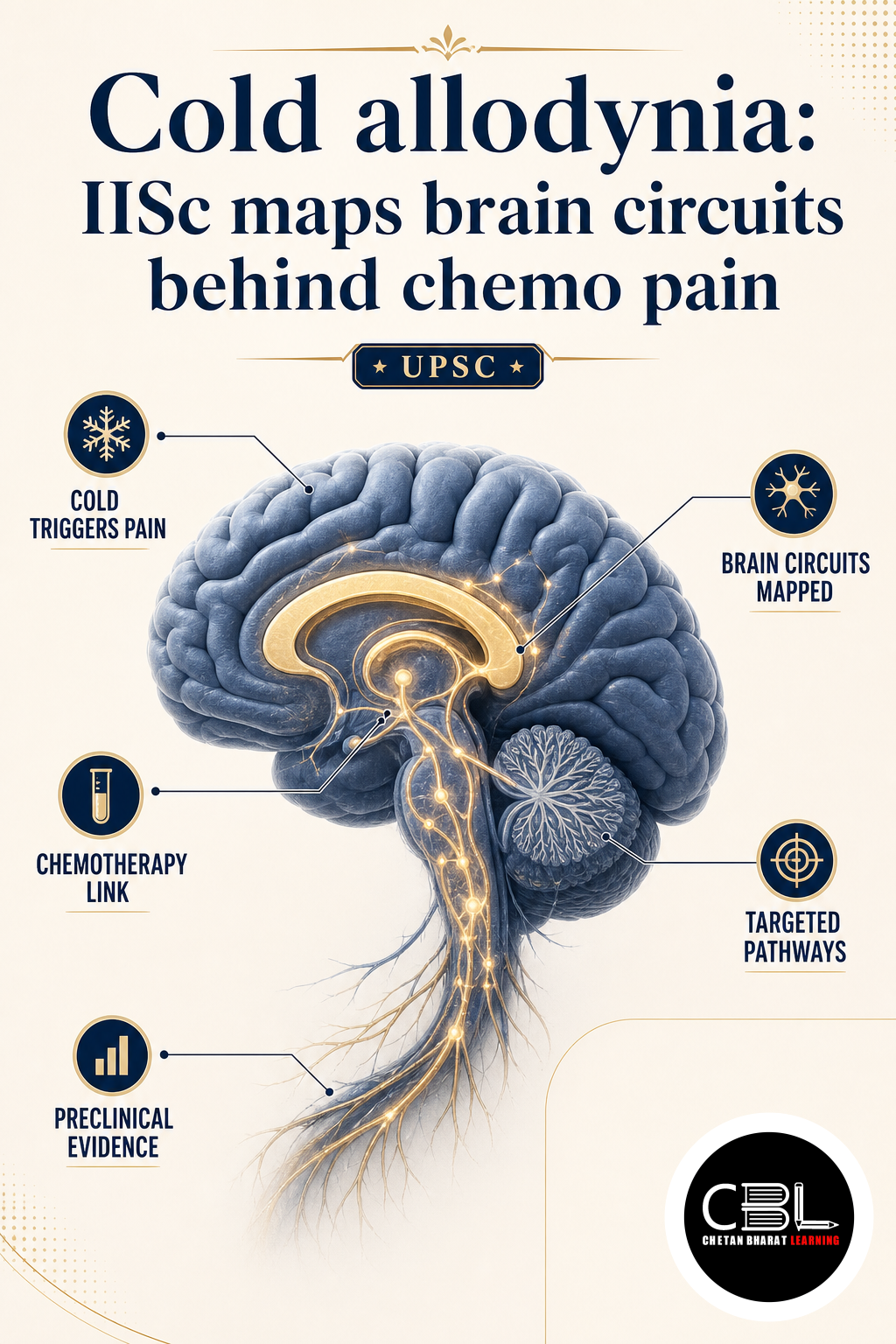
Researchers from IISc and TCG-CREST recently identified the exact ‘brain circuit’ that alters sensory processing after chemotherapy exposure. Using laboratory mice models, they traced the neural pathways and discovered that the connection between the lateral parabrachial nucleus (in the upper brainstem) and the parafascicular region of the thalamus undergoes structural and functional changes. You can review the full biological study via the Cell Reports portal for precise neurological mapping.
The study specifically focused on oxaliplatin, a widely used platinum-based chemotherapy drug notorious for causing severe cold sensitivity. The researchers found that even after the chemotherapy is stopped and peripheral nerve endings heal, the central brain circuit remains altered, explaining why chronic pain persists long after treatment ends.
Key Features
- Neuroplasticity: The nervous system’s ability to change its connections and signal strength. Chemotherapy induces long-term maladaptive changes in how pain signals are processed.
- Peripheral Sensitization: The sensory nerves in the extremities (hands and feet) become abnormally sensitive to environmental stimuli.
- Central Sensitization: The spinal cord and brain circuits become hyper-responsive, amplifying normal signals into severe pain responses.
- Network Medicine: The study shifts the focus from isolated nerve damage to understanding disease as a disruption within connected biological networks and brain circuits.
Challenges
- Invasive Testing Limits: The current mapping of brain circuits requires invasive experimentation on laboratory mice, which cannot be directly replicated in human subjects.
- Broad-Spectrum Side Effects: Current pain medications broadly suppress the nervous system, leading to severe side effects like drowsiness, cognitive dulling, and high dependence risks.
- Complex Etiology: While commonly linked to platinum-based drugs, cold allodynia can also stem from viral infections, physical injuries, or diabetes, complicating universal treatment protocols.
- Chronic Persistence: Because the central brain circuits remain altered even after peripheral nerves heal, standard anti-inflammatory drugs are largely ineffective against this specific neuropathic pain.
Way Forward
The immediate goal of the research team is to identify pharmacological interventions that can specifically target and reverse the altered brain circuits in mice models. Successfully mapping these pathways opens the door to precision neuromedicine, allowing doctors to treat the exact mechanism producing the pain rather than broadly numbing the patient.
Over the next five years, researchers aim to test whether these circuit-level findings apply to other forms of nerve injury, potentially revolutionizing how chronic pain is managed globally without compromising the effectiveness of life-saving cancer treatments.
Prelims Practice Corner
Q1. What specific chemotherapy drug is most commonly associated with cold allodynia?
- a) Doxorubicin
- b) Oxaliplatin
- c) Paclitaxel
- d) Cisplatin
Answer: Oxaliplatin, a platinum-based chemotherapy drug, is specifically noted for causing severe cold sensitivity.
Q2. Which two brain regions form the newly identified neural circuit responsible for this condition?
- a) Hippocampus and Amygdala
- b) Cerebellum and Medulla
- c) Lateral parabrachial nucleus and Parafascicular region of thalamus
- d) Frontal cortex and Hypothalamus
Answer: The connection between the lateral parabrachial nucleus and the parafascicular region of the thalamus alters after chemotherapy.
Q3. Cold allodynia is best classified as which type of pain?
- a) Nociceptive pain
- b) Neuropathic pain
- c) Psychogenic pain
- d) Idiopathic pain
Answer: It is a neuropathic pain resulting from damage or dysfunction of the nervous system, not actual tissue injury.
Q4. What does the term ‘Central Sensitization’ refer to in this context?
- a) Nerves in the hands becoming numb
- b) The spinal cord and brain becoming hyper-responsive to pain signals
- c) Immune system attacking the brain
- d) Reduced blood flow to the brain
Answer: Central sensitization occurs when the spinal cord and brain circuits amplify normal signals into severe pain responses.
Q5. Which reputed scientific journal recently published the findings of the IISc and TCG-CREST study?
- a) Nature
- b) Science
- c) Cell Reports
- d) The Lancet
Answer: The discovery of the brain circuit was published in the journal Cell Reports.
Mains Practice Questions
Q1. Discuss the biological mechanism of Chemotherapy-Induced Peripheral Neuropathy (CIPN) and how it alters the human perception of pain. (10 marks)
Answer Structure:
- Intro: Define CIPN and cold allodynia, highlighting how life-saving cancer drugs inadvertently damage the peripheral and central nervous systems.
- Body: Explain the difference between nociceptive and neuropathic pain. Detail the concepts of peripheral sensitization and central sensitization, referencing the newly discovered circuit between the lateral parabrachial nucleus and the thalamus.
- Conclusion: Conclude that pain is actively constructed by the nervous system, and biological injuries can cause long-term architectural changes in neural processing.
Q2. “The future of pain management lies in shifting from broad-spectrum suppression to precision neuromedicine.” Analyze this statement in the context of recent neurological discoveries. (15 marks)
Answer Structure:
- Intro: Introduce the limitations and severe side effects (drowsiness, dependence) of current broad-spectrum painkillers that blunt the entire nervous system.
- Body: Analyze how mapping specific neural circuits (like those identified by IISc for cold allodynia) allows for mechanism-based treatments. Discuss the potential of targeted medicines, neuromodulation, and personalized risk assessment.
- Conclusion: Suggest that understanding network medicine will enable clinicians to relieve chronic pain without compromising the effectiveness of primary treatments like chemotherapy.
FAQs on Cold allodynia
Why does the pain persist even after chemotherapy is completed?
While the peripheral nerve endings in the hands and feet may eventually heal after treatment stops, the central nervous system undergoes neuroplasticity. The brain circuits responsible for processing temperature and pain remain structurally and functionally altered, leading to chronic neuropathic pain.
How is neuropathic pain different from normal pain?
Normal (nociceptive) pain is a protective warning system triggered by actual or potential tissue damage, like touching a hot stove. Neuropathic pain is caused by disease or damage to the nervous system itself, causing the brain to misinterpret harmless signals—like a cool breeze—as severe burning or sharp pain.
What is the ultimate goal of mapping these specific brain circuits?
Mapping the exact neural pathways allows scientists to develop precision therapies. Instead of using heavy opioids or broad nerve-blockers that cause severe side effects, future pharmacological interventions could target the specific abnormal receptors and circuits causing the pain, preserving the patient’s cognitive and motor functions.
Related Current Affairs
Preparing for UPSC, PCS or HCS?
Talk to a mentor at Chetan Bharat Learning, Chandigarh. Free guidance on choosing the right exam and building a study plan.
Chat on WhatsAppCall 97793 53345UPSC / IAS / PCS coaching in Chandigarh · Trusted by aspirants across Punjab & Haryana
Leave a Reply
You must be logged in to post a comment.