
UPSC Mapping
| Prelims | Science & Technology |
|---|---|
| Mains | GS Paper 3 (Science & Technology & Health) |
What is Friedreichs Ataxia?
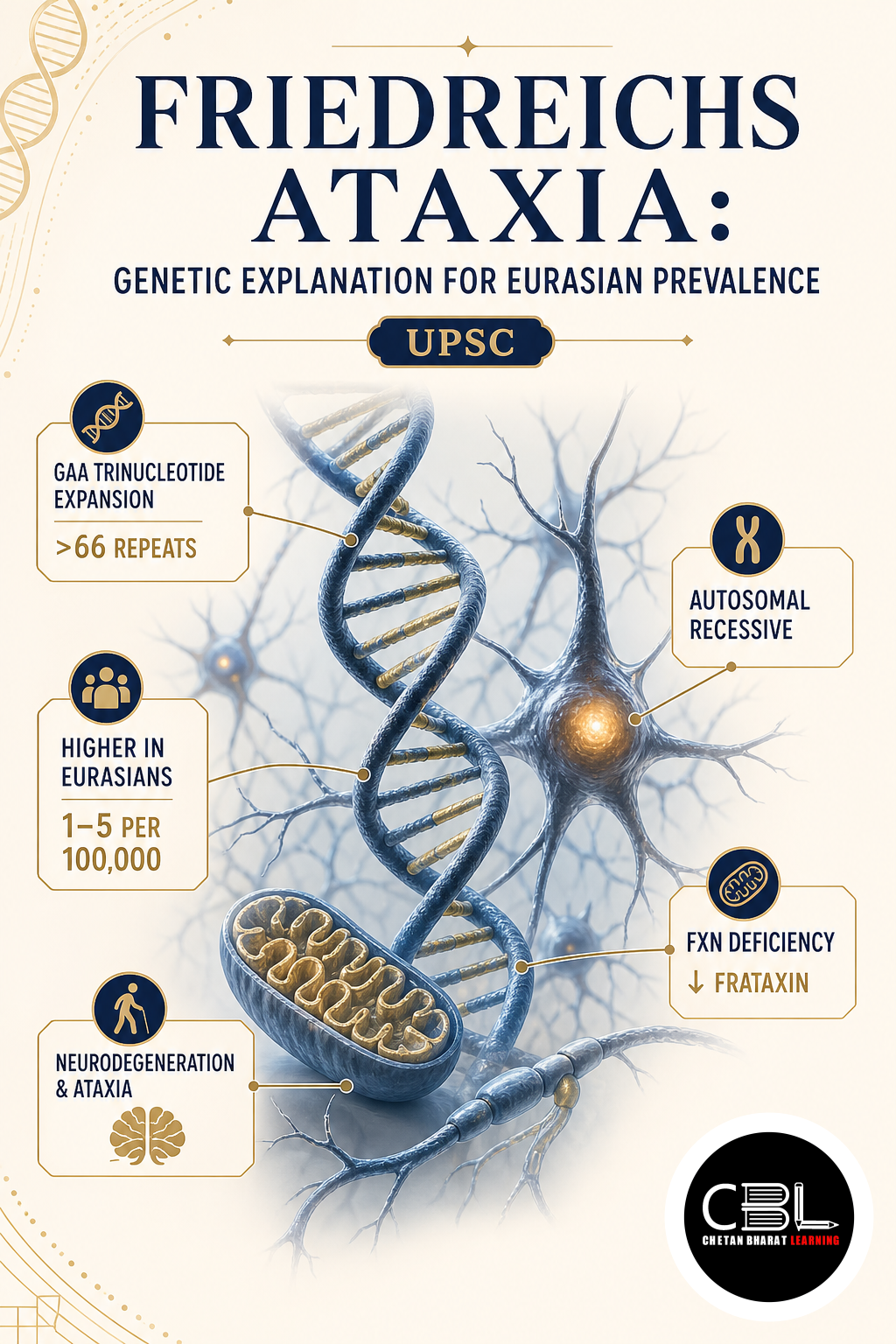
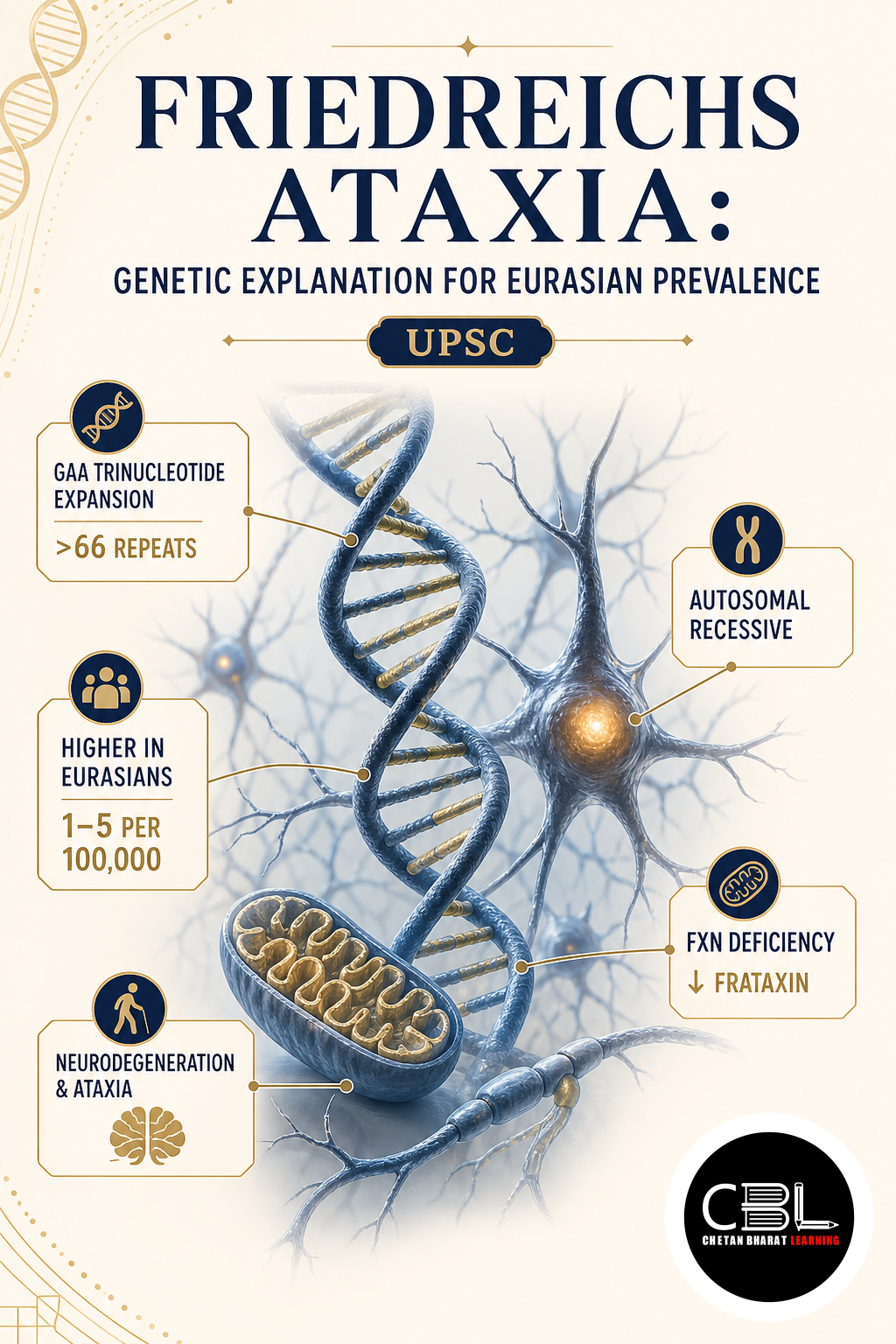
Friedreichs Ataxia is a rare, inherited genetic disorder that progressively damages the nervous system and heart. Symptoms generally begin during childhood or adolescence, often between 5–15 years. It is primarily caused by an abnormal expansion of GAA trinucleotide repeats in the FXN (frataxin) gene, reducing production of frataxin—a protein crucial for normal mitochondrial function and iron–sulfur cluster formation. The disorder follows an autosomal recessive inheritance pattern.
Currently, there is no cure that reverses the underlying genetic defect. The recent discovery of ‘protomutations’ in the FXN gene—found only in Eurasian populations—explains why the disease is predominantly found among people of Eurasian descent.
Why is Friedreichs Ataxia in the News?
Scientists have identified ‘protomutations’ in the FXN gene that serve as a reservoir for disease-causing expanded GAA alleles. These protomutations are exclusive to Eurasian populations, providing a breakthrough in understanding the epidemiology of the disorder. The finding could pave the way for improved genetic screening and targeted therapeutic interventions. For more details, refer to the official PIB release.
Key Features of Friedreichs Ataxia
- Genetic Disorder: Autosomal recessive inheritance due to FXN gene mutation.
- GAA Expansion: Abnormal expansion of GAA trinucleotide repeats.
- Frataxin Deficiency: Reduced frataxin protein levels affecting mitochondrial function.
- Symptoms: Progressive damage to the nervous system and heart, onset in childhood/adolescence.
- Eurasian Prevalence: ‘Protomutations’ found only in Eurasian populations.
Challenges in Friedreichs Ataxia
- No Cure: No existing treatment fully reverses the genetic defect.
- Late Diagnosis: Symptoms may appear early but diagnosis can be delayed.
- Progressive Nature: Mobility and cardiac function deteriorate over time.
- Genetic Testing: Limited access to testing in some regions.
- Therapeutic Development: Challenges in creating therapies for rare genetic disorders.
Way Forward for Friedreichs Ataxia
Early genetic screening and diagnosis are essential to improve outcomes. The identification of protomutations enables population-specific screening programmes. Ongoing research in gene therapy and frataxin replacement offers hope for future treatments. Establishing patient registries and conducting clinical trials will accelerate therapeutic development. Raising awareness among clinicians and the public can lead to earlier diagnosis and better support. International best practices can be found through the WHO.
Prelims Practice Corner
-
Which gene is associated with Friedreichs Ataxia?
Answer: (b) FXN
-
What type of mutation causes Friedreichs Ataxia?
Answer: (b) GAA trinucleotide expansion
-
Which protein is deficient in Friedreichs Ataxia?
Answer: (b) Frataxin
-
What is the mode of inheritance of Friedreichs Ataxia?
Answer: (b) Autosomal recessive
-
Which population group shows higher prevalence of Friedreichs Ataxia?
Answer: (b) Eurasian
Mains Practice Questions
-
Discuss the significance of the recent genetic discovery explaining the prevalence of Friedreichs Ataxia in Eurasian populations. (250 words, 15 marks)
Answer Structure:
- Intro: Introduce Friedreichs Ataxia and the recent genetic breakthrough.
- Body: Explain the role of the FXN gene, GAA expansion, and frataxin deficiency. Discuss the discovery of ‘protomutations’ in Eurasian populations and its implications for genetic screening and research.
- Conclusion: Emphasise the importance of this finding for diagnosis and future therapies.
-
What is the role of frataxin in mitochondrial function? (150 words, 10 marks)
Answer Structure:
- Intro: Define frataxin as a mitochondrial protein.
- Body: Explain its role in iron–sulfur cluster formation and mitochondrial function. Describe how deficiency leads to mitochondrial dysfunction and cellular damage.
- Conclusion: Conclude that frataxin is essential for energy production.
FAQs on Friedreichs Ataxia
What is Friedreichs Ataxia?
It is a rare inherited disorder causing progressive damage to the nervous system and heart.
What is the genetic cause?
An abnormal expansion of GAA repeats in the FXN gene, reducing frataxin production.
Is there a cure?
No cure currently exists; management focuses on symptom relief.
Related Current Affairs
Preparing for UPSC, PCS or HCS?
Talk to a mentor at Chetan Bharat Learning, Chandigarh. Free guidance on choosing the right exam and building a study plan.
Chat on WhatsAppCall 97793 53345UPSC / IAS / PCS coaching in Chandigarh · Trusted by aspirants across Punjab & Haryana
Leave a Reply
You must be logged in to post a comment.