
UPSC Relevance
This topic is important for GS Paper II (International Relations) and GS Paper III (Energy Security), covering West Asian geopolitics, maritime security, global energy markets and India’s foreign policy.
Why in News
According to the passage, Qatar is mediating between the United States and Iran to facilitate negotiations over a ceasefire and the reopening of the Strait of Hormuz. The report notes that the Strait has remained partially affected because of regional conflict and attacks on commercial shipping, while Iran has indicated progress towards resumption of shipping subject to security conditions.
Quick Facts
| Region | West Asia |
|---|---|
| Issue | US-Iran peace talks and maritime security in the Strait of Hormuz |
| Mediator | Qatar, with participation from Oman and Pakistan |
| UPSC Themes | International Relations, energy security, maritime security and geopolitics |
What is the Strait of Hormuz?
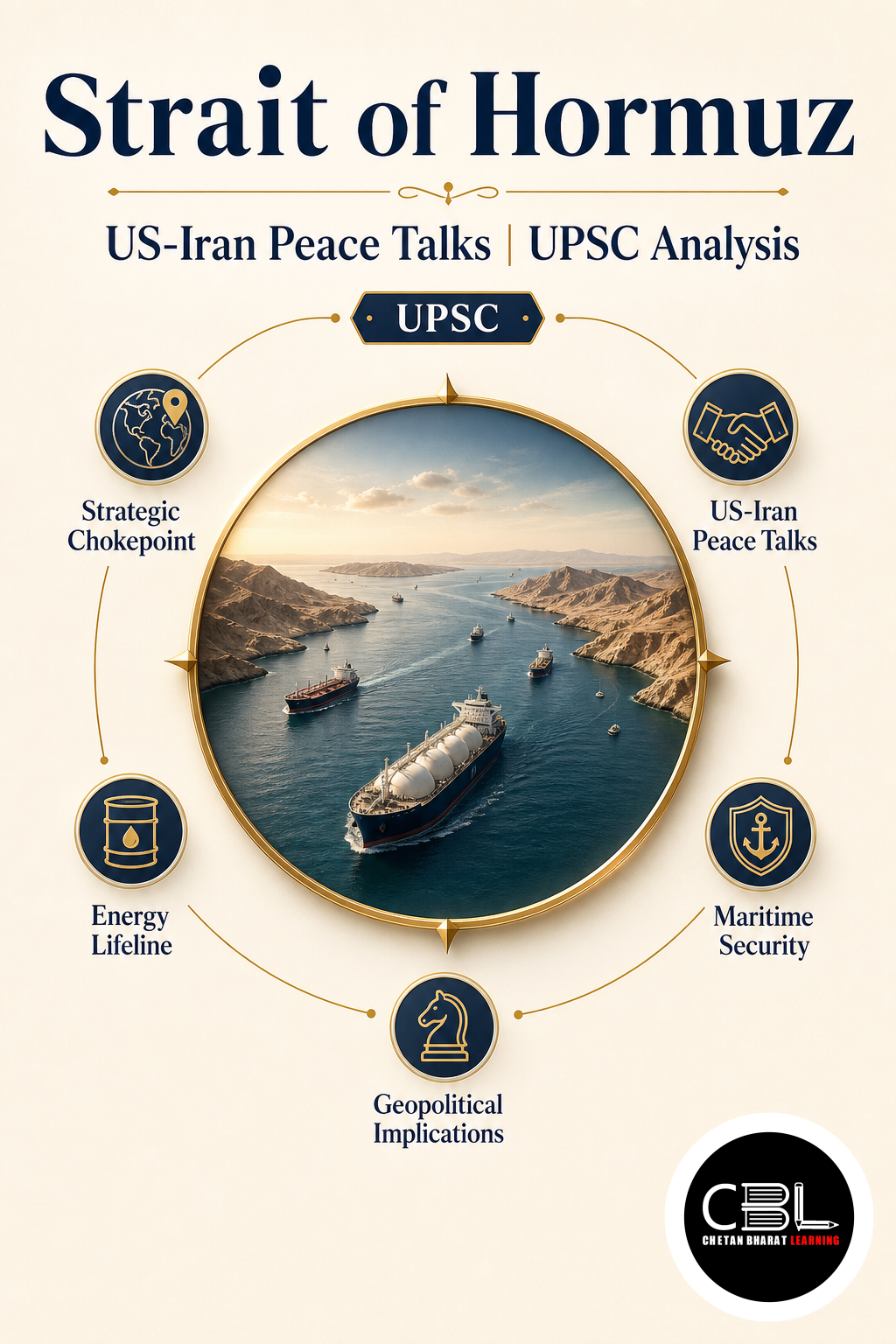
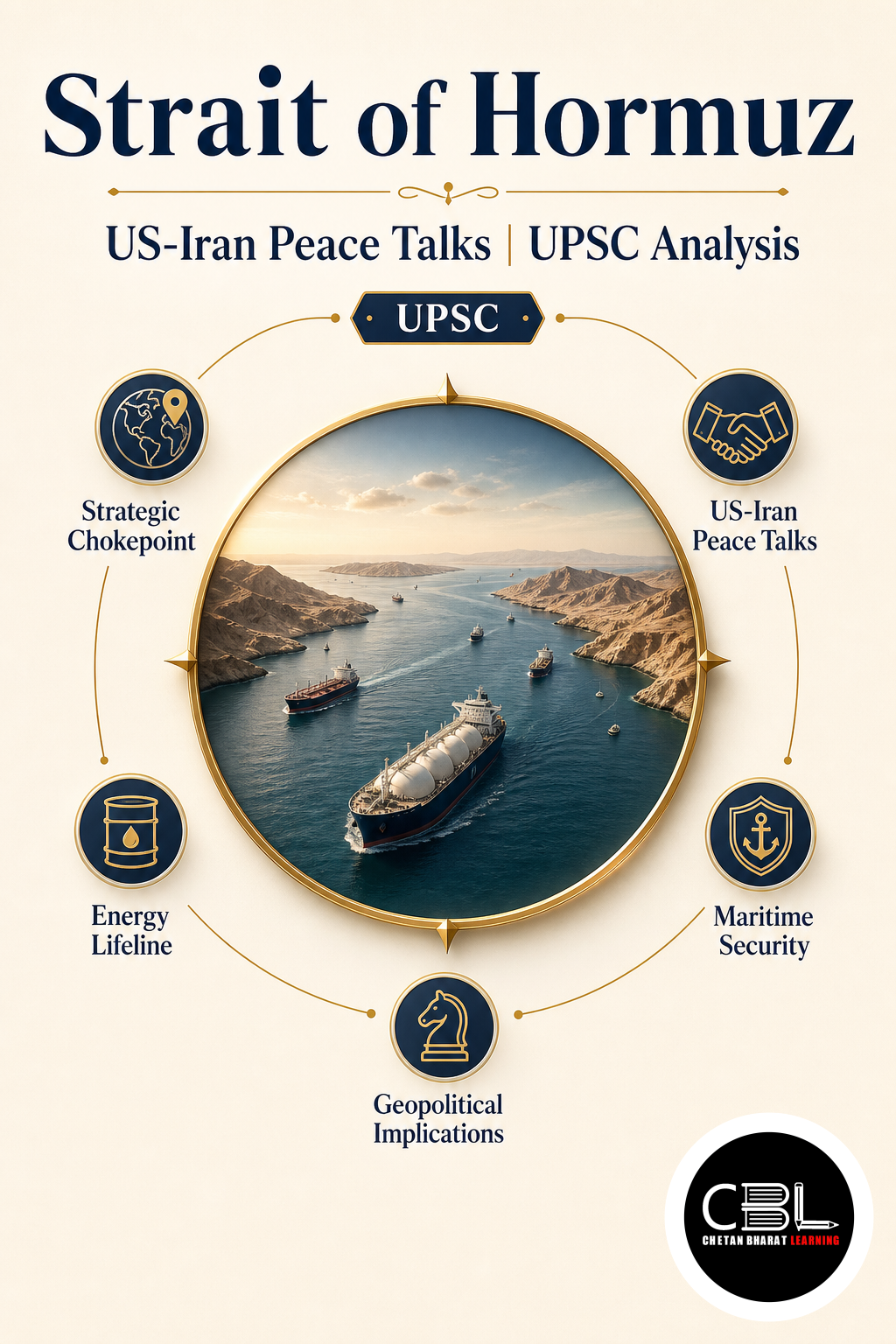
The Strait of Hormuz is a narrow maritime passage connecting the Persian Gulf with the Gulf of Oman and the Arabian Sea. It is one of the world’s busiest energy corridors through which a large share of global oil trade passes.
The Strait is located between Iran and Oman, with nearby countries including Iraq, Kuwait, Bahrain, Qatar, Saudi Arabia, the United Arab Emirates, Afghanistan and Pakistan.
Why is the Strait of Hormuz Important?
- Global Energy Security: A significant share of the world’s seaborne oil trade passes through the Strait.
- International Trade: It is a major route for commercial shipping.
- Strategic Chokepoint: Disruptions affect global markets, insurance costs and supply chains.
- India’s Interests: India’s energy imports and economic stability are closely linked to uninterrupted maritime traffic.
Major Maritime Chokepoints
- Strait of Hormuz
- Bab-el-Mandeb
- Suez Canal
- Bosporus
- Malacca Strait
- Panama Canal
Why is Hormuz Called an Energy Lifeline?
Disruption of oil exports through the Strait can reduce global supplies, raise international crude oil prices, increase inflation and impose higher import costs on energy-dependent economies.
Why is Iran Restricting Shipping?
- Security concerns
- Ongoing regional conflict
- US sanctions
- Pressure on oil exports
Why Does the United States Oppose Restrictions?
The United States supports the principle of freedom of navigation under international law, arguing that unrestricted movement through vital maritime routes is essential for global trade, energy security and regional stability.
Why are Qatar and Oman Mediating?
- Qatar: Maintains relations with multiple regional powers and acts as an active mediator.
- Oman: Has traditionally served as a trusted intermediary with long experience in regional diplomacy.
- Pakistan: Is participating in diplomatic engagement between the concerned sides.
US Sanctions on Iran
Sanctions affecting exports, banking, financial transactions, shipping and technology transfers, aimed at increasing pressure regarding Iran’s nuclear programme and regional activities.
Roots of the US-Iran Conflict
- Nuclear programme
- Regional influence
- Economic sanctions
- Regional proxy conflicts
Role of the Houthis
The Houthis are an Iran-aligned movement in Yemen. They have attacked commercial shipping in the Red Sea, causing higher insurance costs, longer shipping routes and additional pressure on global trade.
Oil Prices During Conflict
Fears of supply disruptions during conflict increase oil prices, while successful peace talks improve supply confidence and may contribute to lower crude prices.
Impact on India
- Energy Security: Higher crude prices increase India’s import bill.
- Inflation: Rising transport and logistics costs.
- Current Account Deficit: Higher oil imports can widen external imbalances.
- Strategic Interests: India maintains balanced relations with Iran, Saudi Arabia, the UAE, Oman and the United States.
India’s Approach
- Supporting freedom of navigation
- Balanced diplomacy
- Diversified energy imports
- Strategic petroleum reserves
- Peaceful dialogue
Way Forward
- Continue diplomatic engagement
- Strengthen maritime security cooperation
- Ensure safe commercial navigation
- Build confidence among regional stakeholders
- Promote peaceful dispute resolution under international law
Prelims Practice Questions
Q1. The Strait of Hormuz connects: (a) Red Sea and Mediterranean Sea (b) Persian Gulf and Gulf of Oman (c) Arabian Sea and Bay of Bengal (d) Black Sea and Mediterranean Sea.
Answer: (b).
Q2. According to the passage, Qatar is mediating between: (a) India and Pakistan (b) US and Iran (c) Saudi Arabia and Yemen (d) Israel and Egypt.
Answer: (b).
Q3. Which of the following is identified as a major maritime chokepoint in the passage? (a) Malacca Strait (b) Suez Canal (c) Bab-el-Mandeb (d) All of the above.
Answer: (d).
Q4. The Houthis, as described in the uploaded infographic, are primarily associated with: (a) Syria (b) Yemen (c) Lebanon (d) Iraq.
Answer: (b).
Q5. A disruption in the Strait of Hormuz is most likely to directly affect: (a) Global energy supplies (b) Antarctic fisheries (c) Himalayan glaciers (d) Arctic shipping only.
Answer: (a).
Mains Practice Questions
Q1 (10 Marks): Discuss the strategic importance of the Strait of Hormuz in global energy security and international trade.
Q2 (15 Marks): Examine the implications of US-Iran tensions for India’s energy security, foreign policy and maritime interests in West Asia.
FAQs
Why is the Strait of Hormuz strategically important? It is one of the world’s most important maritime routes for global oil transportation and international trade.
What role is Qatar playing? Qatar is mediating negotiations between the United States and Iran to facilitate peace talks and maritime reopening.
Why is this issue important for India? It directly affects India’s energy imports, inflation, maritime trade, strategic interests and relations with countries in West Asia.
Related Current Affairs
Preparing for UPSC, PCS or HCS?
Talk to a mentor at Chetan Bharat Learning, Chandigarh. Free guidance on choosing the right exam and building a study plan.
Chat on WhatsAppCall 97793 53345UPSC / IAS / PCS coaching in Chandigarh · Trusted by aspirants across Punjab & Haryana
Leave a Reply
You must be logged in to post a comment.