
UPSC Syllabus Mapping
| GS Paper: | GS-II & GS-III |
| Subject: | Judiciary, Governance and Artificial Intelligence |
| Syllabus Pointers: | Prep with our comprehensive UPSC Current Affairs Hub analysis guidelines. |
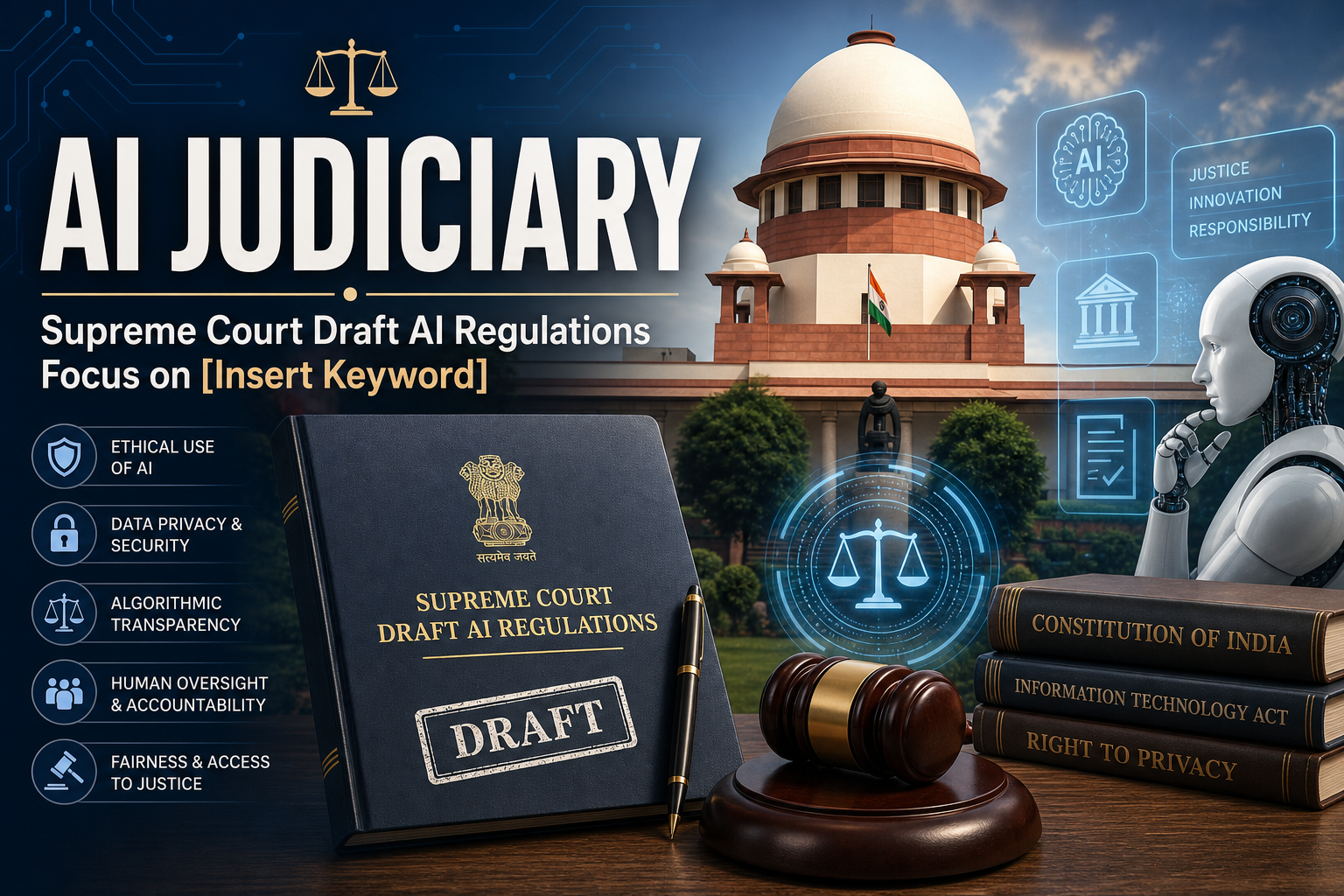
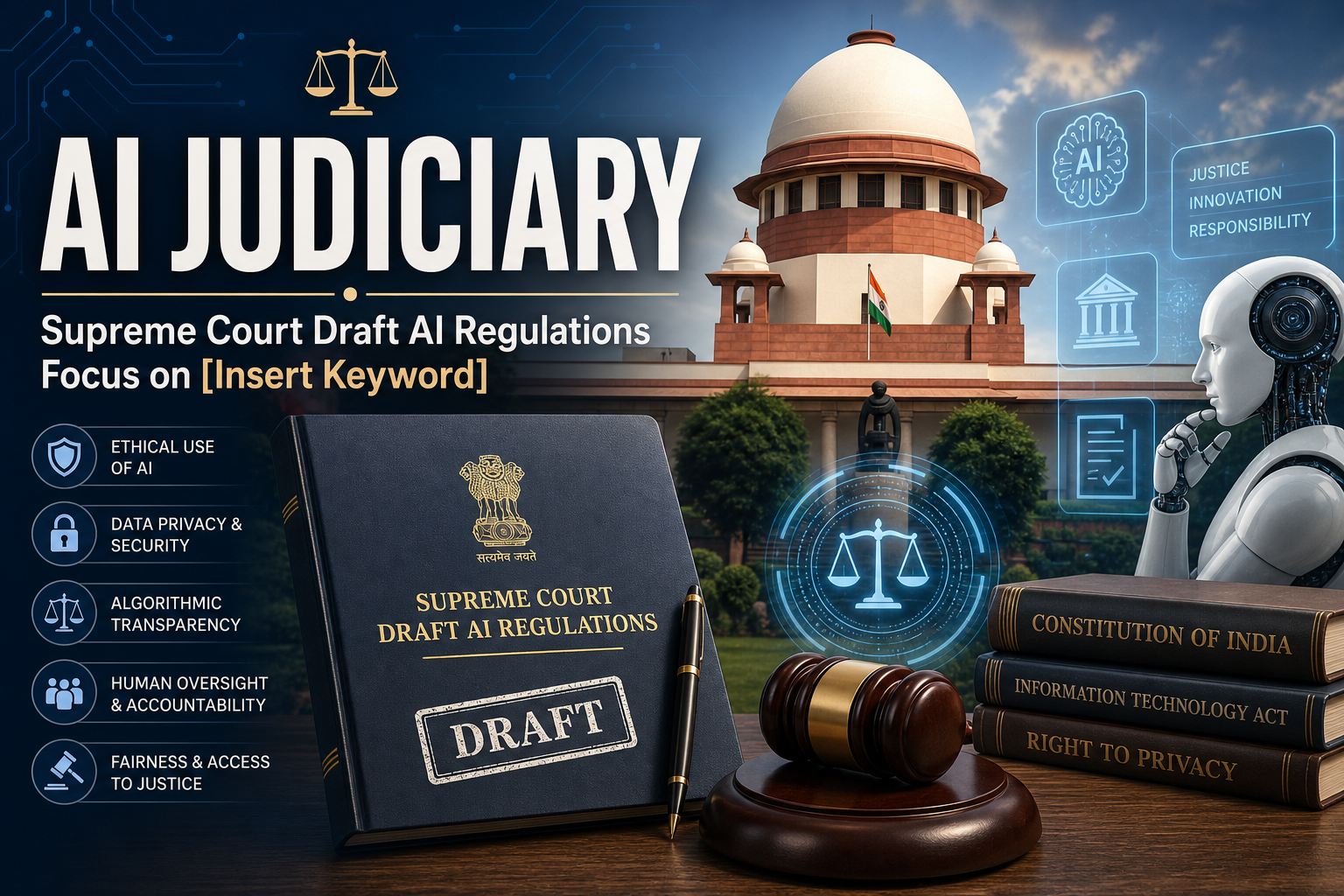
Recent developments regarding AI Judiciary relate to the Supreme Court’s proposed Draft AI Regulations, 2026, which seek to enable the responsible use of Artificial Intelligence in judicial administration while ensuring that judicial decision-making remains entirely under human control. The framework aims to improve efficiency without compromising constitutional values, due process and judicial independence.
Key Dimensions of AI Judiciary
Artificial Intelligence (AI) refers to computer systems capable of performing tasks that normally require human intelligence, including language processing, speech recognition, translation, document summarisation and pattern analysis.
The draft framework distinguishes between three broad categories of AI use in courts: administrative AI for scheduling and case management, assistive AI for legal research, translation, transcription and document summarisation, and decision-making AI, which directly influences judicial outcomes. The first two categories may be used subject to safeguards, whereas the third is prohibited.
What Does the Supreme Court Permit?
The proposed regulations allow AI to assist courts in improving efficiency through case management, transcription, translation, legal research, document summarisation, accessibility services and judicial administration. Such use is envisaged only under written approval and continuous human supervision.
Human judges remain solely responsible for every judicial determination. AI is intended to function as an assistive tool rather than a substitute for judicial reasoning.
What Has Been Prohibited?
The draft regulations prohibit the use of AI for deciding guilt or innocence, determining conviction or sentencing, granting or rejecting bail, assessing witness credibility, predicting future criminal behaviour or independently deciding issues affecting personal liberty. Algorithmic decision-making without meaningful human judgment is not permitted.
The framework also discourages the use of black-box AI in matters affecting personal liberty because its reasoning cannot be adequately explained. Instead, preference is given to explainable AI, where the basis of recommendations can be understood and scrutinised.
Constitutional Principles Behind the Framework
The proposed safeguards are rooted in the principles of natural justice. These include Nemo Judex in Causa Sua (no one should be a judge in their own cause) and Audi Alteram Partem (hear the other side). Judicial appreciation of facts, context and fairness cannot be delegated to an algorithm.
The framework also emphasises transparency. Whenever AI materially assists judicial or administrative work, the parties concerned should be informed in an appropriate manner. Institutional governance through AI Committees, AI Secretariats and research support mechanisms has also been proposed to ensure accountability.
For additional background on Artificial Intelligence, refer to global developmental tracking frameworks.
Way Forward
Artificial Intelligence can substantially improve judicial efficiency by reducing delays, improving accessibility and supporting legal research. However, any integration of AI into the justice delivery system must preserve judicial independence, constitutional values, transparency, accountability and meaningful human oversight. A balanced regulatory framework will help India harness technological innovation while protecting citizens’ fundamental rights.
Prelims Practice Corner
Q1. According to the proposed judicial AI framework, which of the following should remain exclusively under human judicial authority?
- (a) Translation of court records
- (b) Case scheduling
- (c) Granting bail and deciding guilt
- (d) Document summarisation
Answer: (c) The draft regulations prohibit AI from making decisions affecting personal liberty, including bail, conviction and sentencing.
Q2. The principle Audi Alteram Partem refers to:
- (a) Separation of powers
- (b) Hear the other side
- (c) Judicial review
- (d) Rule against retrospective laws
Answer: (b) Audi Alteram Partem is a foundational principle of natural justice requiring every affected party to be given an opportunity to be heard.
Mains Practice Question
“Artificial Intelligence can improve judicial efficiency but cannot replace judicial reasoning.” Discuss the opportunities and challenges of integrating AI into India’s judiciary with reference to constitutional principles and natural justice. (150 Words, 10 Marks)
FAQs
Can AI decide court cases in India under the proposed regulations?
No. AI may assist in administrative and research functions, but judicial decisions affecting rights and personal liberty must always remain with human judges.
Related Current Affairs
Preparing for UPSC, PCS or HCS?
Talk to a mentor at Chetan Bharat Learning, Chandigarh. Free guidance on choosing the right exam and building a study plan.
Chat on WhatsAppCall 97793 53345UPSC / IAS / PCS coaching in Chandigarh · Trusted by aspirants across Punjab & Haryana
Leave a Reply
You must be logged in to post a comment.