
UPSC Syllabus Mapping
- GS Paper: GS-III
- Subject: Indian Economy, Inflation and Monetary Policy
- Syllabus Pointers: Prep with our comprehensive UPSC Current Affairs Hub analysis guidelines.
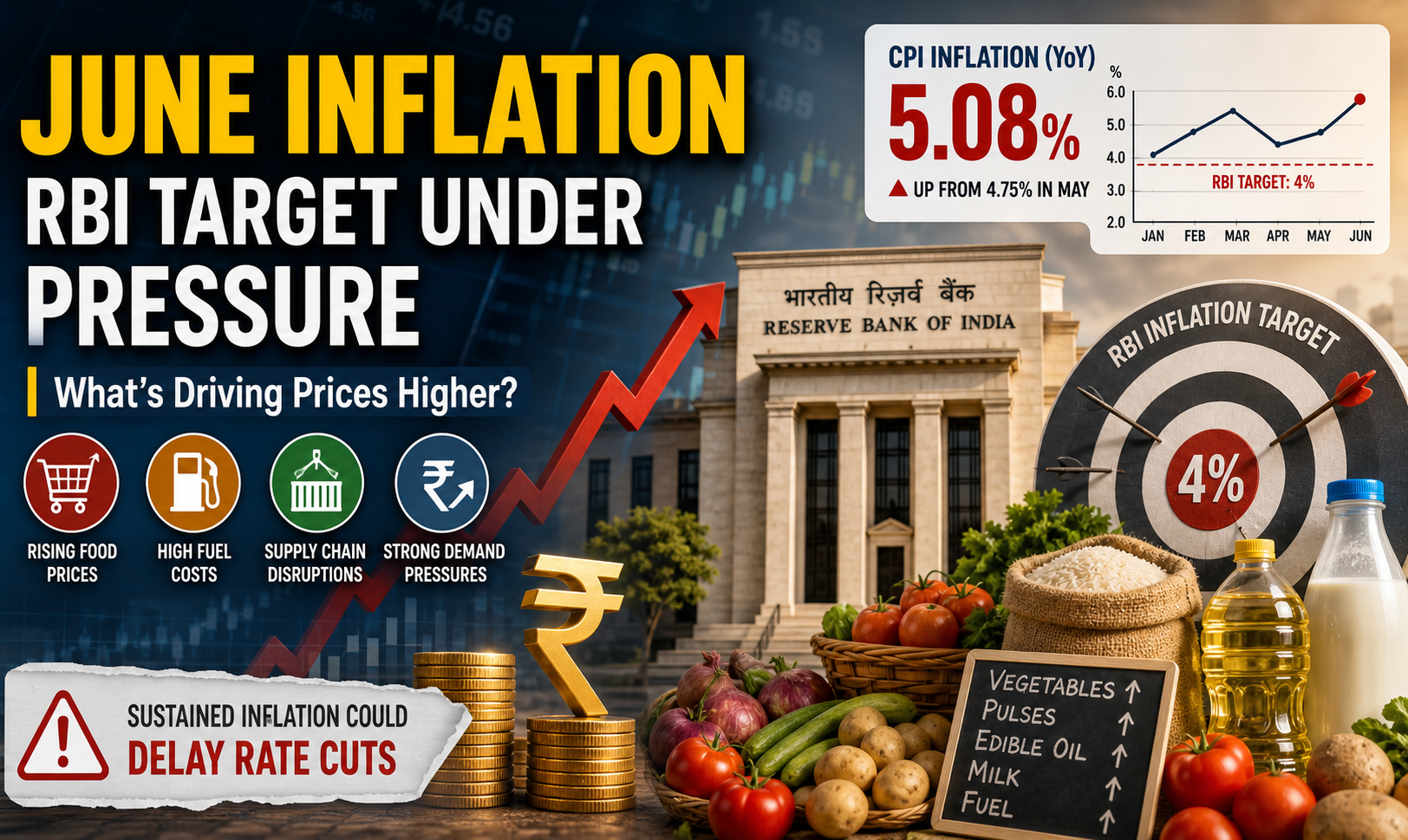
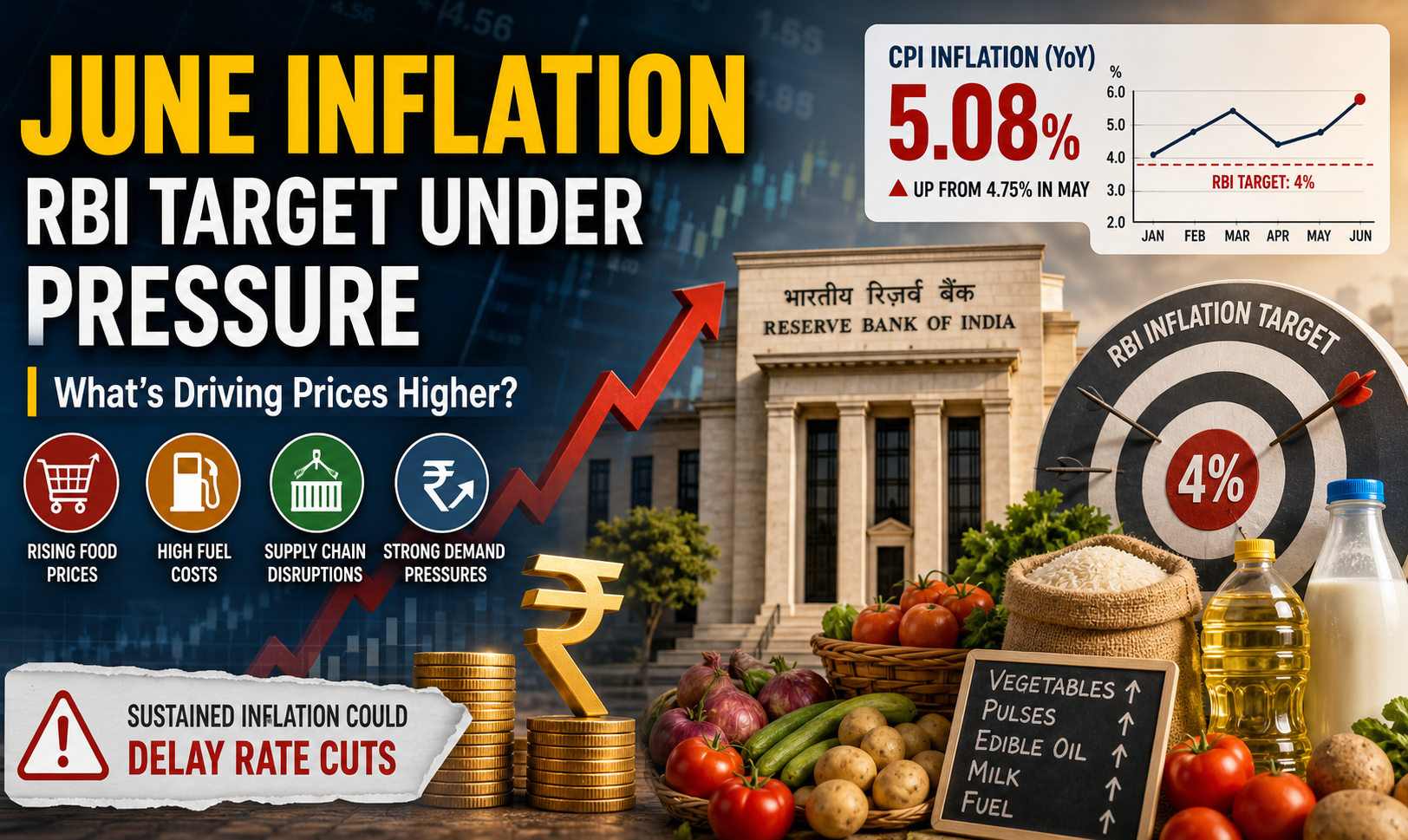
Recent updates regarding June Inflation indicate that India’s retail inflation (Consumer Price Index or CPI) may rise to around 4.25%, crossing the Reserve Bank of India’s (RBI) medium-term target of 4%. The increase is largely attributed to rising transport costs and imported fuel inflation following geopolitical tensions in West Asia, although inflation is expected to remain within the RBI’s tolerance band of 2–6%.
Key Dimensions of June Inflation
Inflation refers to a sustained increase in the general price level of goods and services over time. In India, retail inflation is measured using the Consumer Price Index (CPI), compiled by the National Statistics Office (NSO). The RBI uses CPI as the nominal anchor for monetary policy under the Flexible Inflation Targeting (FIT) framework.
The RBI aims to maintain inflation at 4%, with a tolerance band of 2% to 6%. Inflation above 4% does not automatically imply policy failure, but sustained deviations influence monetary policy decisions.
Why is Inflation Rising?
- Transport Inflation: Higher diesel and fuel prices have increased transportation costs, which are passed on to consumers through higher prices for goods and services. Transport carries a significant weight in the CPI basket.
- Imported Inflation: India imports nearly 85% of its crude oil requirement. Geopolitical tensions in West Asia have pushed up international crude oil prices, increasing domestic fuel costs and contributing to cost-push inflation.
- LPG Price Increase: Higher LPG prices directly affect household expenditure and indirectly raise production and transportation costs across sectors.
Economic Implications
- Higher inflation reduces purchasing power, especially for low-income households. It raises business costs, creates uncertainty for investment decisions and can slow economic growth if inflation persists for a prolonged period.
- For monetary policy, inflation trends influence the RBI’s decisions on policy rates and liquidity management to maintain price stability while supporting growth.
- For additional background on inflation, refer to global developmental tracking frameworks.
Way Forward
India should diversify energy sources, strengthen strategic petroleum reserves, improve logistics efficiency and enhance domestic renewable energy capacity to reduce vulnerability to imported inflation. Coordinated fiscal and monetary policies remain essential to maintaining price stability without compromising economic growth.
Prelims Practice Corner
Question 1
Which index does the Reserve Bank of India primarily use for inflation targeting?
- (a) Wholesale Price Index (WPI)
- (b) Consumer Price Index (CPI)
- (c) Index of Industrial Production (IIP)
- (d) GDP Deflator
Answer: (b)
The RBI follows the Flexible Inflation Targeting framework using CPI as the nominal anchor.
Question 2
Imported inflation in India is most directly affected by increases in:
- (a) Domestic rainfall
- (b) International crude oil prices
- (c) Gold production
- (d) Bank deposits
Answer: (b)
India’s dependence on imported crude oil makes international oil prices a major source of imported inflation.
Mains Practice Question
“Imported fuel inflation and rising transport costs continue to pose challenges for India’s inflation management. Examine the role of monetary policy and structural reforms in maintaining price stability.” (150 Words, 10 Marks)
FAQs
Why is June inflation expected to rise?
Higher transport costs, imported fuel inflation driven by geopolitical tensions and increased LPG prices are expected to push CPI inflation above the RBI’s 4% target.
Related Current Affairs
Preparing for UPSC, PCS or HCS?
Talk to a mentor at Chetan Bharat Learning, Chandigarh. Free guidance on choosing the right exam and building a study plan.
Chat on WhatsAppCall 97793 53345UPSC / IAS / PCS coaching in Chandigarh · Trusted by aspirants across Punjab & Haryana
Leave a Reply
You must be logged in to post a comment.