
UPSC Syllabus Mapping
- GS Paper: GS-I, GS-II & GS-III
- Subject: Society, Governance, Indian Economy and Inclusive Growth
- Syllabus Pointers: Prep with our comprehensive UPSC Current Affairs Hub analysis guidelines.
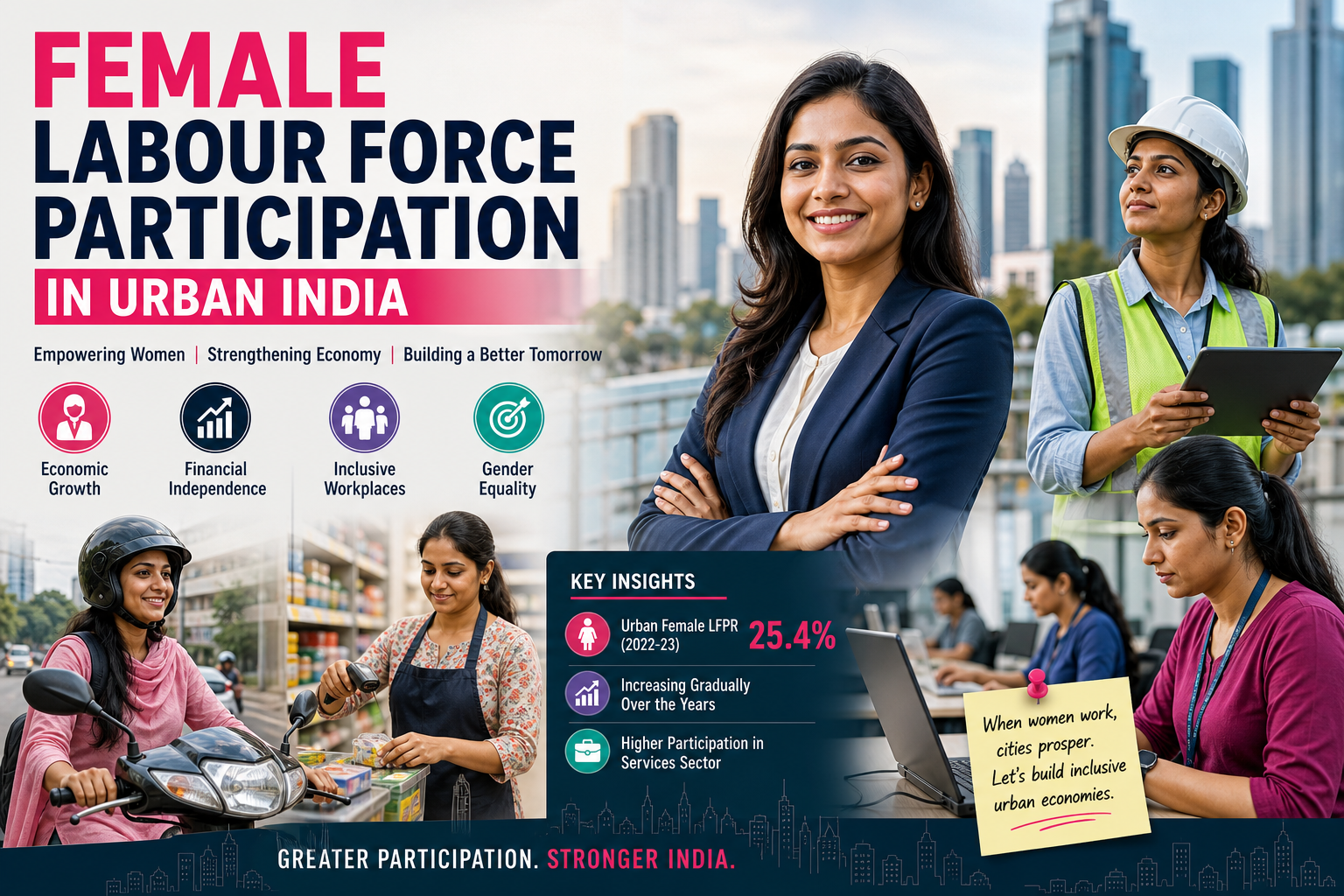
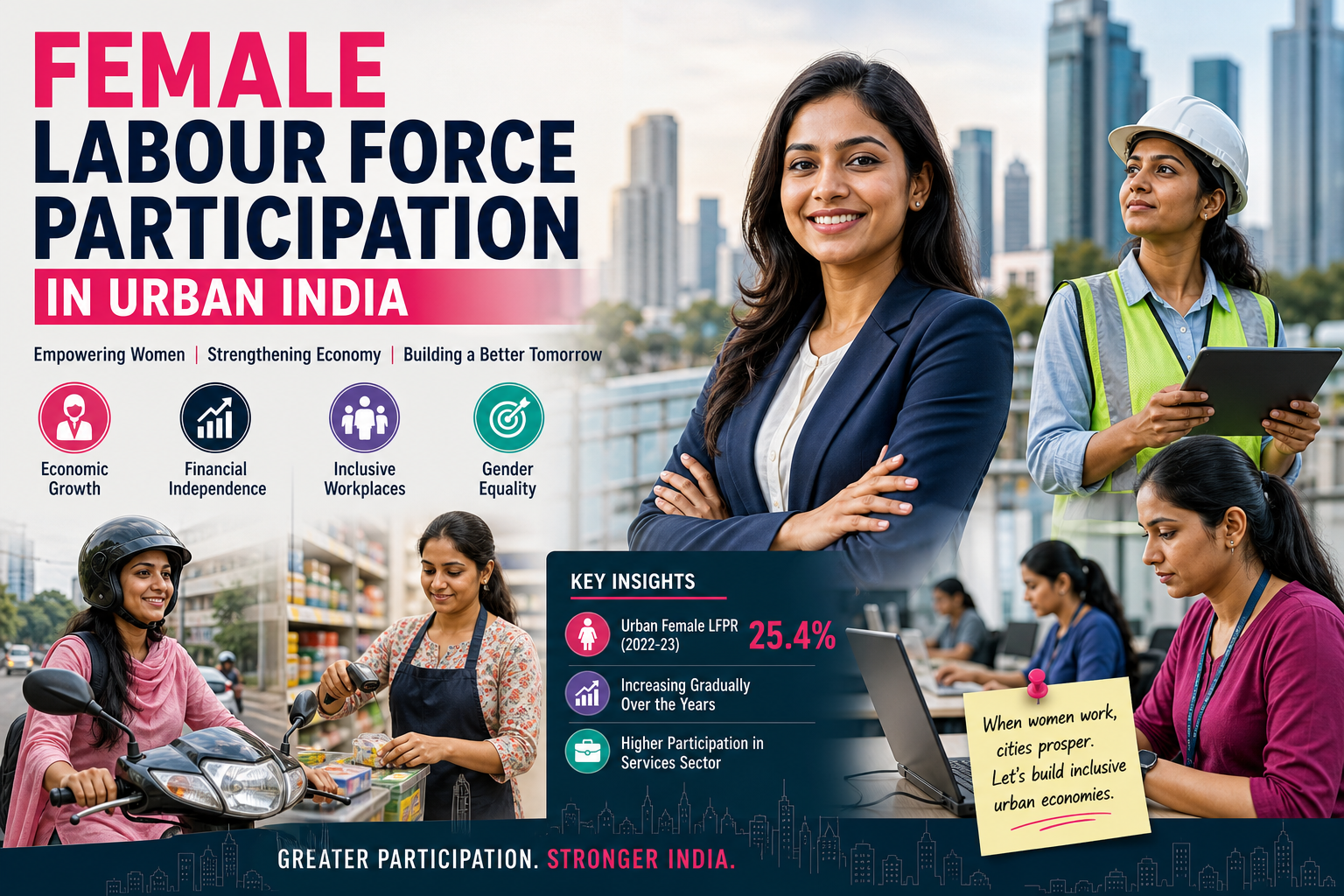
Recent updates regarding Female Labour Force Participation highlight that Indian cities alone cannot substantially reduce women’s time, safety and care burdens. The discussion, based on the latest Periodic Labour Force Survey (PLFS), argues that affordable childcare, safer mobility, supportive workplaces and changes in social norms are essential for increasing women’s participation in the workforce.
Key Dimensions of Female Labour Force Participation
The Labour Force Participation Rate (LFPR) measures the proportion of the working-age population that is either employed or actively seeking employment. Higher female labour force participation contributes to faster economic growth, increased household incomes, poverty reduction and a stronger demographic dividend.
Although urbanisation creates new employment opportunities, many women continue to remain outside the labour market because of unpaid care responsibilities, safety concerns, limited mobility, workplace barriers and restrictive gender norms.
Major Barriers
Childcare burden
Women continue to perform a disproportionate share of unpaid domestic and caregiving work, limiting their ability to take up paid employment.
Mobility and safety
Long travel times, inadequate public transport, harassment and concerns over personal safety reduce workforce participation, particularly in urban areas.
Workplace constraints
Limited flexible work options, career interruptions due to caregiving, wage gaps and weak childcare support discourage women from entering or remaining in the labour force.
UPSC Value Addition
Prelims
- Labour Force Participation Rate (LFPR)
- Worker Population Ratio (WPR)
- Periodic Labour Force Survey (PLFS)
- Demographic Dividend
Mains
Discuss how increasing female labour force participation can accelerate inclusive growth and demographic dividend while identifying structural barriers that continue to limit women’s economic participation.
For additional background on women’s labour force participation, refer to global developmental tracking frameworks.
Way Forward
India should expand affordable childcare facilities, improve public transport and women’s safety, encourage flexible work arrangements, strengthen equal opportunity policies and promote shared household responsibilities. A combination of social reform, urban planning and labour market reforms can significantly raise female labour force participation and support inclusive economic growth.
Prelims Practice Corner
Q1. Labour Force Participation Rate (LFPR) includes:
- (a) Only employed persons
- (b) Only unemployed persons
- (c) Both employed persons and those actively seeking work
- (d) Only government employees
Answer: (c) LFPR includes people who are employed as well as those actively looking for work.
Q2. Which factor is most directly associated with increasing female labour force participation?
- (a) Reduced childcare burden
- (b) Higher import tariffs
- (c) Lower rainfall
- (d) Currency depreciation
Answer: (a) Affordable childcare is one of the most effective measures for enabling more women to participate in paid employment.
Mains Practice Question
“Urbanisation alone cannot substantially increase women’s workforce participation unless structural barriers such as childcare, safety and workplace inequality are addressed.” Examine. (150 Words, 10 Marks)
FAQs
Why is female labour force participation important?
Higher participation increases economic growth, improves household welfare, strengthens gender equality and enables India to realise its demographic dividend.
Related Current Affairs
Preparing for UPSC, PCS or HCS?
Talk to a mentor at Chetan Bharat Learning, Chandigarh. Free guidance on choosing the right exam and building a study plan.
Chat on WhatsAppCall 97793 53345UPSC / IAS / PCS coaching in Chandigarh · Trusted by aspirants across Punjab & Haryana
Leave a Reply
You must be logged in to post a comment.