
Why Is This News Important?
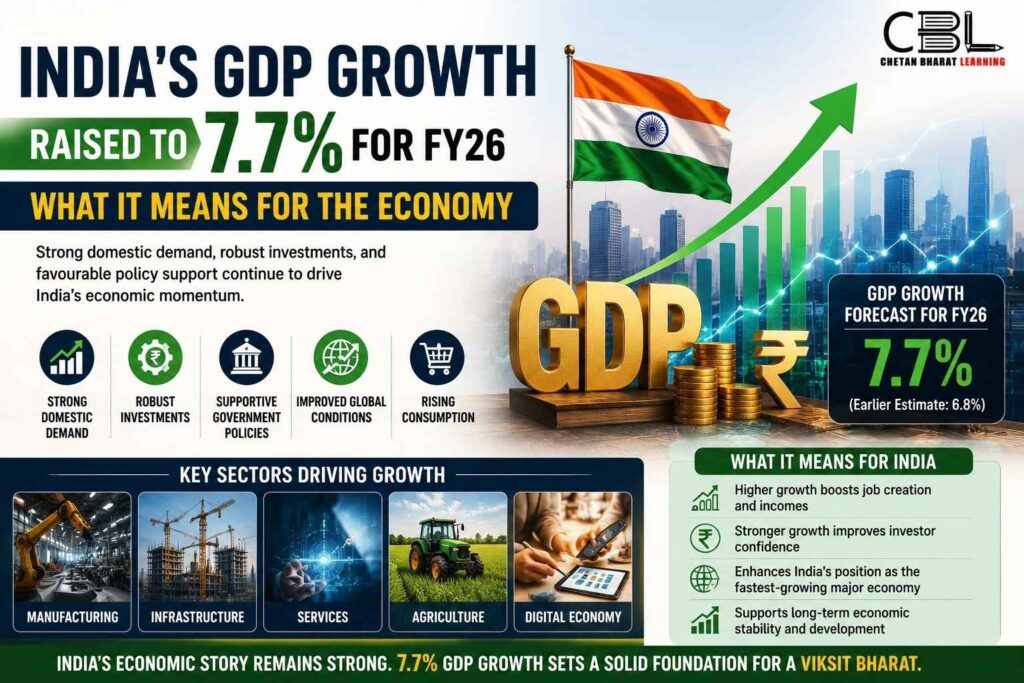
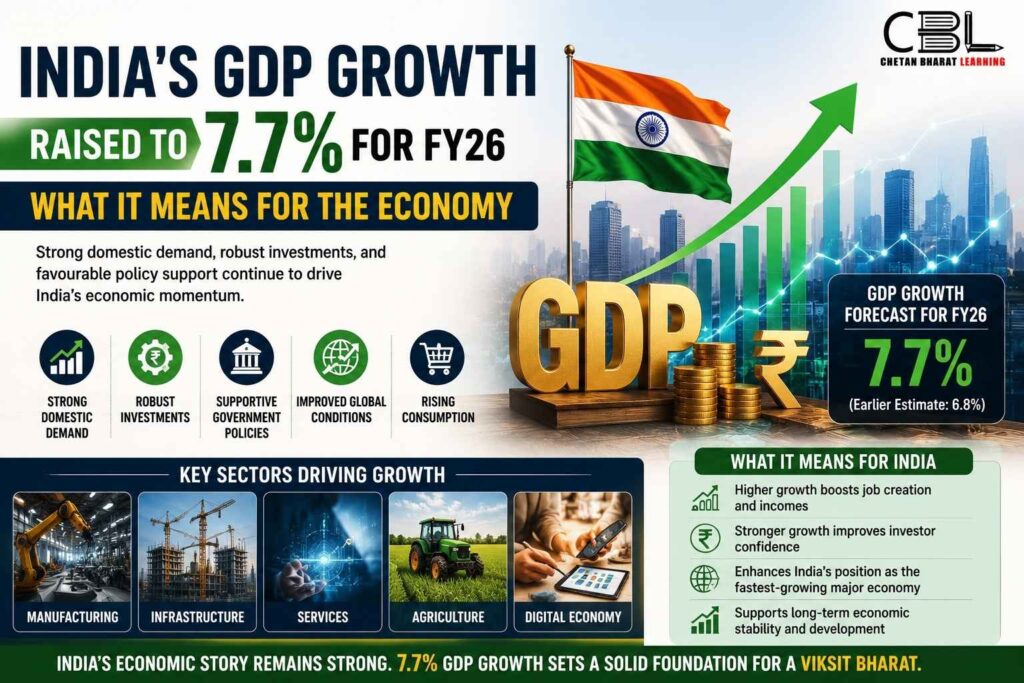
India’s economy has ended FY26 on a strong note, with the GDP growth estimate revised upward to 7.7%.
The revision reflects strong investment activity, resilient domestic demand, and continued economic momentum despite global uncertainties.
For UPSC aspirants, the development is important because it relates to economic growth, macroeconomic stability, investment trends, and India’s development trajectory.
What Happened?
According to the Ministry of Statistics and Programme Implementation (MoSPI), India’s GDP growth estimate for FY26 has been revised to 7.7%.
Key highlights include:
- Higher-than-expected economic growth.
- Strong investment activity.
- Continued domestic demand.
- Positive economic momentum.
- Resilience despite external challenges.
The revised estimate highlights the strength of the Indian economy in a challenging global environment.
What Is GDP?
Gross Domestic Product (GDP) measures the total value of goods and services produced within a country during a specific period.
GDP is one of the most important indicators of economic performance because it reflects:
- Economic activity
- Income generation
- Employment opportunities
- Investment trends
- Overall development
A higher GDP growth rate generally indicates a growing economy.
What Drove the Growth?
Several factors contributed to the upward revision in GDP growth.
Strong Investment Activity
Higher public and private investments played a significant role in supporting growth.
Infrastructure spending and capital expenditure helped boost economic activity.
Resilient Domestic Demand
Strong consumption demand continued to support economic expansion.
Increased spending by households contributed to overall growth.
Government Reforms
Policy measures aimed at improving business conditions and infrastructure development supported economic momentum.
Stable Macroeconomic Environment
Controlled inflation and improved fiscal management also contributed to positive growth outcomes.
Impact on the Indian Economy
The higher GDP growth estimate can have several positive effects.
Increased Investor Confidence
Strong growth attracts domestic and foreign investors.
Higher Employment Opportunities
Economic expansion often leads to job creation across sectors.
Better Revenue Collection
Higher economic activity can increase government revenues.
Stronger Global Position
Sustained growth enhances India’s position among major global economies.
Challenges Ahead
Despite strong performance, certain risks remain.
Global Economic Slowdown
Weak growth in major economies could affect exports and investment flows.
Geopolitical Uncertainties
Conflicts and geopolitical tensions may impact global markets.
Inflationary Pressures
Rising prices could affect consumer spending and economic stability.
External Sector Risks
Changes in global trade and financial conditions remain important concerns.
Why Is This Important for UPSC?
The topic is relevant under:
- Indian Economy
- Economic Development
- Growth and Development
- Fiscal Policy
- Investment and Infrastructure
- Current Affairs
Questions on GDP, economic indicators, and growth trends are frequently asked in UPSC examinations.
Way Forward
To sustain high growth rates, India should focus on:
- Encouraging private investment
- Expanding infrastructure development
- Promoting manufacturing
- Enhancing employment generation
- Strengthening exports
A balanced growth strategy can help maintain long-term economic progress.
Prelims Pointers
| Topic | Key Fact |
|---|---|
| Indicator | GDP |
| Growth Estimate | 7.7% |
| Financial Year | FY26 |
| Agency | MoSPI |
| Driver | Investment Growth |
Mains Perspective
Possible UPSC Question
“Discuss the factors responsible for India’s strong GDP growth performance. Examine the challenges to sustaining high economic growth in the coming years.”
Key Dimensions
- Investment-led growth
- Infrastructure development
- Domestic demand
- Employment generation
- Macroeconomic stability
- Global economic risks
Frequently Asked Questions
What is GDP?
GDP measures the total value of goods and services produced within a country.
What is India’s revised GDP growth estimate for FY26?
The estimate has been revised upward to 7.7%.
What contributed to the growth?
Strong investments, domestic demand, and supportive government policies.
Why is GDP growth important?
It reflects economic performance and influences employment, income, and development.
Conclusion
India’s revised GDP growth estimate of 7.7% highlights the resilience and strength of the country’s economy.
Driven by investments, domestic demand, and policy support, the growth momentum reinforces India’s position as one of the fastest-growing major economies. However, sustaining this performance will require continued reforms and effective management of global and domestic challenges.
For More UPSC Current Affairs
Stay updated with the latest developments in economy, governance, and public policy through UPSC Coaching in Chandigarh and IAS Coaching in Chandigarh at Chetan Bharat Learning.
Related Current Affairs
Preparing for UPSC, PCS or HCS?
Talk to a mentor at Chetan Bharat Learning, Chandigarh. Free guidance on choosing the right exam and building a study plan.
Chat on WhatsAppCall 97793 53345UPSC / IAS / PCS coaching in Chandigarh · Trusted by aspirants across Punjab & Haryana
Leave a Reply
You must be logged in to post a comment.