
Important for:
UPSC, Haryana HCS, Punjab PCS
Prelims: Model Code of Conduct (MCC), Representation of People Act
Mains: GS Paper 2 — Elections, Governance, Constitutional Bodies
Why in News?
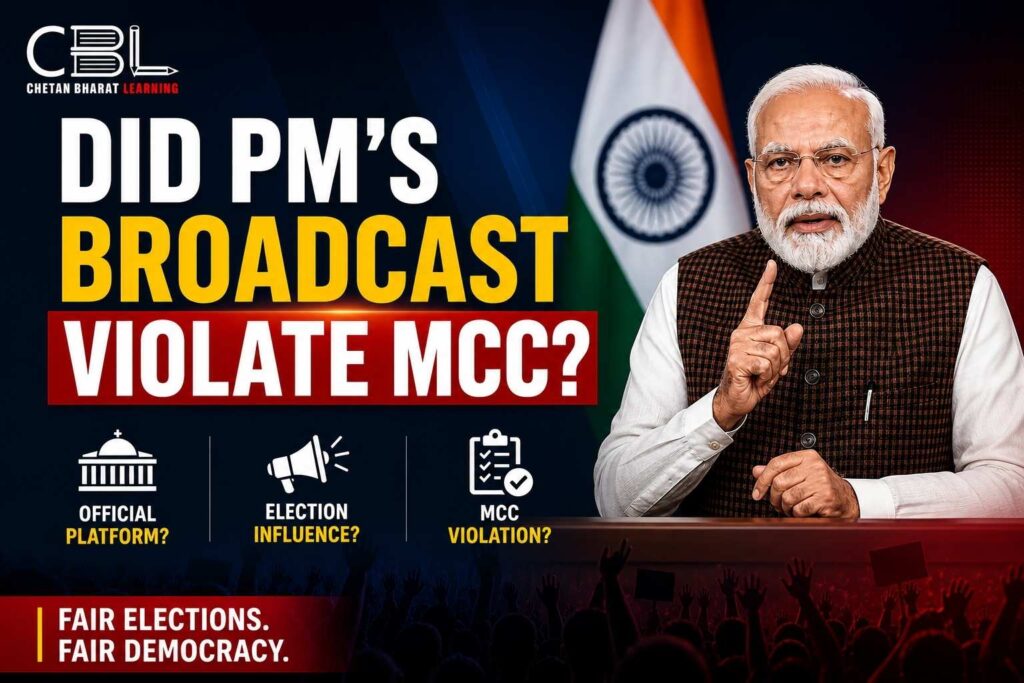
A political controversy has emerged over whether the Prime Minister’s broadcast during elections violated the Model Code of Conduct (MCC) and election laws regarding the use of public resources.
What is Model Code of Conduct (MCC)?
➤ MCC is a set of guidelines:
- Ensures free and fair elections
- Applies to political parties and candidates
✔ Comes into force after election announcement
✔ Prevents misuse of government machinery
Legal Provisions Involved
1. Representation of People Act, 1951
- Governs election conduct
2. Section 123
➤ Includes:
- Appeal to voters using religion, caste, etc.
- Misuse of official machinery
3. Role of Election Commission
➤ Ensures compliance with MCC
➤ Can issue notices, warnings, or bans
What is the Controversy?
➤ Issue Raised
- PM’s speech broadcast on:
- Doordarshan
- All India Radio
➤ Allegation
→ Public resources used for political messaging
➤ Legal Question
→ Does this count as:
- Campaigning using state machinery?
- Violation of MCC?
What Does the Law Say?
- MCC prohibits misuse of official resources
- But:
- Not every speech qualifies as violation
- Context and intent matter
Why Has Election Commission Not Acted Yet?
➤ Possible reasons:
- Legal interpretation complexity
- Need for evidence
- Grey area in law
Why is This Important?
1. Electoral Fairness
Ensures level playing field
2. Misuse of Public Resources
Key governance issue
3. Institutional Role
Strength of Election Commission
4. Constitutional Ethics
Maintains democratic values
➤ Concerns
- Lack of clarity in law
- Possible misuse of power
- Delayed action by institutions
Global Context
Many democracies restrict:
→ Use of state media for political campaigns
India-Specific Insight
- MCC is not legally binding law
- But highly influential in elections
Key Insight for UPSC
➤ Important theme:
✔ Democracy + Electoral integrity
PREPARTION For Aspirants
➤ If you are preparing through
UPSC coaching Chandigarh or IAS coaching Chandigarh,
this topic is extremely important for:
✔ GS Paper 2 answer writing
✔ Ethics + governance case studies
✔ Prelims factual questions
PRELIMS PRACTICE QUESTIONS
Q1. MCC is issued by:
A. Parliament
B. Election Commission
C. Supreme Court
D. President
⇢ Answer: B
Q2. MCC comes into force:
A. After elections
B. Before elections
C. After announcement of elections
D. During voting
⇢ Answer: C
Q3. Section 123 relates to:
A. Taxes
B. Corrupt practices
C. Banking
D. Judiciary
⇢ Answer: B
Q4. MCC is:
A. Law
B. Guideline
C. Constitution
D. Rule book
⇢ Answer: B
Q5. Election Commission ensures:
A. Tax collection
B. Fair elections
C. Banking rules
D. Trade
⇢ Answer: B
CBL Mains Practice Question
“Model Code of Conduct plays a crucial role in maintaining electoral integrity, but its non-statutory nature limits its effectiveness.” Discuss.
FAQs
1. What is MCC?
Guidelines to ensure free and fair elections.
2. Is MCC legally binding?
No, but it is enforced by Election Commission.
3. What is the controversy?
Use of public broadcast for political messaging.
4. Who monitors elections?
Election Commission of India.
5. Which GS paper covers this?
GS Paper 2.
Related Current Affairs
Preparing for UPSC, PCS or HCS?
Talk to a mentor at Chetan Bharat Learning, Chandigarh. Free guidance on choosing the right exam and building a study plan.
Chat on WhatsAppCall 97793 53345UPSC / IAS / PCS coaching in Chandigarh · Trusted by aspirants across Punjab & Haryana
Leave a Reply
You must be logged in to post a comment.