
Important for:
UPSC, Haryana HCS, Punjab PCS
Prelims: Mental health, stress, resilience
Mains: GS Paper 1 & 4 — Society, Education, Ethics
Why in News?
Concerns are rising over student mental health, especially in highly competitive academic environments, highlighting the need to focus not just on academic success but also on emotional well-being.
Key Concept: Distress vs Mental Health
➤ Distress is:
- A natural part of life
➤ Problem arises when:
- It becomes overwhelming
- Students lack coping mechanisms
Major Issues Highlighted
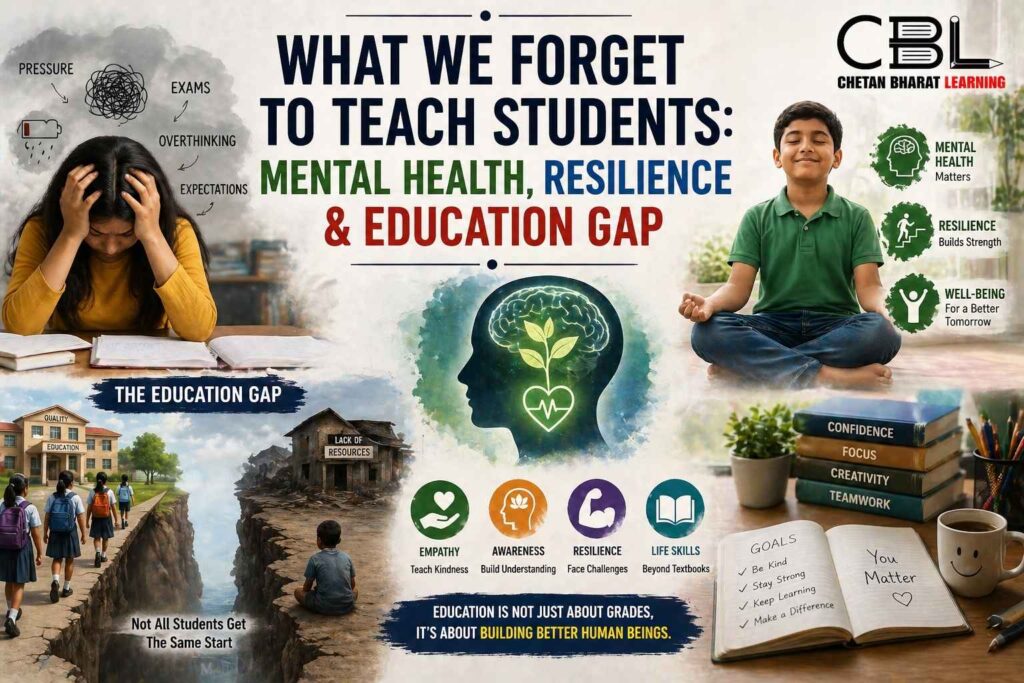
1. Extreme Academic Pressure
- Competitive exams
- Performance expectations
2. Lack of Emotional Training
- Students not taught:
- Coping mechanisms
- Stress management
3. Social Comparison
- Constant comparison with peers
- Leads to:
→ Low self-esteem
4. Silence Around Mental Health
- Students hesitate to:
→ Seek help
Big Fish–Little Pond Effect
- Students in competitive environments:
→ Feel less capable - Even high achievers:
→ Experience low self-worth
Core Argument of Article
➤ Education system focuses on:
- Marks
- Achievement
❌ But ignores:
- Emotional resilience
- Failure handling
- Mental strength
Why This Matters
- Impacts:
- Youth mental health
- Productivity
- Social well-being
India-Specific Context
- Highly competitive exam culture
- Coaching ecosystem
- Rising cases of:
→ Student anxiety and distress
Way Forward
- Integrate:
- Mental health education
- Emotional intelligence training
- Encourage:
- Open conversations
- Counseling support
Ethics Dimension (GS4)
➤ Key values:
- Self-awareness
- Emotional intelligence
- Resilience
- Empathy
PRELIMS PRACTICE QUESTIONS
Q1. Distress refers to:
A. Mental illness only
B. Natural emotional stress
C. Physical disease
D. Economic problem
✅ Answer: B
Q2. Big Fish–Little Pond effect relates to:
A. Economy
B. Self-esteem in competitive environments
C. Agriculture
D. Climate change
✅ Answer: B
Q3. Which of the following improves mental health?
- Counseling
- Emotional awareness
- Ignoring stress
A. 1 and 2 only
B. 2 only
C. 1 only
D. 1, 2 and 3
✅ Answer: A
Q4. Emotional intelligence refers to:
A. IQ
B. Managing emotions
C. Physical strength
D. Memory
✅ Answer: B
Q5. Student stress is mainly due to:
A. Lack of education
B. Academic pressure
C. Climate change
D. Trade
✅ Answer: B
CBL Mains Practice Question
“India’s education system focuses more on achievement than emotional well-being.”
Critically examine and suggest reforms.
FAQs
1. What is the main issue discussed?
Student mental health and lack of emotional education.
2. What is distress?
A natural emotional response to challenges.
3. Why is student stress increasing?
Due to competition and expectations.
4. What is the solution?
Teach resilience and coping mechanisms.
5. Which GS paper covers this topic?
GS Paper 1 & GS Paper 4.
Related Current Affairs
Preparing for UPSC, PCS or HCS?
Talk to a mentor at Chetan Bharat Learning, Chandigarh. Free guidance on choosing the right exam and building a study plan.
Chat on WhatsAppCall 97793 53345UPSC / IAS / PCS coaching in Chandigarh · Trusted by aspirants across Punjab & Haryana
Leave a Reply
You must be logged in to post a comment.