
Tropical cyclone naming is in focus as Cyclone Murasu strengthens over the Bay of Bengal. For related developments, see CBL’s geography and environment coverage.
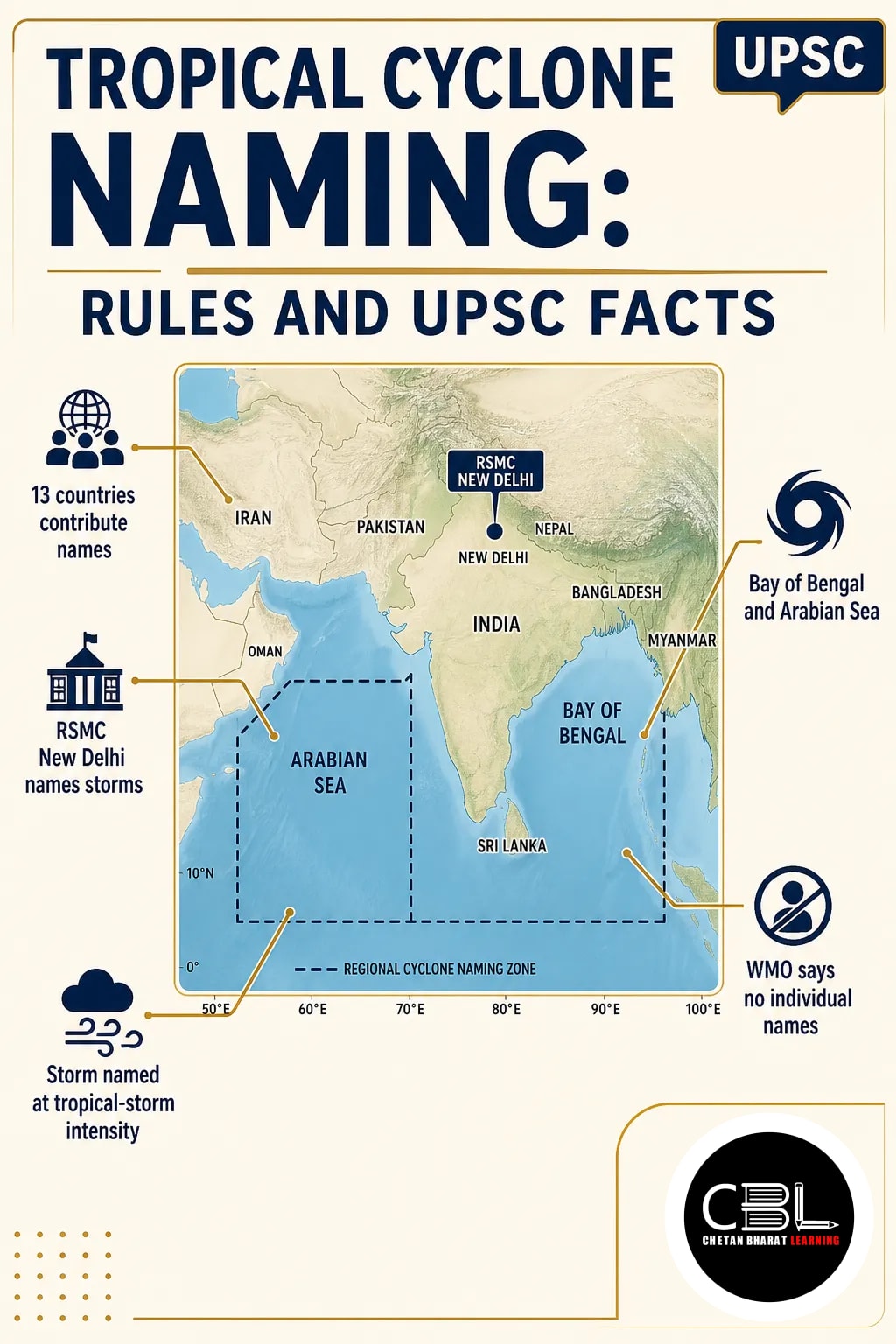
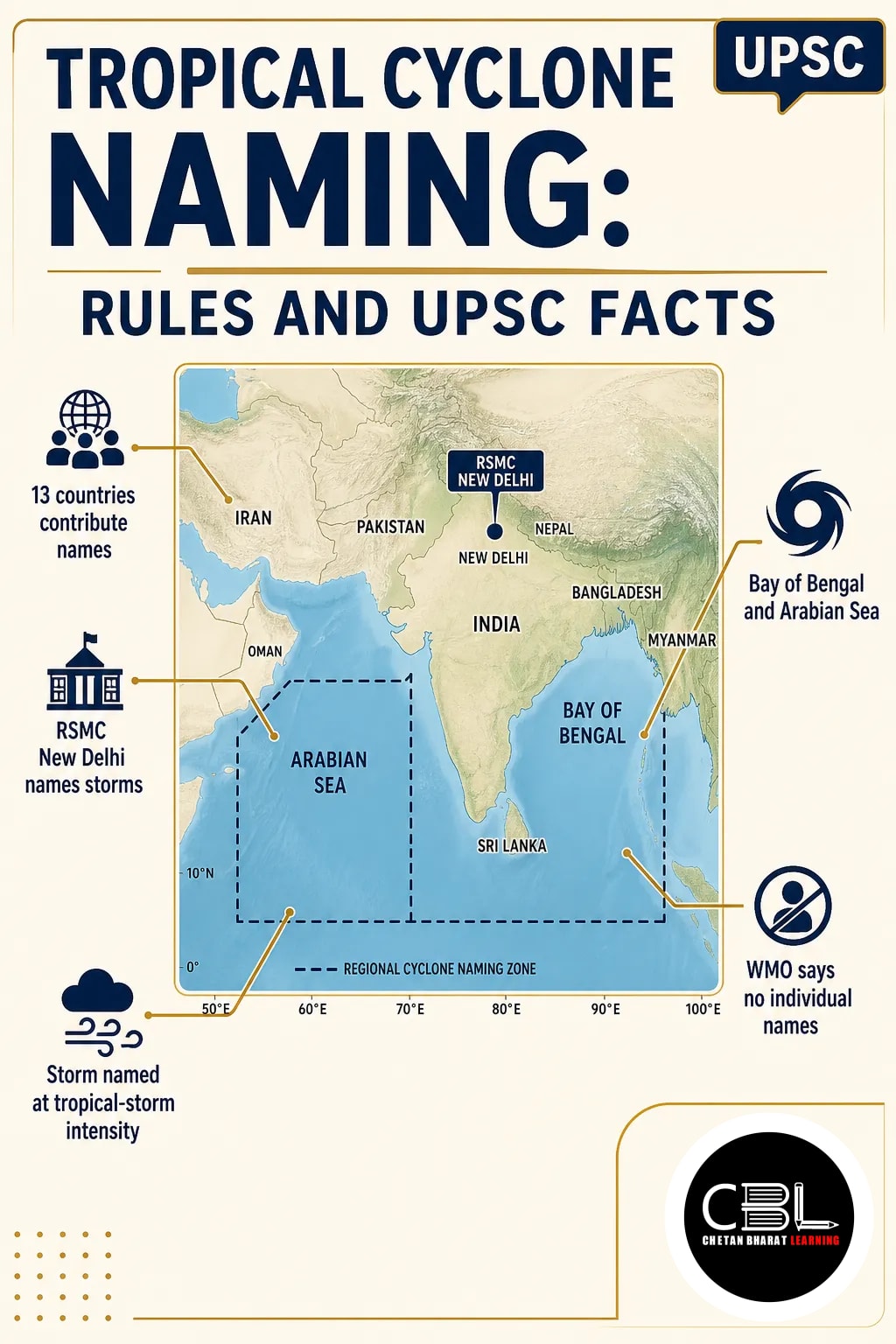
Quick answer: Tropical cyclone naming uses pre-designated regional lists to identify storms. In the northern Indian Ocean, 13 countries contribute names, while the New Delhi regional centre names eligible storms over the Bay of Bengal and Arabian Sea. The process is relevant to Cyclone Murasu, which intensified on 2 November 2026.
How does tropical cyclone naming work?
Regional tropical cyclone bodies establish advance lists and procedures for naming storms. According to the World Meteorological Organisation (WMO), they determine names at annual or biennial sessions.
Procedures differ across regions. For example, some use alphabetical order, while others follow the alphabetical order of country names. No tropical cyclone is named after an individual, according to the WMO.
| Fact | Details |
|---|---|
| Naming centre | Regional Specialised Meteorological Centre (RSMC), New Delhi |
| Areas covered | Bay of Bengal and Arabian Sea |
| Regional list | Names contributed by 13 northern Indian Ocean countries |
| Naming condition | The storm reaches the relevant intensity |
Which countries contribute names?
Thirteen countries contribute names for northern Indian Ocean cyclones, which follow a cyclical sequence.
They are Bangladesh, India, Iran, Maldives, Myanmar, Oman, Pakistan, Qatar, Saudi Arabia, Sri Lanka, Thailand, the United Arab Emirates and Yemen. However, contributing a name differs from assigning it to a particular storm: the New Delhi centre performs the latter role for the two seas.
Why is cyclone naming in the news?
Cyclone Murasu intensified into a Severe Cyclonic Storm on 2 November 2026. It lay over the west-central and adjoining southwest Bay of Bengal.
The India Meteorological Department (IMD) forecast a crossing near Ongole on the south Andhra Pradesh coast. It expected winds of 100–110 km/h, gusting to 120 km/h. For the earlier forecast, see CBL’s Murasu landfall explainer.
Murasu followed Cyclone Arnab, which had hit the Andhra Pradesh coast. See also the Arnab alert and formation notes.
How are tropical storms classified?
Classification depends on a storm’s maximum sustained wind speed. The source describes a tropical depression as having winds below 63 km/h and a tropical storm as having winds above 63 km/h.
At tropical-storm intensity, the system also receives a name. Moreover, terminology varies by ocean basin: such storms can be called hurricanes or typhoons. Compare the regional terminology in CBL’s typhoon formation and naming explainer.
Why does naming matter?
Names help identify individual storms in forecasts and warnings. Therefore, students should distinguish a storm’s name from its intensity category and forecast location.
Source: The Hindu, 2 November 2026
- Cyclone Murasu: Landfall Forecast and UPSC Facts (1 Nov 2026)
- Cyclone Arnab 2026: IMD Alert, Formation & UPSC (28 Oct 2026)
- Typhoon Noul: Formation, Naming and UPSC Current Affairs (29 Jul 2026)
Asked in UPSC: Previous Year Questions
- UPSC CSE Mains 2024 (GS Paper I): What is sea surface temperature rise? How does it affect the formation of tropical cyclones?
UPSC also tests cyclone formation, so revise physical processes alongside naming rules.
State PCS General Studies can test the naming centre, participating countries and regional cyclone terminology. Also revise storm classification alongside basic physical geography.
Prelims Practice Corner
Mains Practice Questions
Frequently Asked Questions
Who names cyclones in the Bay of Bengal?
RSMC New Delhi names eligible cyclones in the Bay of Bengal. It also names eligible storms over the Arabian Sea.
How many countries contribute cyclone names in the northern Indian Ocean?
Thirteen countries contribute names. They include India, Bangladesh, Oman and Thailand, among others.
Are cyclones named after individuals?
No, according to the WMO, tropical cyclones are not named after individuals. Instead, regional bodies use pre-designated lists.
Related Current Affairs
Preparing for UPSC, PCS or HCS?
Talk to a mentor at Chetan Bharat Learning, Chandigarh. Free guidance on choosing the right exam and building a study plan.
Chat on WhatsAppCall 97793 53345UPSC / IAS / PCS coaching in Chandigarh · Trusted by aspirants across Punjab & Haryana

 Ananya RanaIAS · AIR 60
 Aditya SharmaIAS · AIR 70
 Ria Kaur SethiIPS · AIR 89
 Aman AloonIRS · AIR 295
 Sumer Singh VirkIRS · AIR 335
 Shivani PanchalIAS

Leave a Reply
You must be logged in to post a comment.