
UPSC Mapping
Prelims
- Typhoon
- Tropical Cyclones
- Ocean Basins
Mains
- GS Paper I – Geography
- GS Paper III – Disaster Management
Quick Facts
| Origin | Philippine Sea |
|---|---|
| Landfall | Guangdong, China |
| Name Origin | South Korea (‘Glow of Sunrise/Sunset’) |
What is Typhoon Noul?
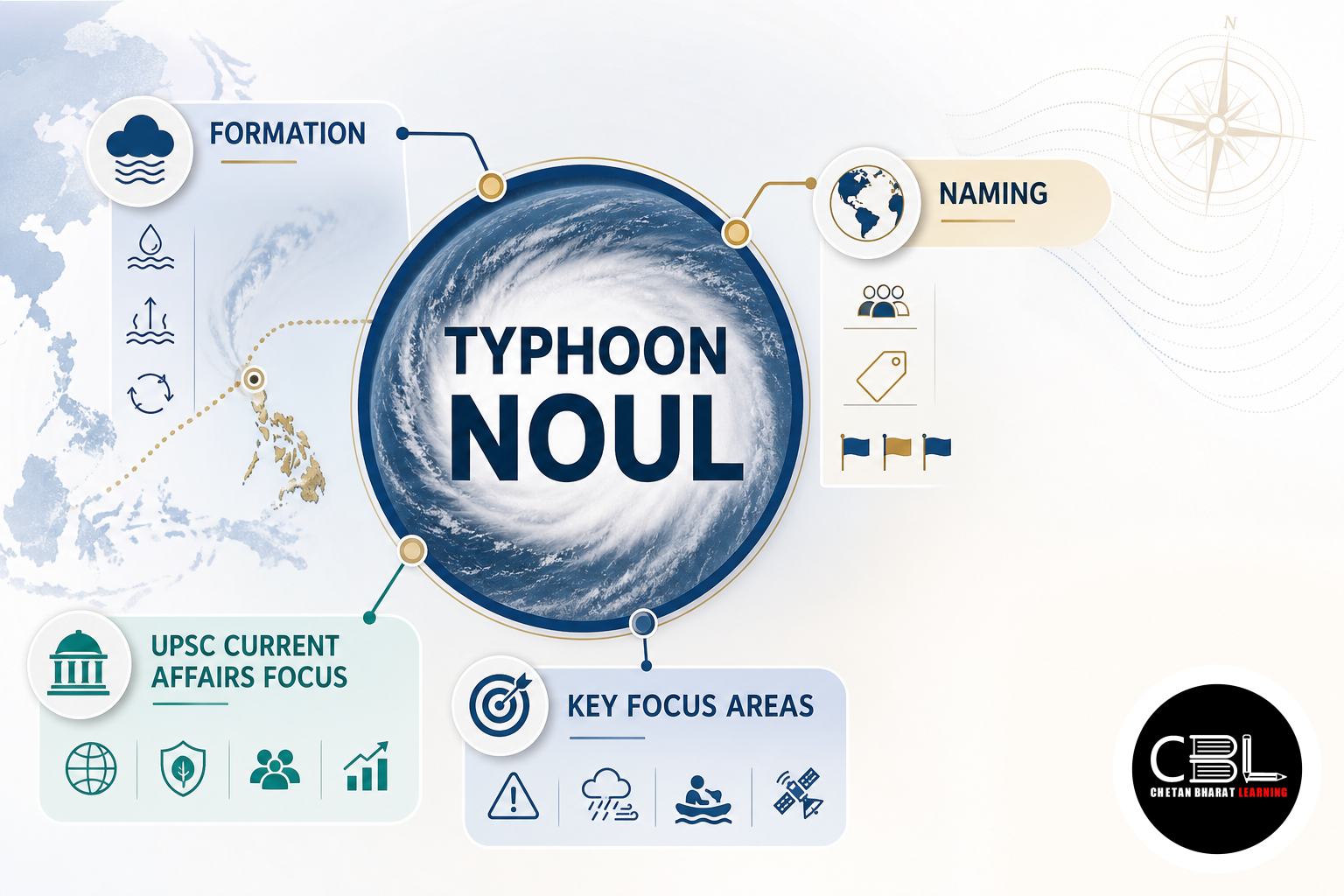
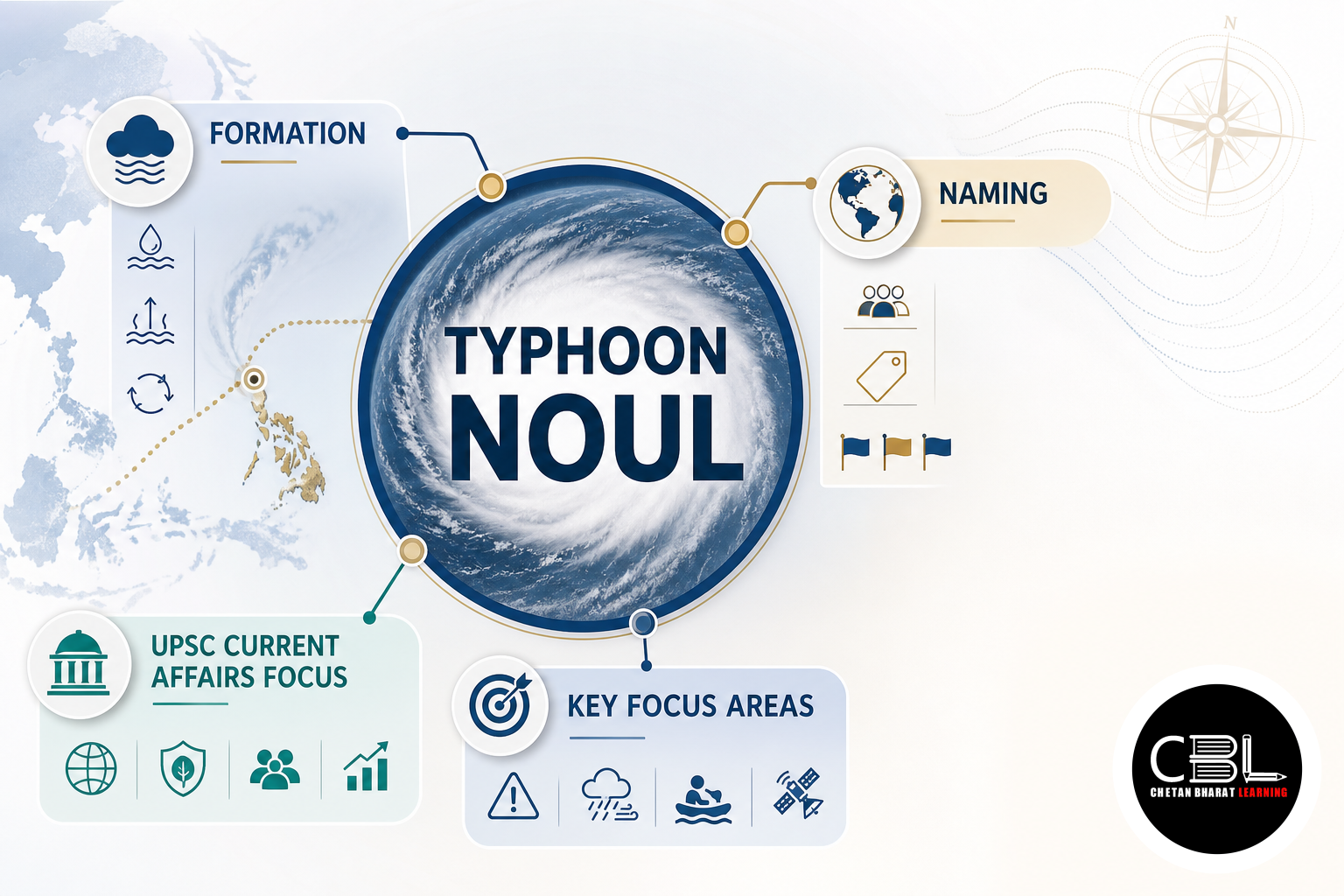
Typhoon Noul is a tropical cyclone that developed over the Philippine Sea in the northwestern Pacific Ocean before making landfall in Guangdong Province, China. The name ‘Noul’ was contributed by South Korea and means ‘the glow of sunrise or sunset’.
Tropical cyclones are intense low-pressure systems characterised by strong winds, heavy rainfall and spiralling cloud bands. They derive their energy from warm ocean waters and weaken after moving over land or cooler seas.
Why is Typhoon Noul in News?
Typhoon Noul recently made landfall in southern China’s Guangdong Province after originating in the western North Pacific. The event has renewed attention on tropical cyclone monitoring, early warning systems and regional disaster preparedness.
The development is also important for UPSC because questions frequently test the different regional names used for tropical cyclones across ocean basins.
Key Features
- Typhoon: Tropical cyclones forming over the northwestern Pacific Ocean are called typhoons.
- Hurricane: Similar storms in the North Atlantic and northeastern Pacific are known as hurricanes.
- Cyclone: Storms developing over the North Indian Ocean and South Pacific are generally called cyclones.
- Formation Conditions: Warm sea-surface temperatures, abundant moisture, Coriolis force and low vertical wind shear favour tropical cyclone development.
- Hazards: Heavy rainfall, storm surge, strong winds, flooding and coastal erosion are the major impacts.
Challenges
- Coastal Flooding: Storm surges inundate low-lying coastal regions.
- Infrastructure Damage: High winds damage buildings, transport and power infrastructure.
- Heavy Rainfall: Flash floods and landslides frequently accompany landfall.
- Economic Losses: Agriculture, fisheries and trade suffer significant disruption.
- Climate Variability: Warmer oceans may increase the intensity of some tropical cyclones, even though cyclone frequency may not uniformly increase.
Way Forward
Strengthening early warning systems, resilient infrastructure, coastal ecosystem restoration and disaster preparedness remains essential for reducing cyclone-related losses. International cooperation also improves forecasting and information sharing across ocean basins.
India continues to strengthen cyclone preparedness through improved forecasting, evacuation planning and disaster response mechanisms. Official weather information is available through India Meteorological Department.
Prelims Practice Corner
-
Q1. A tropical cyclone over the northwestern Pacific Ocean is known as:
(a) Cyclone (b) Hurricane (c) Typhoon (d) Tornado
Answer: (c) Typhoon.
-
Q2. Typhoon Noul originated over the:
(a) Arabian Sea (b) Bay of Bengal (c) Philippine Sea (d) South China Sea
Answer: (c) Philippine Sea.
-
Q3. The name ‘Noul’ was contributed by:
(a) Japan (b) China (c) South Korea (d) Vietnam
Answer: (c) South Korea.
-
Q4. Hurricanes occur mainly over the:
(a) North Atlantic and northeastern Pacific (b) North Indian Ocean (c) Southern Ocean (d) Arctic Ocean
Answer: (a) North Atlantic and northeastern Pacific.
-
Q5. Which condition is essential for tropical cyclone formation?
(a) Cold ocean water (b) Warm sea-surface temperatures (c) Snow cover (d) High atmospheric pressure
Answer: (b) Warm sea-surface temperatures.
Mains Practice Questions
-
Q1. Explain the geographical conditions necessary for the formation of tropical cyclones. Discuss their socio-economic impacts. (10 Marks)
Answer Structure:
- Intro: Define tropical cyclones.
- Body: Formation conditions, hazards, disaster preparedness.
- Conclusion: Highlight climate resilience and early warning systems.
-
Q2. Differentiate between hurricanes, typhoons and cyclones. Why are regional naming conventions important? (15 Marks)
Answer Structure:
- Intro: Explain tropical cyclone terminology.
- Body: Ocean basins, naming conventions, forecasting and disaster management.
- Conclusion: Emphasise international cooperation in weather monitoring.
FAQs on Typhoon Noul
- What is Typhoon Noul?
- Typhoon Noul is a tropical cyclone that formed over the Philippine Sea in the northwestern Pacific Ocean and later made landfall in Guangdong Province, China.
- Why are tropical cyclones called different names?
- The same weather system is given different regional names depending on the ocean basin in which it forms, such as hurricane, typhoon or cyclone.
- Why is this topic important for UPSC?
- Questions on tropical cyclone formation, naming conventions and disaster management are frequently asked in both UPSC Prelims and Mains.
Related Current Affairs
Preparing for UPSC, PCS or HCS?
Talk to a mentor at Chetan Bharat Learning, Chandigarh. Free guidance on choosing the right exam and building a study plan.
Chat on WhatsAppCall 97793 53345UPSC / IAS / PCS coaching in Chandigarh · Trusted by aspirants across Punjab & Haryana
Leave a Reply
You must be logged in to post a comment.