
UPSC Mapping
| Exam Area | Relevant Points |
|---|---|
| Prelims | IEA, OECD, Oil Crisis of 1973-74, Strategic Oil Reserves and Energy Reports |
| Mains | GS Paper 2: International Institutions; GS Paper 3: Energy Security and Economy |
Article
The International Energy Agency (IEA) has recently indicated that global oil markets could return to more normal conditions next year as geopolitical and supply-related pressures evolve. The IEA chief made these remarks amid continued concerns about elevated energy prices, supply disruptions and international market uncertainty. The development highlights the agency’s role in monitoring global energy markets and supporting energy security. It is relevant for UPSC current affairs preparation under international organisations, energy security, economics and climate policy.
The agency works with governments and industry stakeholders to improve energy security and promote sustainable energy policies. Its analysis influences discussions about petroleum markets, energy transitions and global economic resilience.
Prelims Package
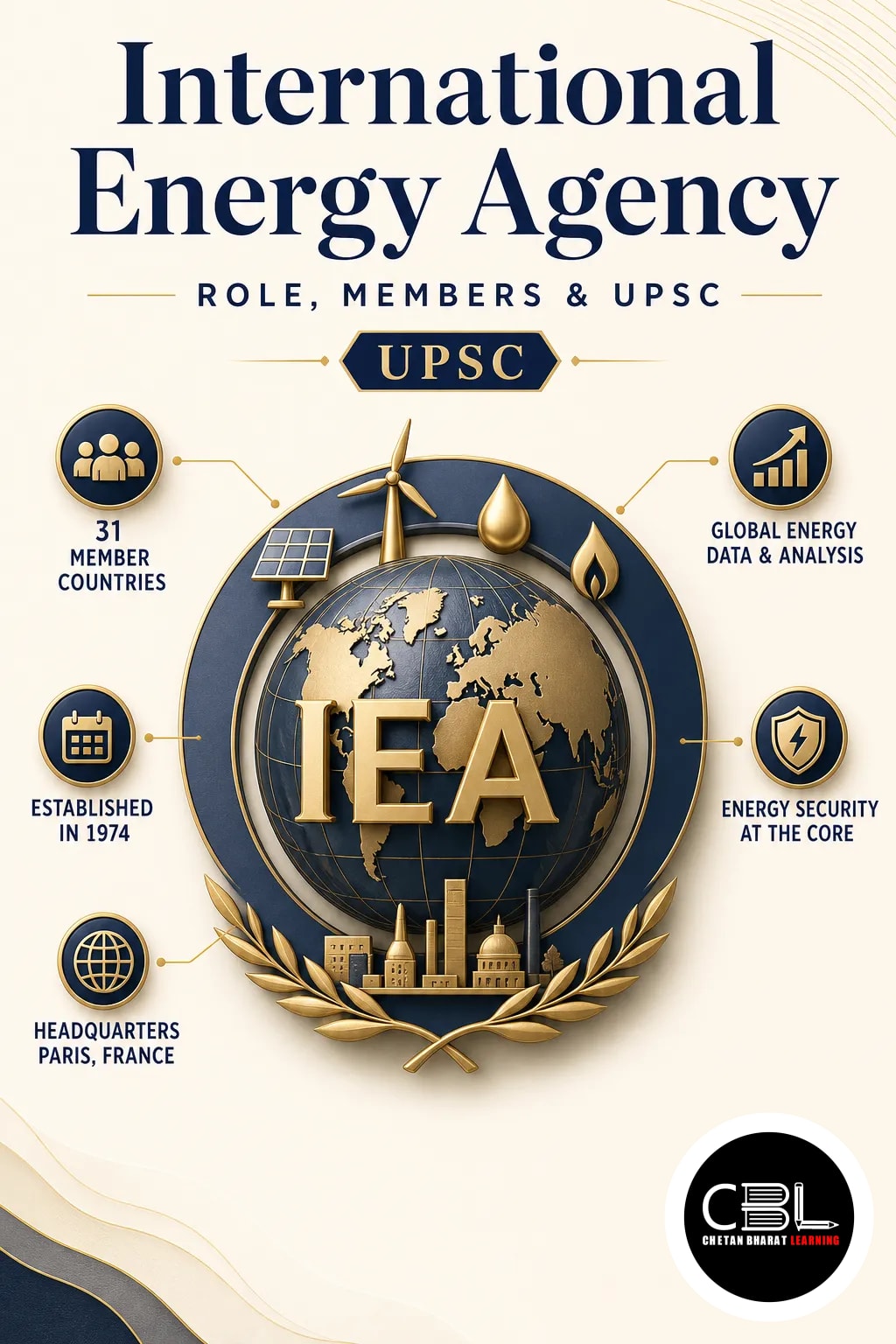
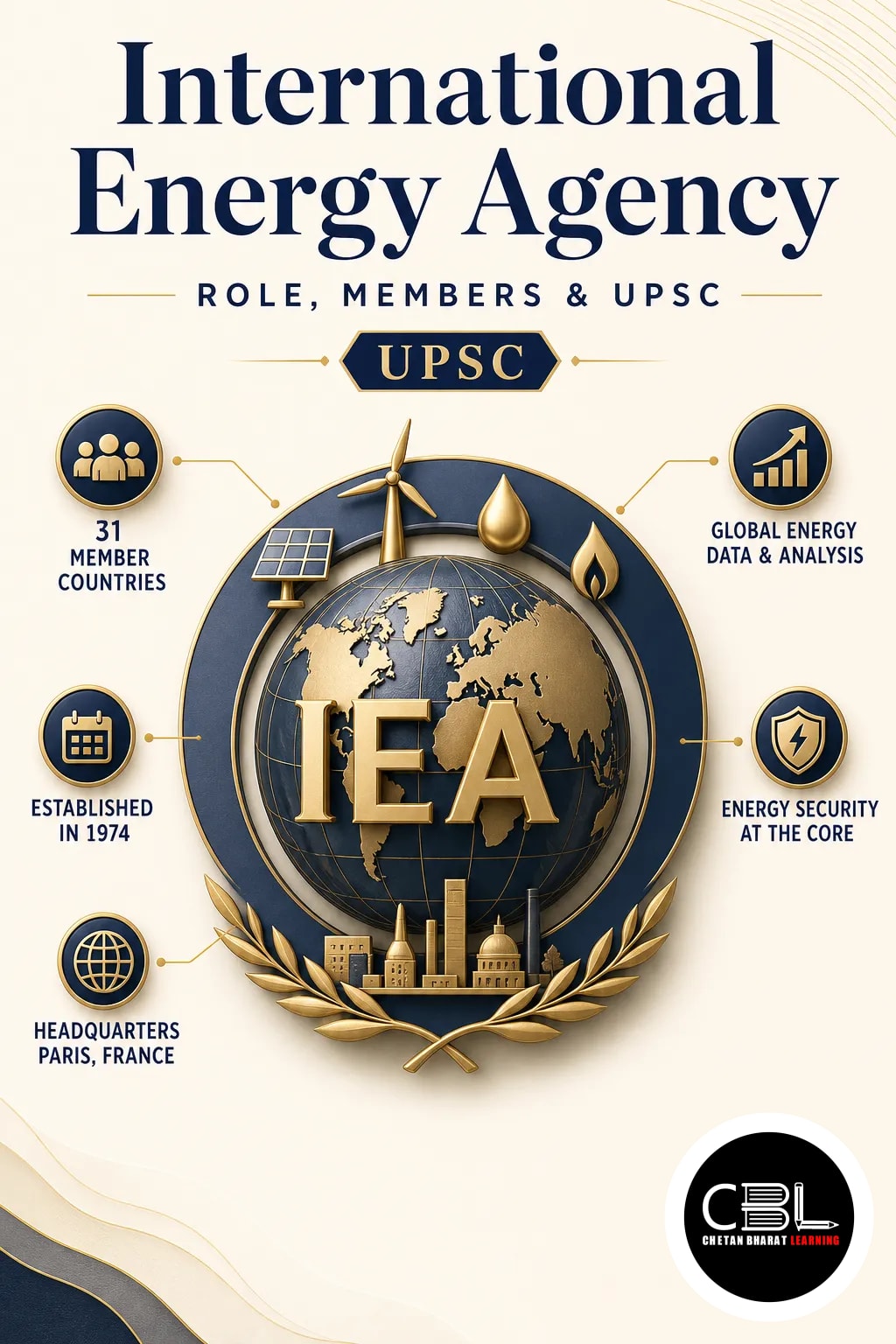
Established: 1974
Headquarters: Paris, France
Institutional Framework: OECD Framework
India’s Status: Association Country Since 2017
Quick Facts
| Topic | Details |
|---|---|
| Organisation | International Energy Agency |
| Nature | Autonomous intergovernmental organisation |
| Origin | Created in response to the 1973-74 oil crisis |
| Work Areas | Energy security, market analysis, policy advice, clean energy, efficiency |
Major Reports
| Report | Primary Focus |
|---|---|
| World Energy Outlook | Long-term global energy trends, policy scenarios and future energy requirements. |
| World Energy Investment | Investment trends across conventional energy, electricity and clean energy technologies. |
| Oil Market Report | Developments in international oil demand, supply, inventories and market balances. |
| Energy Technology Perspectives | Emerging energy technologies, innovation and pathways for energy transitions. |
Mains Package
1. Strengthening Energy Security
India imports a large share of the crude oil it consumes. International supply disruptions can affect domestic fuel costs and broader economic stability. IEA research supports understanding of supply risks, demand trends and emergency preparedness.
2. Supporting Clean Energy Development
India is expanding renewable energy capacity and exploring cleaner technologies. International technical cooperation can support research, investment and improved energy efficiency.
3. Improving Economic Planning
Energy prices influence transportation, manufacturing, agriculture and household expenditure. Reliable energy market data can help policymakers assess inflationary risks and economic vulnerabilities.
FAQs
What is the International Energy Agency?
The IEA is an autonomous intergovernmental organisation established in 1974 within the OECD framework. It promotes energy security, monitors energy markets and provides policy analysis to governments.
Where is the headquarters of the IEA?
The IEA is headquartered in Paris, France. It was established following the 1973-74 oil crisis to strengthen cooperation among energy-importing countries.
Is India a full member of the International Energy Agency?
No. India joined the IEA as an Association Country in 2017. This arrangement facilitates cooperation on energy security, analysis and clean energy policies without conferring full membership.
Related Current Affairs
Preparing for UPSC, PCS or HCS?
Talk to a mentor at Chetan Bharat Learning, Chandigarh. Free guidance on choosing the right exam and building a study plan.
Chat on WhatsAppCall 97793 53345UPSC / IAS / PCS coaching in Chandigarh · Trusted by aspirants across Punjab & Haryana
Leave a Reply
You must be logged in to post a comment.