

UPSC Mapping
| Prelims | International Relations |
|---|---|
| Mains | GS Paper II – International Relations, Security |
Quick Facts
| Occasion | Ukraine Independence Day |
|---|---|
| Location | Kyiv |
| Leaders | Nordic and British |
| Pledge | Military and missile support |
What is Ukraine Military Support?
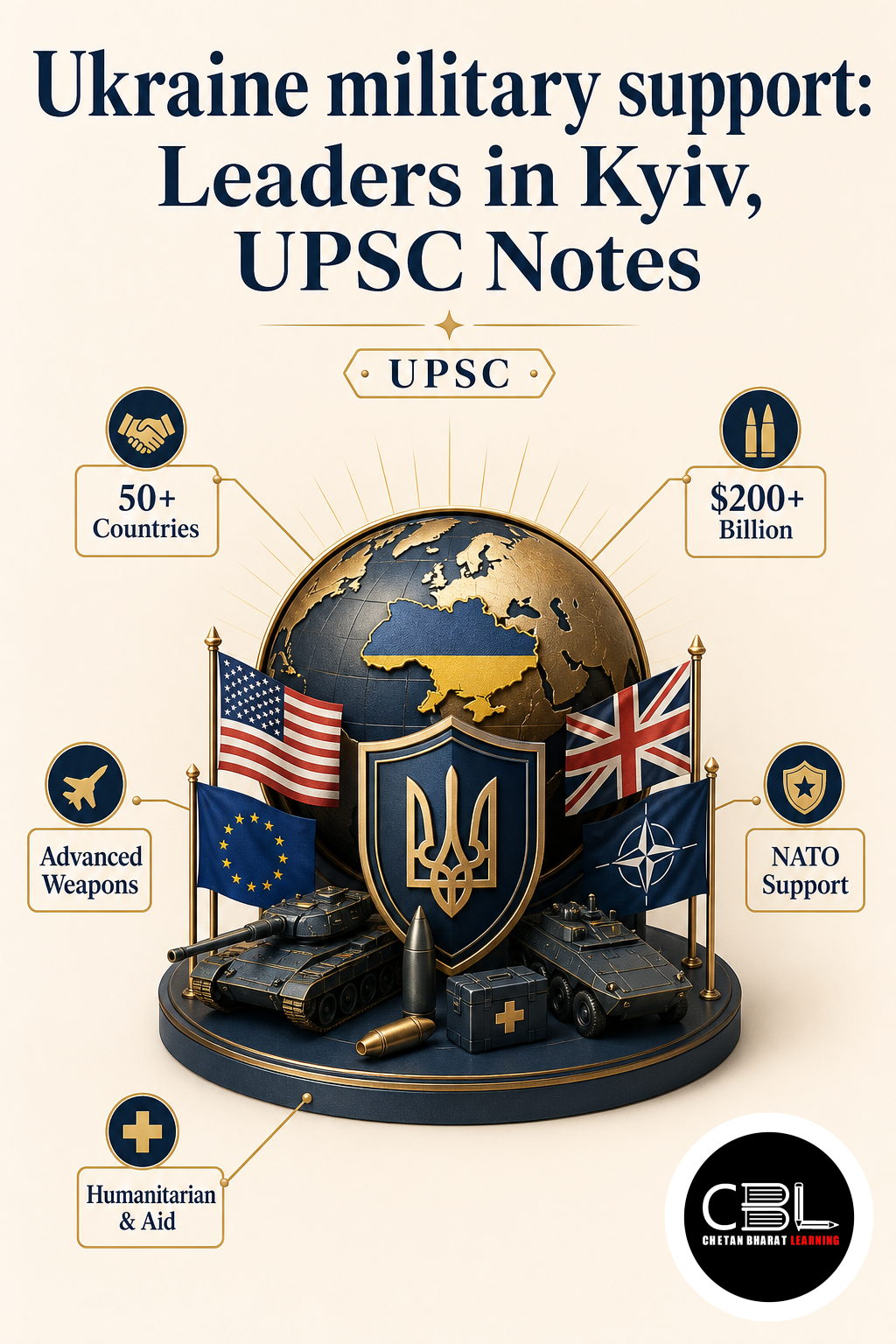
Ukraine military support refers to the military equipment, financial aid, training and security assistance provided to Ukraine by Western countries since the conflict with Russia escalated. It includes artillery, air defence systems, ammunition, missiles and intelligence support. The objective is to strengthen Ukraine’s ability to defend its territory and sovereignty.
Support packages are often announced during symbolic events such as Ukraine Independence Day to signal long-term political commitment. The arrival of Nordic and British leaders in Kyiv underlines that European governments remain engaged in the security situation. Such visits also serve to coordinate future assistance and reassure the Ukrainian government.
Why is Ukraine Military Support in News?
Ukraine military support is in news because Nordic and British leaders travelled to Kyiv to pledge ongoing military and missile support on Ukraine Independence Day. The timing gives the visit strong symbolic value and demonstrates continued Western unity. It also reflects the persistent demand for sophisticated weapons as the war continues.
The Al Jazeera report notes that such high-level visits reinforce the message that Kyiv retains international backing. The focus on missiles indicates an emphasis on long-range strike capacity and air defence.
Key Features
- Symbolic occasion: The visit took place on Ukraine Independence Day, highlighting political solidarity.
- High-level presence: Nordic and British leaders arrived in Kyiv to meet Ukrainian counterparts.
- Military commitment: The leaders pledged ongoing military support and missile supplies.
- European security focus: The presence of Nordic states reflects rising security concerns across northern Europe.
- Continued escalation: Fresh weapons commitments suggest no immediate diplomatic settlement is expected.
Challenges
- Prolonged conflict: Ongoing arms supplies can extend the war and delay negotiations.
- Regional escalation: Advanced missile systems may increase the risk of wider conflict in Europe.
- Economic burden: Sustaining military aid imposes long-term costs on donor governments.
- Humanitarian crisis: Continued hostilities worsen civilian displacement and infrastructure damage.
- Global food and energy effects: The conflict has already disrupted supply chains and price stability worldwide.
Way Forward
Military support should be paired with active diplomatic initiatives aimed at a negotiated ceasefire and long-term security arrangements. Donor countries need transparent reporting systems to track weapons use and prevent escalation beyond defensible needs. Humanitarian corridors and civilian protection must remain central to any assistance programme.
The United Nations can facilitate dialogue and monitor compliance with international humanitarian law. A balanced approach that combines deterrence with diplomacy offers the most realistic path toward reducing violence.
Prelims Practice Corner
Q1. Kyiv is the capital of which country?
- (a) Poland
- (b) Ukraine
- (c) Belarus
- (d) Moldova
Answer: (b) Ukraine.
Q2. Which leaders arrived in Kyiv on Ukraine Independence Day?
- (a) Nordic and British
- (b) South Asian and British
- (c) Latin American and German
- (d) African Union and French
Answer: (a) Nordic and British leaders.
Q3. The leaders pledged what type of support to Ukraine?
- (a) Food aid only
- (b) Military and missile support
- (c) Debt relief
- (d) Tourist visas
Answer: (b) Military and missile support.
Q4. Ukraine Independence Day is observed in which month?
- (a) June
- (b) July
- (c) August
- (d) September
Answer: (c) August.
Q5. Which term best describes the leaders’ visit?
- (a) Economic summit
- (b) Solidarity visit
- (c) Trade negotiation
- (d) Cultural exchange
Answer: (b) Solidarity visit.
Mains Practice Questions
Q1. Evaluate the role of Western military support in shaping the outcome of the Russia-Ukraine conflict. (15 marks)
Answer Structure:
- Intro: Mention the recent Kyiv visit and pledge of support.
- Body: Cover military aid, missile systems, diplomatic signals, escalation risks and humanitarian implications.
- Conclusion: Balance support with diplomacy for durable peace.
Q2. Discuss the strategic and economic consequences of the Russia-Ukraine war for Europe and the Global South. (10 marks)
Answer Structure:
- Intro: Contextualise the war and Western support.
- Body: Analyse energy costs, food supply, refugee flows, defence budgets and Global South diplomatic positions.
- Conclusion: Suggest multilateral cooperation for recovery.
FAQs on Ukraine Military Support
Who arrived in Kyiv on Ukraine Independence Day?
Nordic and British leaders arrived in Kyiv to pledge ongoing military and missile support.
What kind of support did the leaders pledge?
They pledged ongoing military support and missile supplies to Ukraine.
Why is this visit significant?
The visit is significant because it signals continued Western political and military support for Ukraine.
Related Current Affairs
Preparing for UPSC, PCS or HCS?
Talk to a mentor at Chetan Bharat Learning, Chandigarh. Free guidance on choosing the right exam and building a study plan.
Chat on WhatsAppCall 97793 53345UPSC / IAS / PCS coaching in Chandigarh · Trusted by aspirants across Punjab & Haryana
Leave a Reply
You must be logged in to post a comment.