
Punjab air quality experts have questioned claims that the state alone caused severe pollution in Delhi and Lahore. The discussion is relevant to Punjab current affairs because wind patterns, local emissions and monitoring all affect pollution readings.
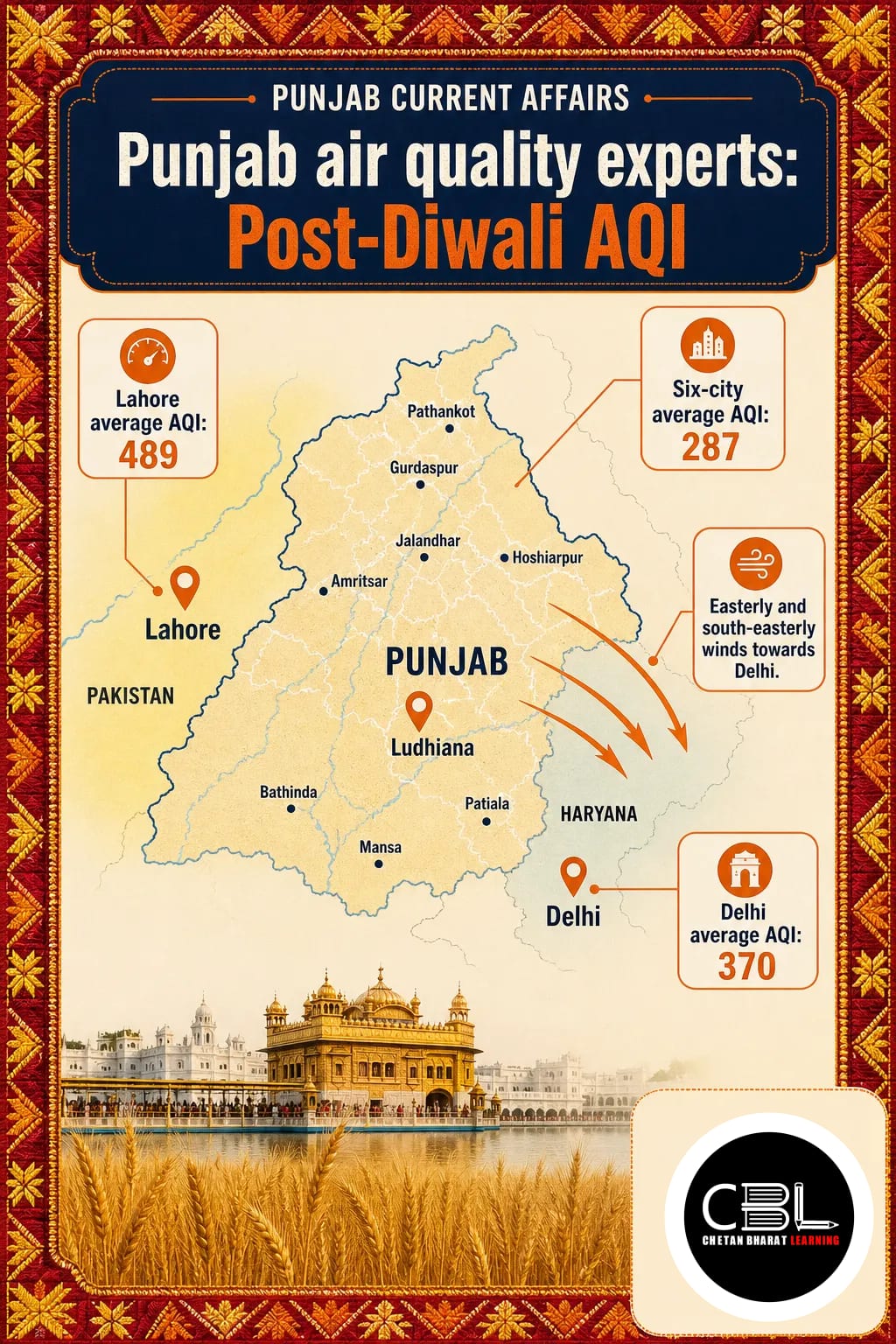
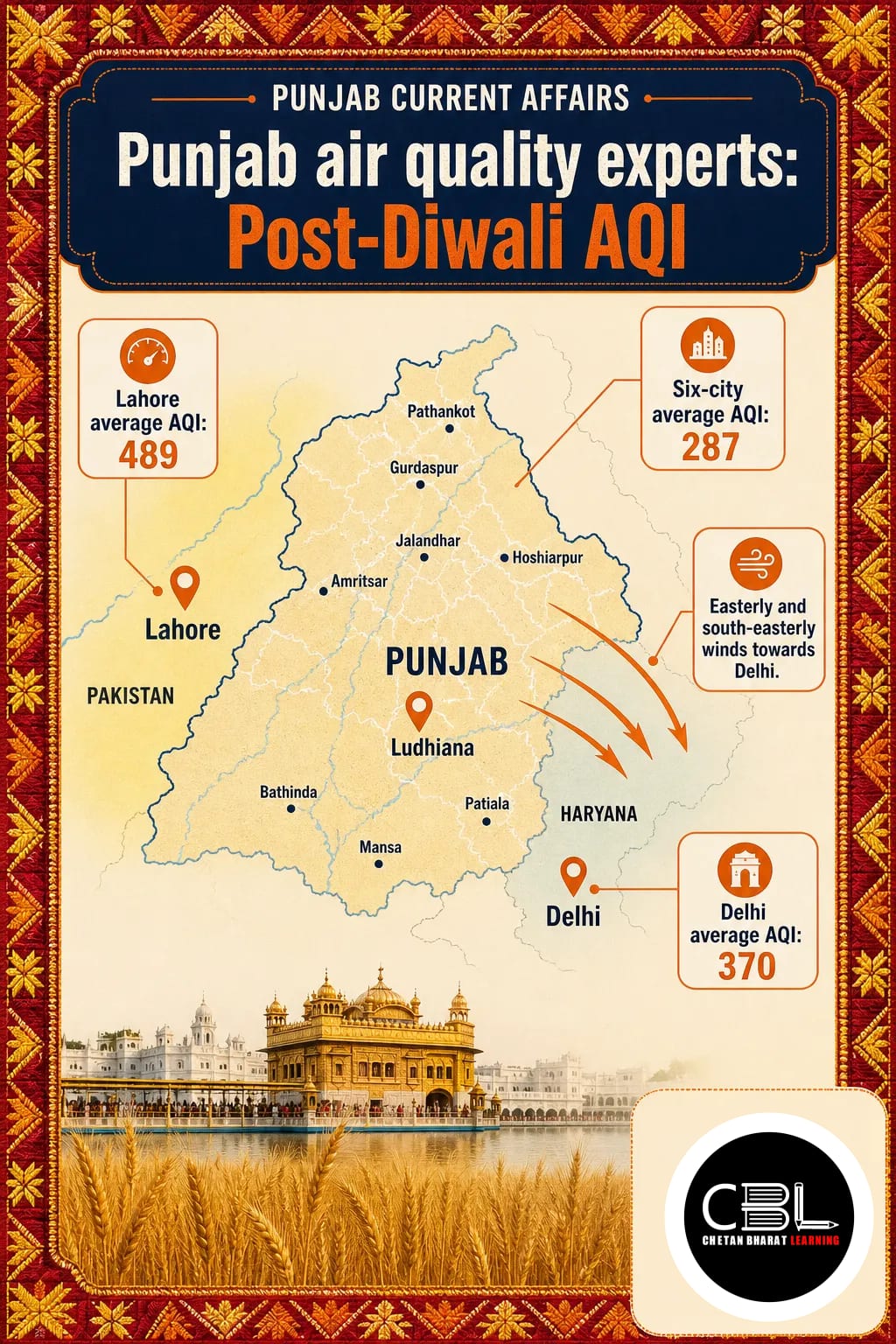
Quick answer: Punjab air quality experts examined pollution claims after Diwali on 8 November 2026. On 9 November, the average Air Quality Index (AQI) was 287 across six major Punjab cities, compared with 370 in Delhi and 489 in Lahore. Experts pointed to wind direction and local pollution sources.
Key facts
The post-Diwali readings show different average pollution levels across Punjab, Delhi and Lahore.
| Point | Details |
|---|---|
| Date of comparison | 9 November 2026, a day after Diwali |
| Punjab | Six-city average AQI: 287 |
| Delhi | Delhi average AQI: 370 |
| Lahore | Lahore average AQI: 489 |
| Wind on Diwali | Easterly and south-easterly winds towards Delhi, according to Gufran Beig |
Why is Punjab linked to the pollution debate?
Delhi and Pakistan’s Punjab government blamed sources in Indian Punjab for poor air in their cities. However, experts said Punjab alone cannot account for Delhi’s severe pollution. They also noted that pollution can travel in different directions, depending on wind speed and direction.
Pakistan’s Punjab environment minister Marriyam Aurangzeb linked Lahore’s deterioration to fireworks, easterly winds and stagnant conditions. However, professor Gufran Beig said Lahore’s experts need to analyse where the winds reaching the city originated. He considered an origin in Indian Punjab unlikely.
What did experts say about Delhi’s air?
Beig said Punjab’s contribution to Delhi’s pollution on Diwali was negligible or nearly zero. He cited easterly and south-easterly winds towards Delhi, rather than the usual north-westerly winds from Punjab. However, he said stubble burning in Punjab and Haryana significantly affects Delhi during the paddy harvest period.
Analyst Manoj Kumar also identified industries, power plants, vehicles, residential fuel combustion and construction dust as Delhi pollution sources. Therefore, seasonal farm fires do not explain the city’s year-round pollution. Beig additionally linked the Diwali increase to firecrackers and Delhi’s own sources.
Why should the AQI comparison be treated carefully?
Punjab’s lower average does not necessarily establish that its air was cleaner than Delhi’s or Lahore’s. Kumar cautioned that Punjab probably has fewer monitoring stations and that their locations matter. As a result, he called for more stations, including in Ludhiana’s Industrial Area.
The readings also represent different places: Punjab’s figure combines six major cities, while the other two are city averages. Lahore’s average of 489 should not be confused with its peak reading of 648 between 9 and 10 am. Thus, both the location and the measurement period matter.
- State capital: Chandigarh is the capital of Punjab.
- River: The Sutlej flows through Punjab.
- District headquarters: Ludhiana city is the headquarters of Ludhiana district.
Source: Indian Express Chandigarh, 12 November 2026
Prelims Practice Corner
Frequently Asked Questions
What was Punjab’s post-Diwali average AQI?
The average AQI was 287 across six major Punjab cities on 9 November 2026. The reading was classified as poor.
Did Punjab alone cause Delhi’s Diwali pollution?
Experts said Punjab alone cannot be held responsible. Gufran Beig cited the wind direction and Delhi’s own pollution sources.
Why do air monitoring station locations matter?
Station locations affect the picture obtained from AQI readings. Manoj Kumar cautioned that Punjab probably has fewer stations and needs more monitoring.
Related Current Affairs
Preparing for UPSC, PCS or HCS?
Talk to a mentor at Chetan Bharat Learning, Chandigarh. Free guidance on choosing the right exam and building a study plan.
Chat on WhatsAppCall 97793 53345UPSC / IAS / PCS coaching in Chandigarh · Trusted by aspirants across Punjab & Haryana









Leave a Reply
You must be logged in to post a comment.