
Quick Facts
| Prelims | Temple Architecture and Pilgrimage Traditions |
|---|---|
| Mains | GS Paper I — Indian Art and Culture |
| Location | Rameswaram, Tamil Nadu |
|---|---|
| Island | Pamban Island |
| Principal Deity | Shiva as Ramanathaswamy |
| Architectural Style | Dravidian |
What is Ramanathaswamy Temple?
Ramanathaswamy Temple is a major Hindu shrine dedicated to Lord Shiva at Rameswaram in Ramanathapuram district. The temple stands on Pamban Island, near the southeastern coast of Tamil Nadu. It forms part of the twelve-Jyotirlinga tradition and the four-site Char Dham pilgrimage circuit connecting India’s different geographical regions.
Religious tradition connects the shrine with Rama’s worship of Shiva before or after his expedition to Lanka, depending on the narrative followed. The main sacred representation is worshipped as Ramanathaswamy. Temple tradition refers to the Ramalingam and the Vishvalingam associated respectively with Rama and Hanuman. These traditions connect Shaiva devotion with the wider Ramayana cultural landscape.
Why is Ramanathaswamy Temple in News?
Ramanathaswamy Temple entered the news when its image formed the ceremonial backdrop for welcoming leaders at the 18th BRICS Summit in New Delhi. The display projected India’s architectural and spiritual heritage within a major diplomatic gathering. It also highlighted a culturally important site from southern India before an international audience.
Using a heritage monument in summit imagery represents a form of cultural diplomacy. India has similarly presented historic crafts, monuments, manuscripts and artistic traditions during international events. Such displays communicate civilisational continuity without changing the formal political agenda. The official BRICS Summit gallery documents the New Delhi meeting and its cultural presentation.
Key Features
The temple complex combines sacred geography, monumental construction and architectural additions made across several centuries.
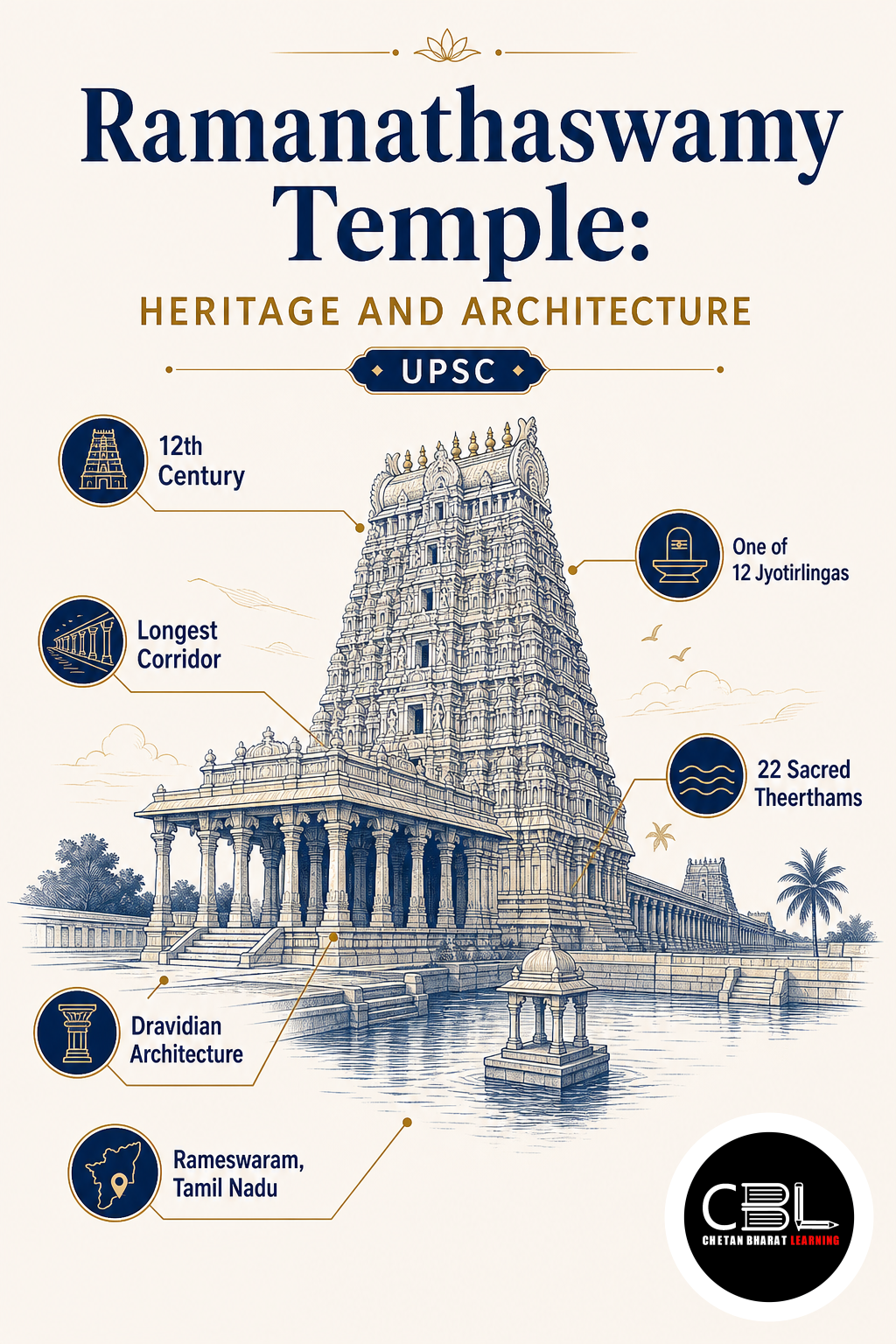
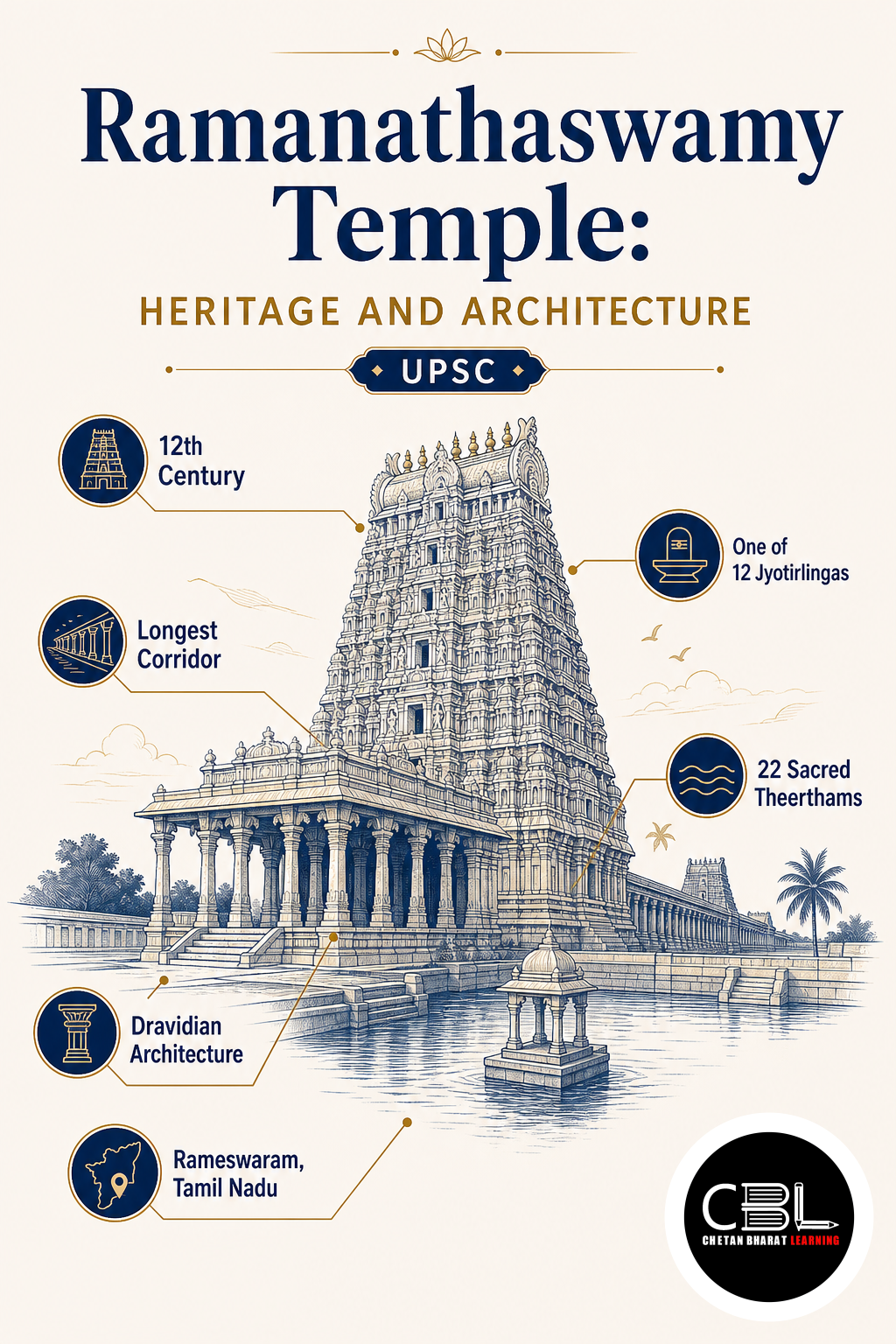
- Monumental corridors: Long pillared passageways create strong visual symmetry and rank among the temple’s most recognisable architectural features.
- Dravidian elements: Gopurams, enclosed courtyards, pillared mandapas, subsidiary shrines and boundary walls reflect the southern temple-building tradition.
- Royal patronage: Pandya-era associations were followed by substantial additions under the Nayaks and the Sethupathi rulers of Ramanathapuram.
- Sacred water tradition: The complex contains twenty-two theerthams or sacred water bodies used in the customary sequence of pilgrimage rituals.
- Pan-Indian pilgrimage: Its place within both the Jyotirlinga and Char Dham traditions connects the Tamil region with wider networks of religious mobility.
The corridors display repeated rows of pillars, sculptural details and carefully organised perspectives. Their visual effect depends on proportion, rhythm and the continuity of structural bays. The temple’s builders integrated these spaces with ritual movement, enabling pilgrims to proceed through gateways, water sites, halls and inner shrines.
Dravidian temples often evolved through cumulative patronage rather than construction under a single ruler. Successive dynasties, regional chiefs, merchants and devotional communities added gateways, halls and endowments. The Rameswaram complex similarly reflects a layered architectural history, although religious traditions associated with the site are considerably older than many surviving structures.
Challenges
Ramanathaswamy Temple requires conservation practices that protect historic fabric while respecting its continuing religious function.
- Marine environment: Salt-bearing air, humidity and cyclonic weather can accelerate deterioration of stone, plaster, paint and metal components.
- Visitor pressure: Large pilgrim flows place stress on corridors, water facilities, sanitation systems and movement routes during festivals and peak seasons.
- Inappropriate repairs: Modern cement, chemical coatings or unverified replacement work may damage traditional materials and obscure historical evidence.
- Ritual continuity: Conservation teams must coordinate work with daily worship, processions, sacred-water practices and access to functioning shrines.
- Urban management: Congestion, commercial activity, waste and unplanned construction around the complex can weaken its wider cultural setting.
Conservation decisions require architectural documentation, material testing and consultation with temple authorities, devotees and heritage specialists. Repairs should use compatible techniques and remain distinguishable where necessary. Digital surveys can record pillars, inscriptions, murals and structural movement without replacing careful physical inspection.
Pilgrimage management must provide safe access without converting a living sacred site into a purely tourist monument. Authorities need clear circulation routes, accessible facilities, fire safety, crowd monitoring and responsible waste disposal. These concerns connect the temple with broader debates covered in the daily current affairs collection.
Way Forward
Authorities should prepare an integrated conservation plan covering architecture, rituals, water management, disaster preparedness and the surrounding townscape. Scientific monitoring can identify salt damage, moisture penetration and structural weakness before irreversible deterioration occurs. Visitor facilities should remain outside sensitive architectural zones wherever feasible.
Interpretation material at Ramanathaswamy Temple should explain its sacred traditions, chronology, patrons and Dravidian features in several Indian languages. Trained guides and digital resources can improve cultural understanding while reducing misinformation. The official Tamil Nadu temple portal provides institutional and visitor information. Conservation must ultimately preserve both the physical monument and its character as a living place of worship.
Prelims Practice Corner
Q1. The temple discussed in the article is located on which island?
(a) Majuli Island (b) Pamban Island (c) Diu Island (d) Elephanta Island
Show answer
Answer: (b) Rameswaram and its principal Shiva shrine are located on Pamban Island in Tamil Nadu.
Q2. The shrine is primarily dedicated to which deity?
(a) Vishnu (b) Surya (c) Shiva (d) Kartikeya
Show answer
Answer: (c) The principal deity is Shiva worshipped in the form of Ramanathaswamy.
Q3. Consider the following statements:
1. The shrine forms part of the Jyotirlinga tradition.
2. Rameswaram is included in the Char Dham pilgrimage circuit.
3. The complex follows the Nagara architectural style.
How many statements are correct?
(a) Only one (b) Only two (c) All three (d) None
Show answer
Answer: (b) Statements 1 and 2 are correct; the temple represents the Dravidian architectural tradition.
Q4. Which rulers contributed substantially to the expansion of the temple’s corridors and monumental structures?
(a) Palas and Senas (b) Nayaks and Sethupathis (c) Kushanas and Shakas (d) Ahoms and Koch rulers
Show answer
Answer: (b) Nayak and Sethupathi patronage played an important role in the complex’s later architectural expansion.
Q5. The term gopuram in southern temple architecture refers to which feature?
(a) Monumental entrance tower (b) Underground water channel (c) Free-standing victory pillar (d) Monastic residential cell
Show answer
Answer: (a) A gopuram is the monumental gateway tower associated with Dravidian temple complexes.
Mains Practice Questions
Q1. Examine how the Rameswaram temple complex combines sacred geography with Dravidian architectural traditions. (250 words, 15 marks)
Answer Structure
- Intro: Locate the shrine and introduce its Jyotirlinga and Char Dham significance.
- Body: Discuss Ramayana traditions, corridors, gopurams, pillars, theerthams, royal patronage and pan-Indian pilgrimage networks.
- Conclusion: Present the complex as a living expression of architectural continuity and cultural integration.
Q2. What challenges arise while conserving a living temple situated in a coastal environment? (150 words, 10 marks)
Answer Structure
- Intro: Explain the dual character of the site as a historic monument and functioning place of worship.
- Body: Cover salt exposure, humidity, visitor pressure, ritual continuity, compatible repairs, disaster planning and urban congestion.
- Conclusion: Recommend scientific conservation supported by community and temple-authority participation.
FAQs on Ramanathaswamy Temple
Where is the shrine located?
It is located in Rameswaram town on Pamban Island in Tamil Nadu’s Ramanathapuram district. The island lies close to the southeastern coast of the Indian mainland.
Why is the temple important for pilgrims?
The shrine belongs to the twelve-Jyotirlinga tradition and Rameswaram forms part of the Char Dham circuit. Its sacred-water rituals and Ramayana associations further strengthen its religious importance.
What is its best-known architectural feature?
The complex is especially recognised for its extensive pillared corridors. Their rhythmic columns, long perspectives and integration with ritual movement create a distinctive architectural experience.
Related Current Affairs
Preparing for UPSC, PCS or HCS?
Talk to a mentor at Chetan Bharat Learning, Chandigarh. Free guidance on choosing the right exam and building a study plan.
Chat on WhatsAppCall 97793 53345UPSC / IAS / PCS coaching in Chandigarh · Trusted by aspirants across Punjab & Haryana
Leave a Reply
You must be logged in to post a comment.