
Important for:
UPSC, Haryana HCS, Punjab PCS
Prelims: DAE, Nuclear Energy, AERB, SHANTI Act
Mains: GS Paper 2 & 3 — Governance, Energy Security, Nuclear Policy
Why in News?
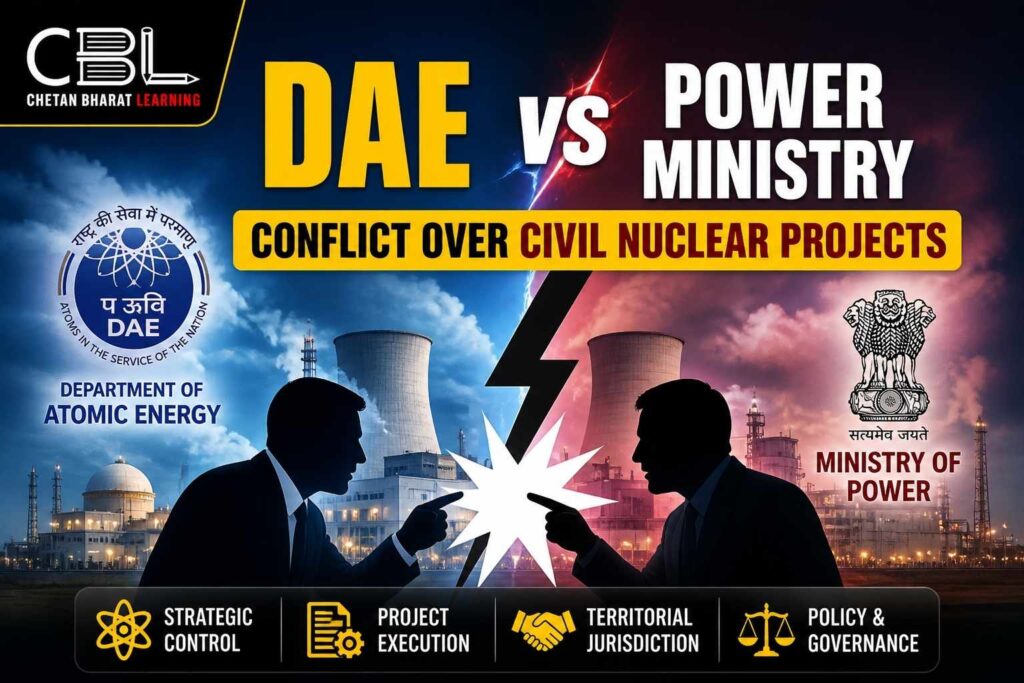
A disagreement has emerged between the Department of Atomic Energy (DAE) and the Power Ministry over who should supervise civil nuclear projects, especially after allowing private sector participation under the SHANTI Act.
What is the Core Issue?
➤ Two ministries are at odds over control:
1. Department of Atomic Energy (DAE)
- Traditionally controls nuclear sector
- Handles fuel supply chain & research
2. Power Ministry
- Wants greater role in civil nuclear power projects
- Especially for private sector involvement
What is the SHANTI Act?
➤ A new law enabling:
✔ Private sector participation in nuclear energy
✔ Expansion of civil nuclear power
Key Change:
➤ Nuclear sector moving from government monopoly → regulated participation model
Why Conflict Arose?
1. Control Over Supply Chain
DAE controls:
- Nuclear fuel
- Research
- Technology
→ This creates conflict of interest
2. Regulatory Overlap
→ AERB depends on DAE
➤ Raises concern about:
✔ Independent regulation
✔ Transparency
3. Private Sector Entry
➤ Power Ministry wants:
✔ Independent oversight
✔ Level playing field
Sector Changes Under the Act
- Private companies can now:
→ Enter nuclear power generation
→ Participate in fuel management
- But critical areas still under DAE:
→ Technology
→ Fuel cycle
Why Nuclear Energy Matters for India
1. Energy Security
Reliable base-load power
2. Clean Energy Transition
Low carbon emissions
3. Climate Goals
Helps meet net-zero targets
➤ Key Concerns
- Conflict of interest (DAE dominance)
- Safety regulation independence
- Private sector confidence
- Liability issues
Global Context
Countries like:
➤ USA, France
have:
✔ Independent nuclear regulators
✔ Clear separation of roles
India-Specific Impact
- Could accelerate nuclear expansion
- But governance clarity is critical
- Balance between:
→ Safety + Growth
Key Insight for UPSC
➤ Important theme:
✔ Governance vs regulation
✔ Energy transition reforms
PRELIMS PRACTICE QUESTIONS
Q1. DAE stands for:
A. Department of Atomic Energy
B. Directorate of Energy
C. Defence Atomic Energy
D. None
→ Answer: A
Q2. SHANTI Act is related to:
A. Agriculture
B. Defence
C. Nuclear sector
D. Banking
→ Answer: C
Q3. Nuclear energy is:
A. Renewable
B. Non-renewable
C. Clean energy
D. Both B and C
→ Answer: D
Q4. AERB is related to:
A. Banking
B. Energy regulation
C. Atomic regulation
D. Trade
→ Answer: C
Q5. Nuclear power helps in:
A. Increasing pollution
B. Reducing emissions
C. Trade
D. Banking
→ Answer: B
CBL Mains Practice Question
“India’s push for private participation in nuclear energy requires strong regulatory reforms.”
Discuss the challenges and solutions.
FAQs
1. What is DAE?
India’s atomic energy department.
2. What is SHANTI Act?
Law allowing private participation in nuclear sector.
3. Why is there conflict?
Due to control over nuclear projects.
4. Why is nuclear energy important?
Clean and reliable power source.
5. Which GS papers cover it?
GS2 and GS3.
Related Current Affairs
Preparing for UPSC, PCS or HCS?
Talk to a mentor at Chetan Bharat Learning, Chandigarh. Free guidance on choosing the right exam and building a study plan.
Chat on WhatsAppCall 97793 53345UPSC / IAS / PCS coaching in Chandigarh · Trusted by aspirants across Punjab & Haryana
Leave a Reply
You must be logged in to post a comment.