
UPSC Syllabus Mapping
| GS Paper | GS-III |
|---|---|
| Subject | Indian Economy, Manufacturing and Industrial Policy |
| Syllabus Pointers | Prep with our comprehensive UPSC Current Affairs Hub analysis guidelines. |
Key Dimensions of Customs Duty Exemption
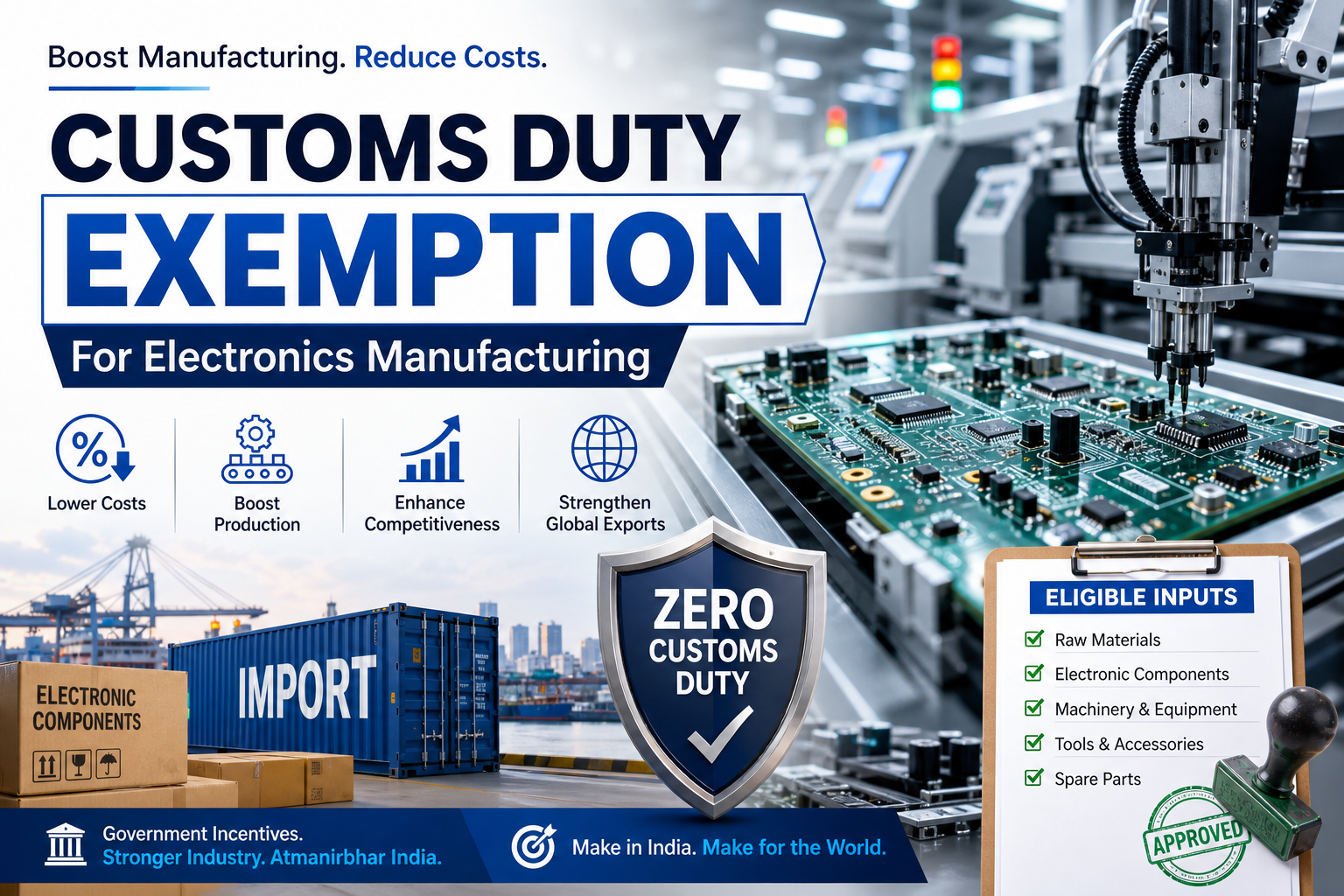
The exemption applies to specific inputs and capital goods used in manufacturing lithium-ion batteries, battery cells and display assemblies. The measure remains valid until 31 March 2029 and is intended to reduce production costs rather than lower duties on finished consumer products.
Capital goods include machinery such as coating machines, powder dryers, slurry transfer systems and extrusion equipment required for lithium-ion cell manufacturing. Lower import costs encourage domestic production and technological upgrading.
Why is this Important?
The policy supports flagship initiatives such as Make in India, the Production Linked Incentive (PLI) Scheme, the National Programme on Advanced Chemistry Cell (ACC) Batteries and the Semiconductor Mission. It aims to improve domestic value addition and reduce dependence on imported components.
Lithium-ion batteries are critical for electric vehicles, renewable energy storage, consumer electronics and grid-scale storage. Strengthening battery manufacturing enhances India’s energy security and clean energy transition.
Global Value Chains and Value Addition
Modern electronic products are manufactured through Global Value Chains (GVCs), where different components are produced across multiple countries. India seeks to move beyond final assembly towards manufacturing high-value components, creating intellectual property and increasing exports.
For broader understanding of global production networks, refer to global developmental tracking frameworks.
Way Forward
India should complement customs reforms with investments in semiconductor fabrication, battery technology, research and development, logistics and skilled manpower. Stable policy support and deeper integration into global value chains will strengthen manufacturing competitiveness and generate high-quality employment.
Prelims Practice Corner
- Q1. Customs duty exemption announced recently primarily targets imports of:
- (a) Finished smartphones
- (b) Inputs and capital goods for electronics manufacturing
- (c) Consumer televisions
- (d) Refrigerators
Answer: (b). The exemption applies to manufacturing inputs and capital goods used for lithium-ion batteries and display assemblies.
- Q2. Which of the following is a major objective of increasing domestic value addition?
- (a) Increase dependence on imports
- (b) Strengthen India’s position in Global Value Chains
- (c) Reduce manufacturing activity
- (d) Eliminate exports
Answer: (b). Greater domestic value addition enables India to move from assembly to high-value manufacturing and exports.
Mains Practice Question
“Reducing customs duties on manufacturing inputs is more effective than protecting finished products through high tariffs.” Discuss in the context of India’s electronics manufacturing strategy. (150 Words, 10 Marks)
FAQs
- Why are lithium-ion batteries strategically important? They are essential for electric vehicles, renewable energy storage and modern electronics, making them central to India’s clean energy and manufacturing ambitions.
- Suggested Internal Links: Production Linked Incentive Scheme, Semiconductor Mission, National Programme on ACC Batteries, Make in India and Global Value Chains.
Related Current Affairs
Preparing for UPSC, PCS or HCS?
Talk to a mentor at Chetan Bharat Learning, Chandigarh. Free guidance on choosing the right exam and building a study plan.
Chat on WhatsAppCall 97793 53345UPSC / IAS / PCS coaching in Chandigarh · Trusted by aspirants across Punjab & Haryana
Leave a Reply
You must be logged in to post a comment.