
UPSC Mapping
| Exam | Syllabus Topic |
|---|---|
| Prelims | Governance & International Relations |
| Mains | GS Paper 2 (Governance & International Relations) |
| Launch Date | Countries Engaged |
|---|---|
| 20 February 2026 | 10+ (including Brazil, Sri Lanka) |
What is GDCBA Capacity Building?
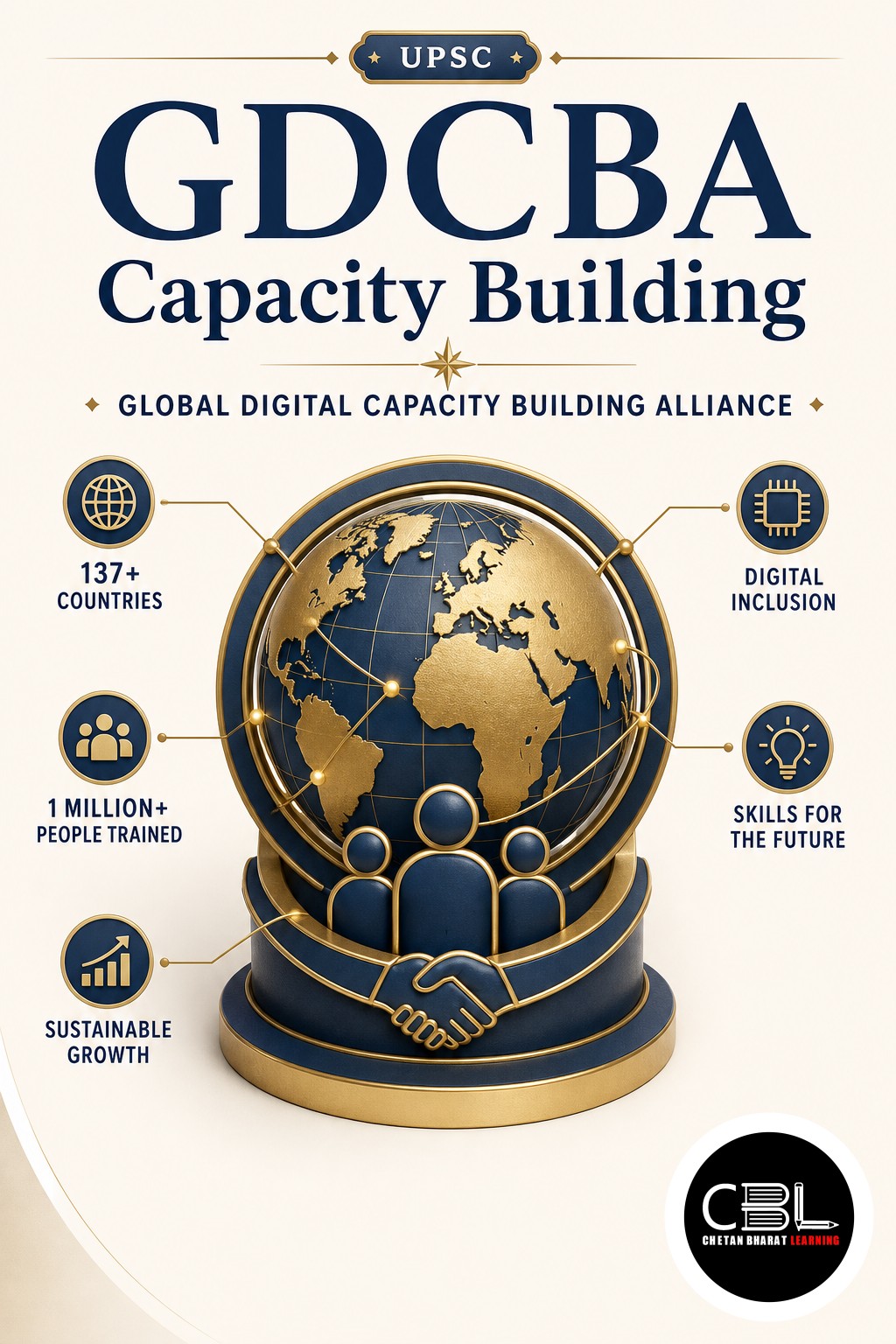
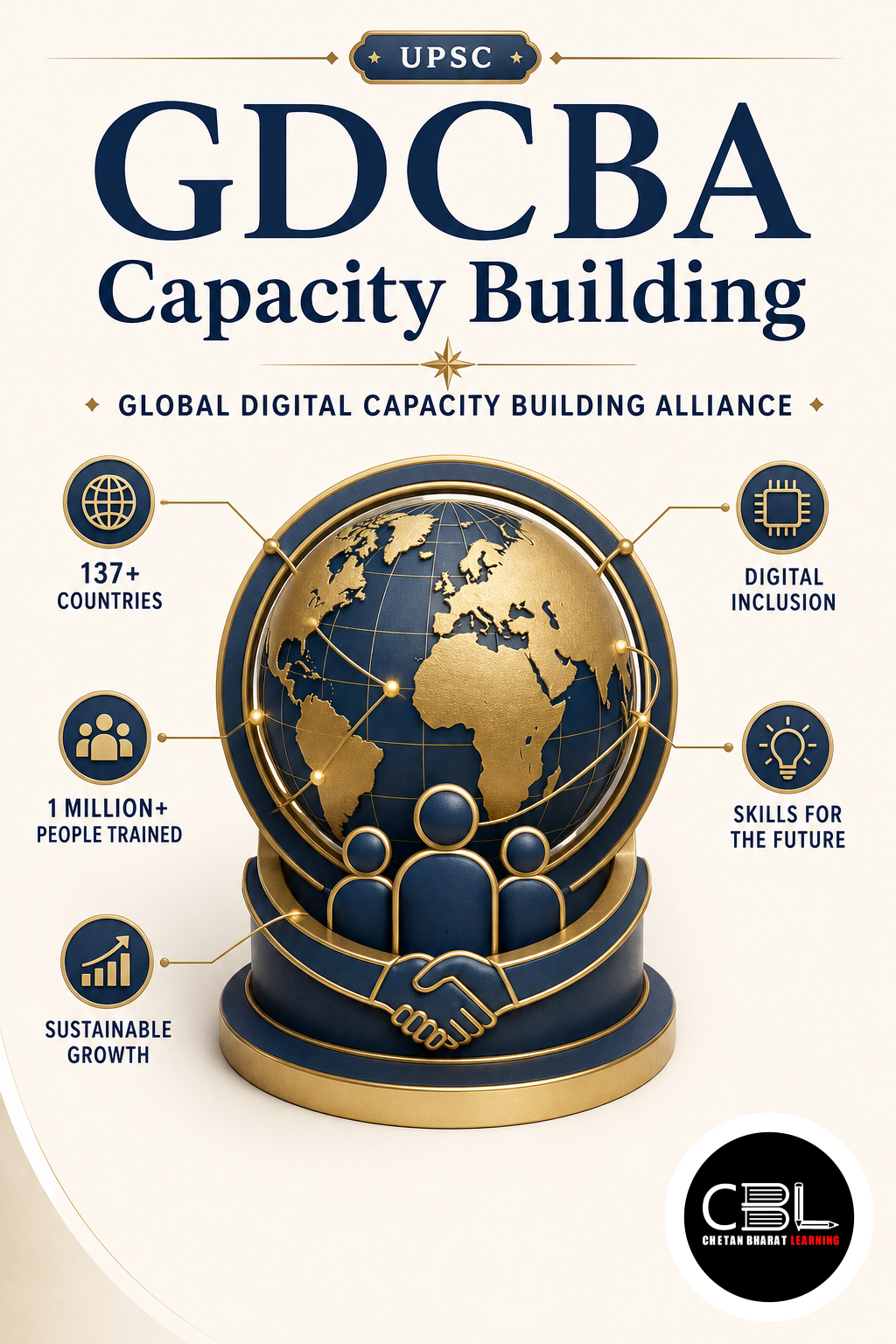
GDCBA Capacity Building is the Global Digital Capacity Building Alliance, a platform for international cooperation on public-sector capacity building. Launched on 20 February 2026 at the India AI Impact Summit, it brings together governments, multilateral and development institutions, and the DPI ecosystem to exchange knowledge. It builds on Mission Karmayogi, India’s National Programme for Civil Services Capacity Building.
The alliance has four goals: strengthen institutional capability across public-sector systems, support evidence-informed capacity-building decisions, foster a global community of practice for governance, and build a repository of implementation knowledge. Engagement has extended across 10 countries, including Brazil, Sri Lanka, and Mauritius. Partners include the Gates Foundation, World Bank, NCGG, UNICEF, and the Commonwealth.
Why is GDCBA Capacity Building in News?
GDCBA Capacity Building is in the news as it completes six months and enters its next phase. The CBC plans to host an Annual Summit and release the State of Capacity Building Report to benchmark global progress. The alliance’s expansion to 10 countries and its growing list of institutional partners have been highlighted.
The initiative demonstrates India’s leadership in public-sector capacity building and its commitment to sharing best practices globally. For more details, refer to this PIB release.
Key Features of GDCBA Capacity Building
- Global Platform: International cooperation on public-sector capacity building.
- Mission Karmayogi Foundation: Builds on India’s national civil services training programme.
- Four Goals: Institutional capability, evidence-based decisions, community of practice, knowledge repository.
- Partners: Gates Foundation, World Bank, UNICEF, Commonwealth, BRICS/FICCI.
- Global Reach: 10+ countries including Brazil, Sri Lanka, Mauritius.
Challenges in GDCBA Capacity Building
- Diverse Needs: Different countries have varying capacity-building requirements.
- Resource Mobilisation: Sustaining funding and institutional support.
- Digital Divide: Ensuring equitable access to digital tools and platforms.
- Coordination: Aligning multiple partners and stakeholders.
- Measuring Impact: Developing metrics to assess capacity-building outcomes.
Way Forward for GDCBA Capacity Building
To strengthen GDCBA Capacity Building, the alliance should focus on developing customised capacity-building modules for different countries, leveraging technology for scalable training, and fostering peer-to-peer learning. Regular monitoring and evaluation of programmes can ensure effectiveness.
Expanding the partnership network to include more Global South countries and South-South cooperation can enhance relevance. The State of Capacity Building Report can serve as a valuable benchmark for global progress. For international best practices, refer to the UNDP.
Prelims Practice Corner
- When was GDCBA launched?
(a) 20 February 2025 (b) 20 February 2026 (c) 20 March 2026 (d) 20 January 2026
Answer: (b) GDCBA was launched on 20 February 2026. - Which Indian initiative does GDCBA build on?
(a) Skill India (b) Mission Karmayogi (c) Digital India (d) Make in India
Answer: (b) GDCBA builds on Mission Karmayogi. - Which body is the custodian of Mission Karmayogi?
(a) NITI Aayog (b) Capacity Building Commission (c) UPSC (d) Ministry of Personnel
Answer: (b) The CBC is the custodian of Mission Karmayogi. - How many countries are engaged with GDCBA?
(a) 5 (b) 8 (c) 10+ (d) 15+
Answer: (c) Engagement has extended across 10+ countries. - What is one of GDCBA’s goals?
(a) Economic growth (b) Strengthening institutional capability (c) Military cooperation (d) Trade liberalisation
Answer: (b) Strengthening institutional capability is one of the four goals.
Mains Practice Questions
Q1. Discuss the significance of the Global Digital Capacity Building Alliance in promoting public-sector capacity building globally. (250 words, 15 marks)
- Intro: Introduce GDCBA and its objectives.
- Body: Discuss its achievements, partners, and global reach. Analyse its role in knowledge sharing and capacity building. Address challenges and suggest a way forward.
- Conclusion: Emphasise India’s leadership in this domain.
Q2. What is Mission Karmayogi and its significance for civil service reforms in India? (150 words, 10 marks)
- Intro: Define Mission Karmayogi as the national civil service capacity-building programme.
- Body: Explain its objectives: training, upskilling, and performance management. Its significance lies in creating a future-ready civil service.
- Conclusion: Conclude that it is a transformative initiative for governance.
FAQs on GDCBA Capacity Building
What is GDCBA?
It is a global alliance for public-sector capacity building, launched by India’s Capacity Building Commission.
What is Mission Karmayogi?
It is India’s National Programme for Civil Services Capacity Building.
Which countries are part of GDCBA?
Engagement includes Brazil, Sri Lanka, Mauritius, and others.
Related Current Affairs
Preparing for UPSC, PCS or HCS?
Talk to a mentor at Chetan Bharat Learning, Chandigarh. Free guidance on choosing the right exam and building a study plan.
Chat on WhatsAppCall 97793 53345UPSC / IAS / PCS coaching in Chandigarh · Trusted by aspirants across Punjab & Haryana
Leave a Reply
You must be logged in to post a comment.