
UPSC Mapping
Prelims
- Lead, Mercury, Cadmium, Arsenic, Pesticides
Mains
- GS Paper III – Environment, Pollution, Public Health
Quick Facts
| Schools at Risk | Highest-Risk Capital | Major Sources |
|---|---|---|
| ~10% in LMICs within 5 km of toxic sites | New Delhi | Industrial & Legacy Pollution |
Article
What are Toxic Pollutants?
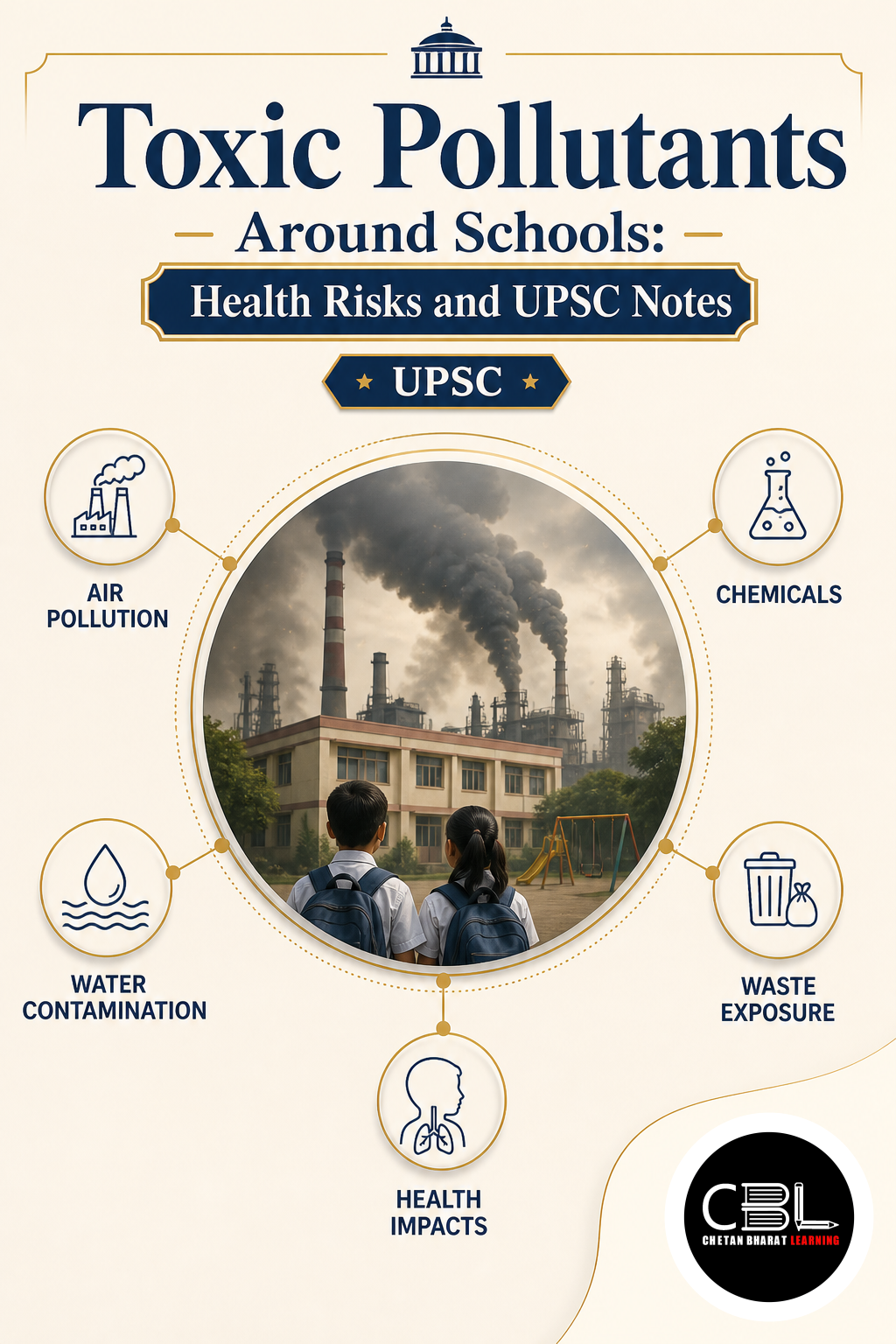
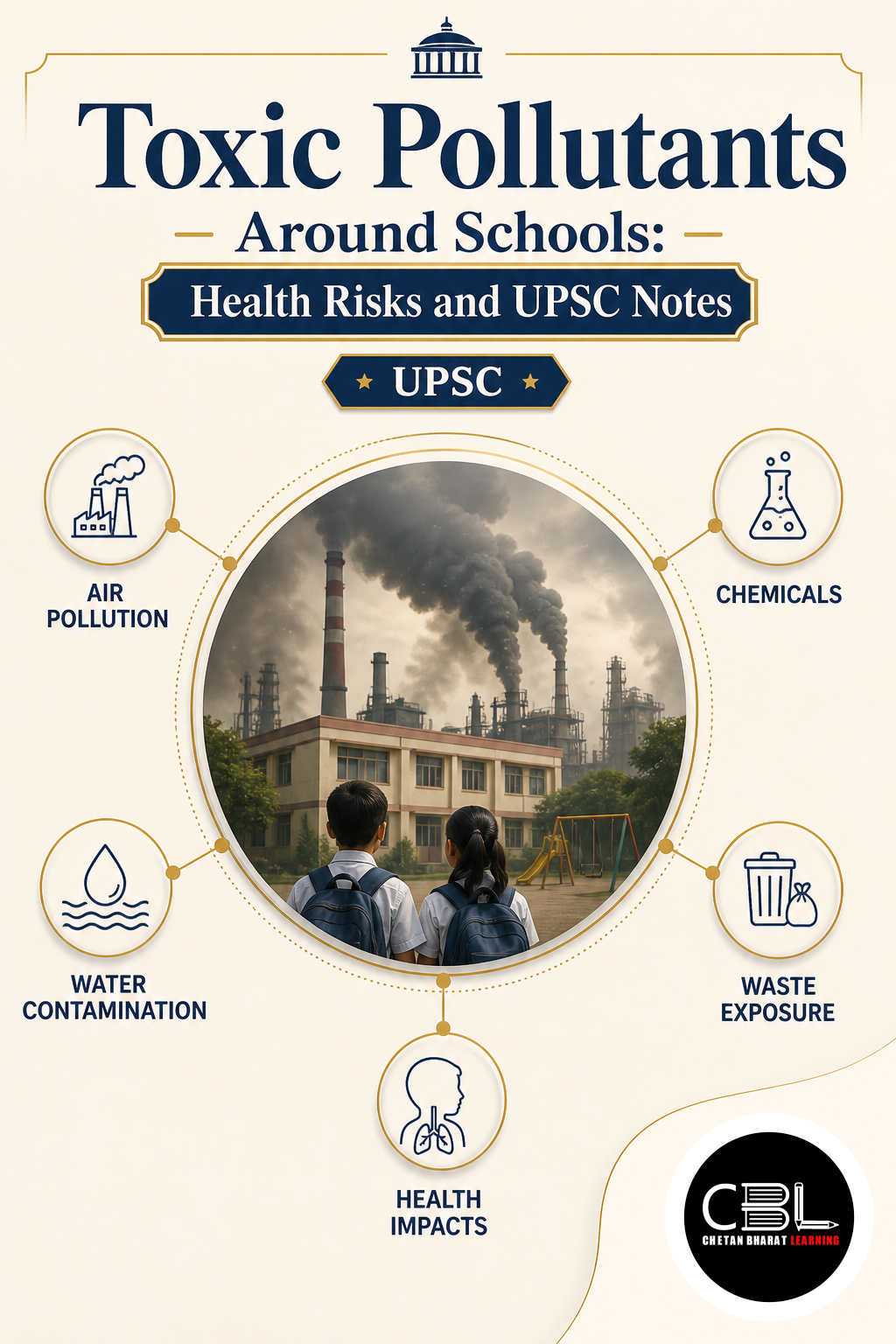
Toxic Pollutants are hazardous chemical substances that contaminate air, water or soil and pose significant risks to human health and ecosystems. Common toxic pollutants include lead, mercury, cadmium, arsenic and various pesticides.
Children are particularly vulnerable because their organs, immune systems and nervous systems are still developing. Long-term exposure can impair physical growth, cognitive development and overall health.
Why are Toxic Pollutants in News?
A recent global study has highlighted the widespread proximity of schools to toxic contamination sites, identifying this as an under-recognised public health challenge.
The study found that approximately 10% of schools in low- and middle-income countries are located within 5 km of documented toxic sites, with New Delhi recording one of the highest levels of exposure.
Key Findings
- Schools near contamination: Around 10% of schools in low- and middle-income countries are situated within 5 km of documented toxic contamination sites.
- Urban concentration: The highest risks occur in densely populated cities where industrial activity, waste disposal and legacy pollution are concentrated.
- New Delhi: Among world capitals, New Delhi recorded the highest exposure, with more than 90% of private schools located near contaminated sites.
- Hazardous substances: The major contaminants include lead, mercury, cadmium, arsenic and pesticides.
Major Toxic Pollutants and Health Effects
- Lead (Pb): Damages the developing brain and nervous system, causing reduced IQ, learning disabilities, behavioural disorders and anaemia.
- Mercury (Hg): Affects the brain, kidneys and nervous system. Prenatal exposure can impair cognitive development and motor skills.
- Cadmium: Accumulates gradually in the body, damages kidneys, weakens bones and is classified as a human carcinogen.
- Arsenic (As): Long-term exposure increases the risk of skin, lung, bladder and liver cancers while also causing cardiovascular and neurological disorders.
- Pesticides: Chronic exposure may lead to hormonal disruption, respiratory diseases, developmental disorders, impaired cognitive development and certain cancers.
Environmental and Public Health Significance
- Learning outcomes: Neurotoxic pollutants reduce cognitive ability and academic performance.
- Public health burden: Chronic illnesses increase healthcare costs and reduce quality of life.
- Environmental justice: Children in densely populated and economically disadvantaged areas often face greater exposure risks.
- Policy relevance: Strengthening pollution monitoring and safer land-use planning around schools can reduce exposure.
Way Forward
Governments should strengthen environmental monitoring, identify contaminated sites and ensure that schools are located away from hazardous industrial zones. Regular health screening and pollution assessments around educational institutions can reduce long-term risks.
Greater coordination between urban planning, environmental regulation and public health authorities is essential to protect children from toxic exposures and promote healthy learning environments.
Prelims Practice Corner
- Q1. Which toxic pollutant primarily damages the developing brain and nervous system in children?
- (a) Cadmium
- (b) Lead
- (c) Mercury
- (d) Arsenic
- Answer: (b) Lead exposure causes reduced IQ, learning disabilities and behavioural disorders.
- Q2. Mercury exposure particularly affects which organs?
- (a) Liver and skin
- (b) Brain, kidneys and nervous system
- (c) Heart and lungs
- (d) Bones and muscles
- Answer: (b)
- Q3. Which toxic pollutant is classified as a human carcinogen and weakens bones?
- (a) Lead
- (b) Mercury
- (c) Cadmium
- (d) Ozone
- Answer: (c)
- Q4. Long-term exposure to arsenic increases the risk of?
- (a) Diabetes only
- (b) Skin, lung, bladder and liver cancers
- (c) Cataract only
- (d) Tuberculosis
- Answer: (b)
- Q5. According to the study, among world capitals, which city had the highest proportion of private schools near contaminated sites?
- (a) Beijing
- (b) Jakarta
- (c) New Delhi
- (d) Cairo
- Answer: (c)
Mains Practice Questions
Q1. Discuss the impact of toxic pollutants on children’s health and learning outcomes. Suggest measures to reduce environmental exposure around schools. (10 marks)
- Intro: Explain children’s vulnerability to environmental pollutants.
- Body: Health impacts, educational consequences, regulatory measures and monitoring.
- Conclusion: Emphasise preventive environmental governance.
Q2. Examine the relationship between environmental pollution, urban planning and public health in the context of toxic contamination around schools. (15 marks)
- Intro: Introduce environmental health risks.
- Body: Industrial pollution, land-use planning, child health, policy interventions and sustainable development.
- Conclusion: Advocate integrated environmental governance.
FAQs
Why are children more vulnerable to toxic pollutants?
Children have developing organs and nervous systems, making them more susceptible to neurological, developmental and physiological damage caused by toxic substances.
Which toxic pollutants were highlighted in the study?
The study identified lead, mercury, cadmium, arsenic and pesticides as the major hazardous substances affecting schools located near contaminated sites.
Why is New Delhi highlighted in the study?
Among the world’s capital cities, New Delhi recorded the highest proportion of private schools located near sites contaminated with hazardous substances according to the study.
Related Current Affairs
Preparing for UPSC, PCS or HCS?
Talk to a mentor at Chetan Bharat Learning, Chandigarh. Free guidance on choosing the right exam and building a study plan.
Chat on WhatsAppCall 97793 53345UPSC / IAS / PCS coaching in Chandigarh · Trusted by aspirants across Punjab & Haryana
Leave a Reply
You must be logged in to post a comment.