
UPSC Syllabus Mapping
GS Paper: GS-II & GS-III
Subject: Health, Science & Technology and Public Policy
Article
What is Antimicrobial Resistance?
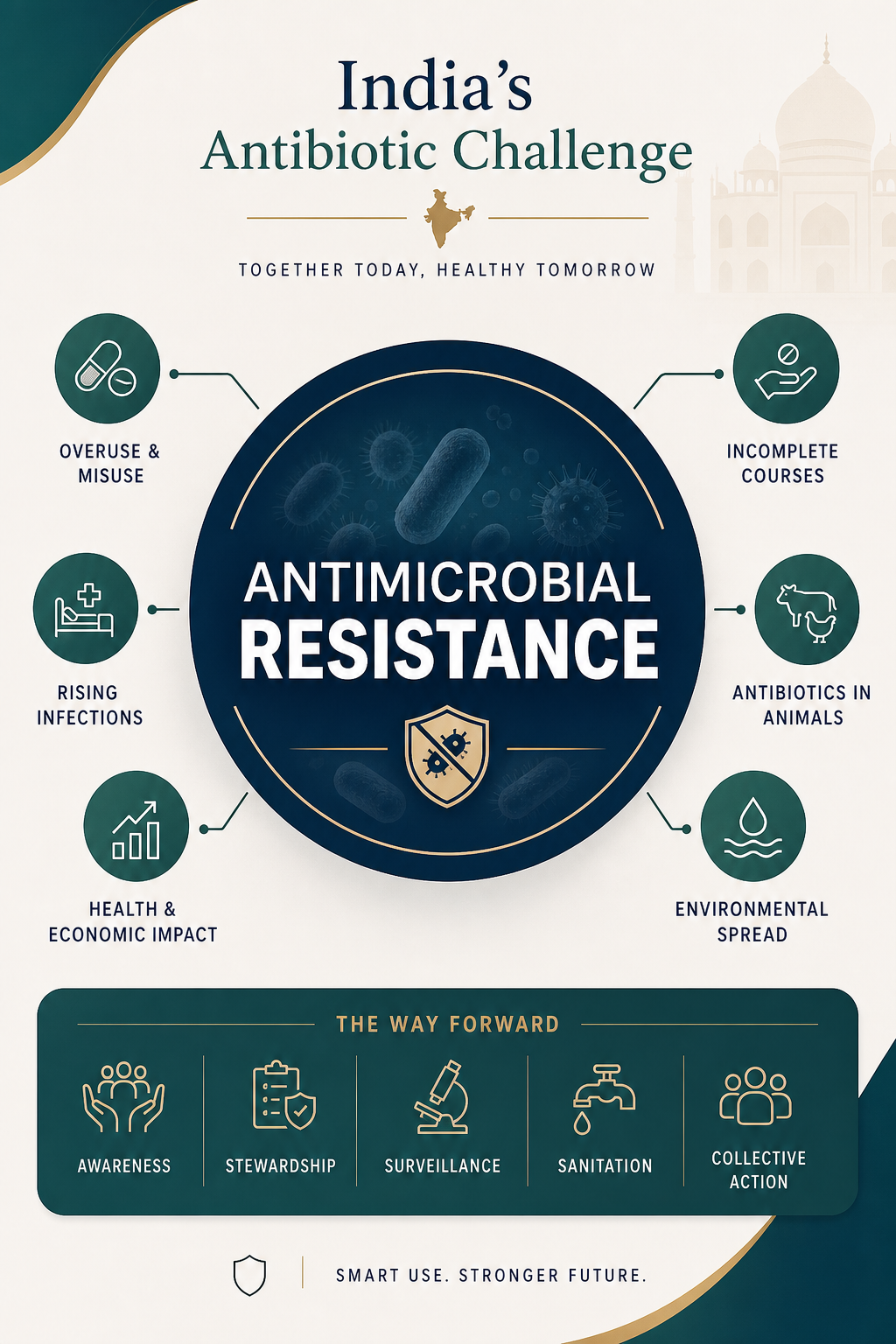
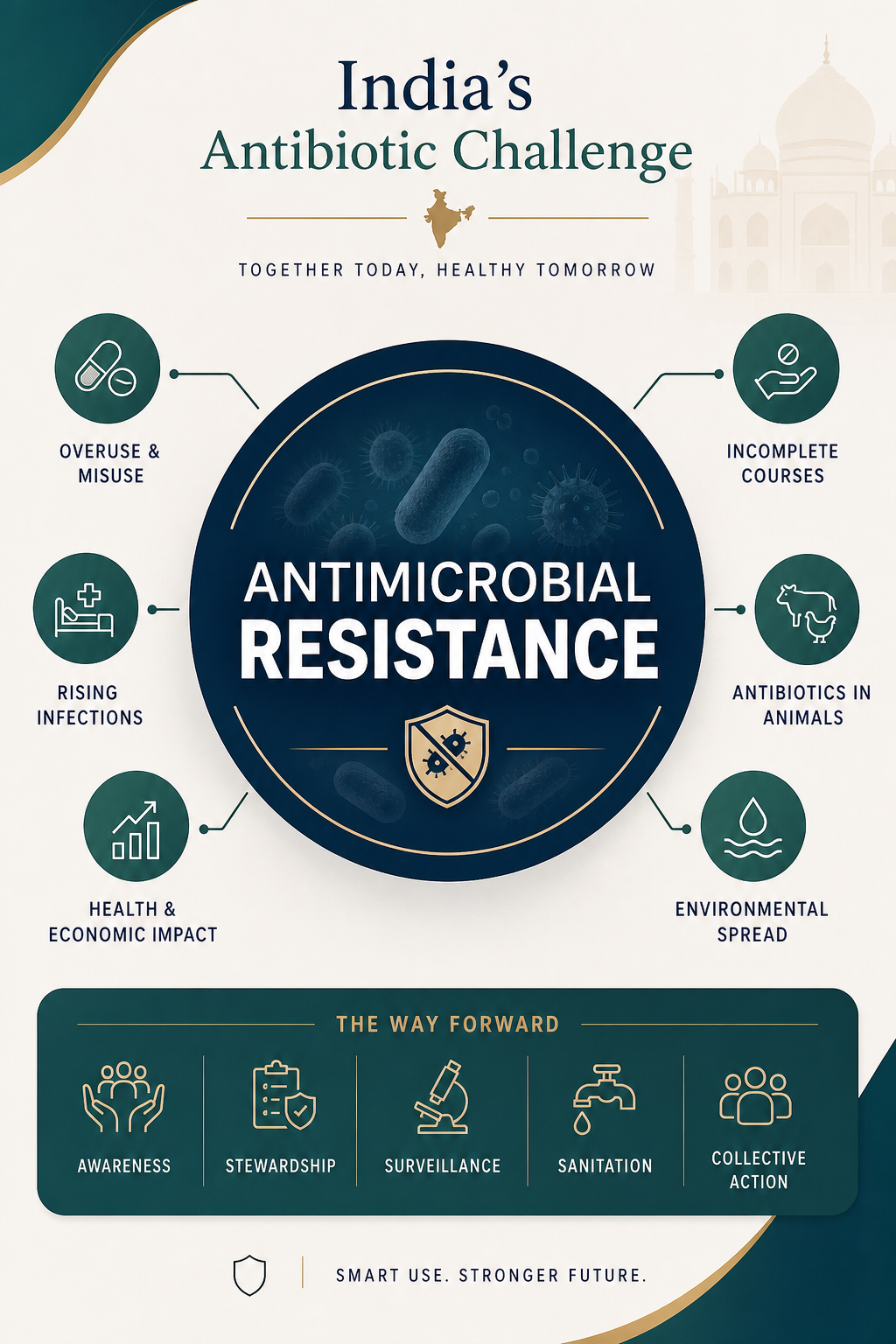
Antimicrobial Resistance (AMR) occurs when microorganisms such as bacteria, viruses, fungi and parasites evolve and become resistant to medicines that were previously effective against them. As resistance develops, infections become more difficult to treat, increasing the risk of prolonged illness, disability and death.
Antibiotic resistance, the most common form of AMR, is largely driven by inappropriate use of antibiotics, incomplete treatment courses, self-medication and excessive use of antibiotics in both humans and livestock.
Why is Antimicrobial Resistance in News?
A study published in The Lancet Public Health highlighted that India continues to rely heavily on ‘Watch’ antibiotics, which are intended for specific infections because they carry a higher risk of promoting antimicrobial resistance. The study also pointed to unequal access to first-line ‘Access’ antibiotics in several regions.
The findings underline the importance of antibiotic stewardship, rational prescribing practices and stronger implementation of the World Health Organization’s AWaRe classification. Official guidance is available through the World Health Organization.
Key Features of Antimicrobial Resistance
- Reduces the effectiveness of life-saving medicines.
- Leads to longer hospital stays and higher healthcare costs.
- Increases mortality from previously treatable infections.
- Threatens modern medical procedures such as surgeries, organ transplantation and chemotherapy.
- WHO classifies antibiotics under the AWaRe framework into Access, Watch and Reserve categories.
- Antibiotic stewardship promotes the right drug, right dose and right duration of treatment.
Challenges Related to Antimicrobial Resistance
India faces several challenges, including over-the-counter sale of antibiotics, self-medication, lack of diagnostic facilities, irrational prescriptions, inadequate infection prevention practices and extensive antibiotic use in livestock. Unequal access to quality healthcare also contributes to inappropriate antibiotic consumption.
Addressing AMR requires coordinated action across human health, animal health and environmental sectors under the One Health approach.
Way Forward for Antimicrobial Resistance
India should strengthen antibiotic stewardship programmes, improve diagnostic infrastructure, enforce prescription-only antibiotic sales, expand surveillance systems and increase public awareness regarding responsible antibiotic use. Wider availability of first-line Access antibiotics and effective implementation of the National Action Plan on AMR will be essential to contain resistance.
Further information on public health initiatives is available through the PIB Official Release.
Prelims Practice Corner
- What does the ‘A’ in the WHO AWaRe classification stand for?
- Which category of antibiotics is recommended as the first choice for most common bacterial infections?
- What is the primary cause of antimicrobial resistance?
- The One Health approach integrates which sectors?
- Which GS Paper covers health and governance issues?
Answers:
- Access
- Access antibiotics
- Inappropriate and excessive antimicrobial use
- Human, animal and environmental health
- GS-II
Mains Practice Questions
Q1. Discuss the causes and consequences of Antimicrobial Resistance in India. Suggest measures to address the growing challenge.
Answer Outline: Drivers of AMR, public health impact, WHO AWaRe framework, antibiotic stewardship, One Health approach.
Q2. Evaluate the importance of rational antibiotic use in achieving sustainable public health outcomes.
Answer Outline: Prescription practices, surveillance, diagnostics, awareness, policy reforms.
FAQs on Antimicrobial Resistance
- What is Antimicrobial Resistance?
- It is the ability of microorganisms to survive and multiply despite treatment with antimicrobial medicines, making infections difficult to cure.
- Why are Watch antibiotics a concern?
- They have a higher potential to promote resistance and should be used only for specific clinical indications.
- Why is Antimicrobial Resistance important for UPSC?
- It connects public health, governance, science, sustainable development and the One Health approach, making it highly relevant for both Prelims and Mains.
Related Current Affairs
Preparing for UPSC, PCS or HCS?
Talk to a mentor at Chetan Bharat Learning, Chandigarh. Free guidance on choosing the right exam and building a study plan.
Chat on WhatsAppCall 97793 53345UPSC / IAS / PCS coaching in Chandigarh · Trusted by aspirants across Punjab & Haryana
Leave a Reply
You must be logged in to post a comment.