
UPSC Syllabus Mapping
- GS Paper: GS-II & GS-III
- Subject: Governance, Water Resources and Environment
- Syllabus Pointers: Prep with our comprehensive UPSC Current Affairs Hub analysis guidelines.
Key Dimensions of Water Pricing
Water is a basic human necessity, a public good and an economic resource. Governments are responsible for ensuring universal access while also maintaining infrastructure for treatment, storage, distribution and wastewater management.
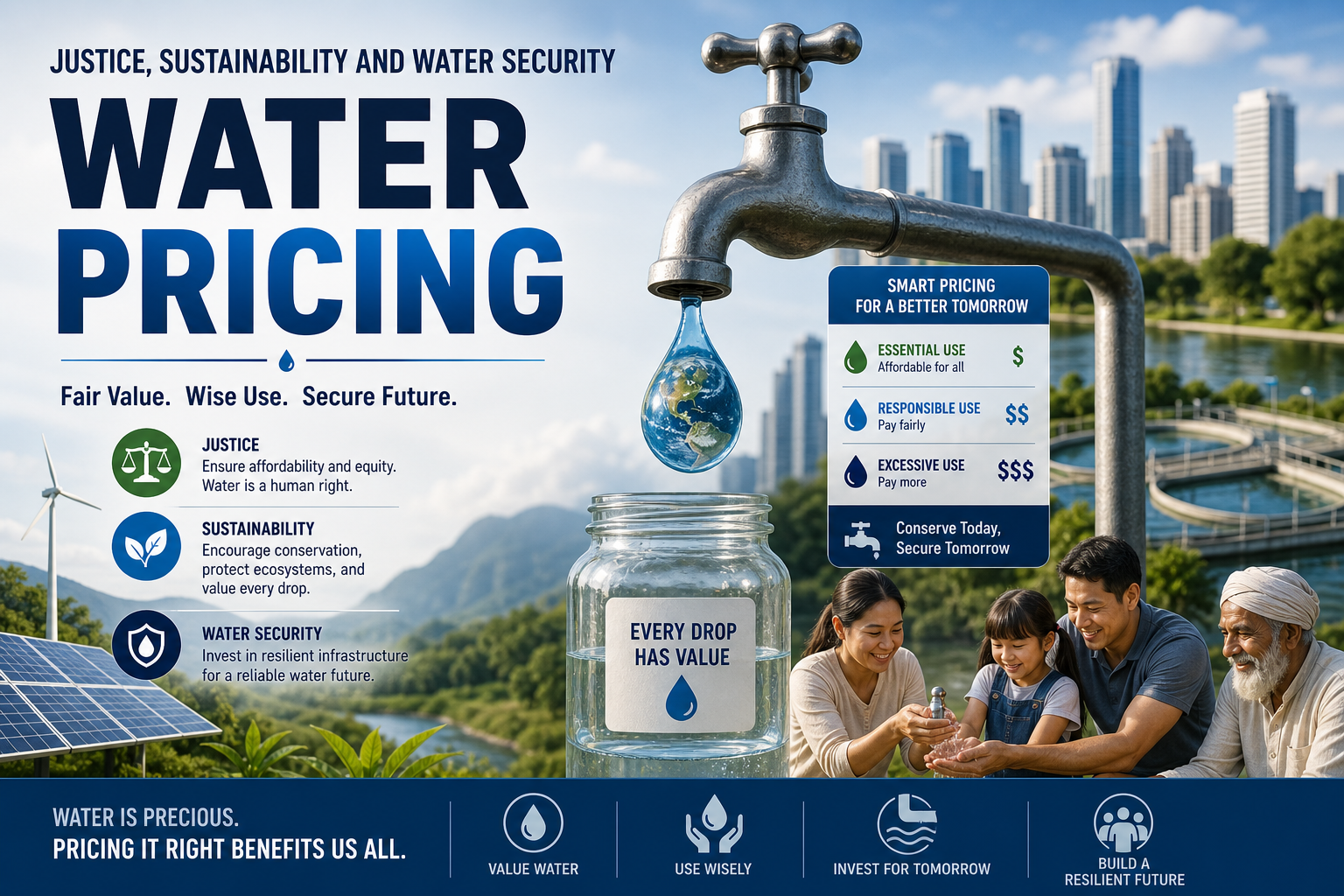
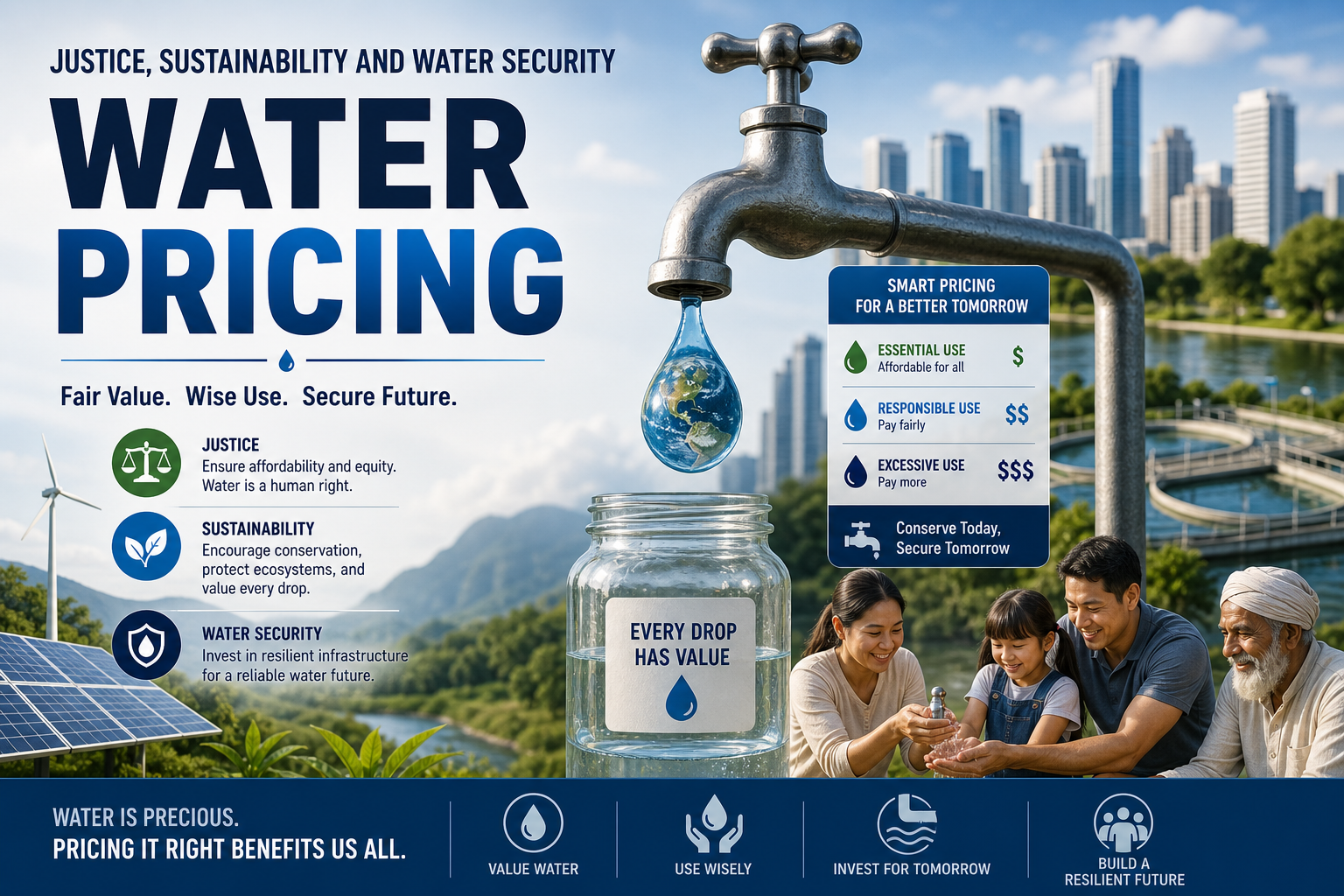
Water pricing refers to the tariff charged for supplying treated water to households, industries and commercial establishments. Ideally, tariffs should recover operation and maintenance costs, support infrastructure upgrades and encourage efficient water use.
Why is Water Pricing a Policy Challenge?
In many Indian cities, urban water tariffs are often influenced by administrative or political considerations rather than the actual cost of service delivery. Low tariffs can weaken the financial sustainability of Urban Local Bodies (ULBs), limiting their ability to maintain pipelines, reduce leakages and improve service quality.
At the same time, excessively high tariffs can reduce affordability for economically weaker households. Therefore, pricing policies must balance financial viability with equitable access to safe drinking water.
Important Concepts
- Grey Water: Grey water is wastewater generated from bathrooms, wash basins and kitchens, excluding toilet waste. After appropriate treatment, it can be reused for gardening, landscaping, flushing toilets and certain industrial purposes, thereby reducing demand for freshwater.
- Circular Water Economy: A circular approach treats water as a reusable resource rather than a disposable commodity. It emphasises reduction, recycling, reuse and efficient management of water throughout its lifecycle.
- Non-Revenue Water (NRW): NRW refers to treated water that is produced but does not generate revenue because of leakages, theft, illegal connections or faulty metering. High NRW results in financial losses for utilities and reduces the quality of water services.
Justice and Climate Dimensions
Affordable water does not automatically guarantee equitable access. Wealthier households often consume larger quantities of subsidised water, while poorer households may depend on expensive tanker supplies or packaged drinking water. Therefore, pricing reforms should be designed with social justice in mind.
Climate change is increasing pressure on India’s water resources through erratic monsoons, groundwater depletion, urbanisation and more frequent droughts. Efficient water pricing can promote conservation and strengthen climate adaptation strategies.
Progressive Water Pricing
Many experts recommend progressive or increasing block tariffs. Under this model, basic water requirements are supplied at affordable prices, while higher levels of consumption attract progressively higher tariffs. This approach protects vulnerable households while discouraging wasteful use.
For additional background on water resources management, refer to global developmental tracking frameworks.
Way Forward
India should adopt evidence-based water pricing policies that ensure affordability for essential consumption while promoting conservation and financial sustainability. Reducing non-revenue water, encouraging grey water reuse, strengthening urban water governance and investing in modern infrastructure will improve long-term water security. Water pricing must ultimately balance economic efficiency with environmental sustainability and social justice.
Prelims Practice Corner
- Which of the following best describes Non-Revenue Water (NRW)?
(a) Untreated groundwater (b) Water used only for irrigation (c) Treated water that does not generate revenue due to losses such as leakages and theft (d) Water supplied free of cost under government schemes
Answer: (c) NRW represents treated water that is produced but lost through leakages, theft, faulty metering or illegal connections before generating revenue.
- Grey water refers to wastewater generated from:
(a) Toilets only (b) Industrial chemical waste only (c) Bathrooms, wash basins and kitchens excluding toilet waste (d) Agricultural runoff
Answer: (c) Grey water excludes sewage from toilets and can often be treated and reused for several non-potable purposes.
Mains Practice Question
“Water pricing is not merely an economic issue but a question of environmental sustainability and social justice.” Discuss in the context of India’s growing water stress. (150 Words, 10 Marks)
FAQs
Why is water pricing important?
Appropriate pricing helps ensure financial sustainability of water utilities, encourages efficient use of water, reduces wastage and supports long-term water security while protecting access for vulnerable groups.
Related Current Affairs
Preparing for UPSC, PCS or HCS?
Talk to a mentor at Chetan Bharat Learning, Chandigarh. Free guidance on choosing the right exam and building a study plan.
Chat on WhatsAppCall 97793 53345UPSC / IAS / PCS coaching in Chandigarh · Trusted by aspirants across Punjab & Haryana
Leave a Reply
You must be logged in to post a comment.