
India’s latest National Family Health Survey (NFHS-6) presents a mixed picture of child nutrition. While some indicators show improvement, others reveal persistent and even worsening challenges. The survey highlights progress in reducing stunting among children but also raises concerns about underweight children, wasting, dietary adequacy, and declining breastfeeding rates in several states.
For UPSC aspirants, the findings are important because child nutrition is directly linked to human capital development, public health, social justice, and economic growth. Understanding these trends is crucial for topics related to Governance, Social Issues, Health, and Inclusive Development.
Students preparing through a reputed UPSC Coaching in Chandigarh or IAS Coaching in Chandigarh should pay close attention to such reports, as questions related to nutrition and health frequently appear in both Prelims and Mains examinations.
What is NFHS-6?
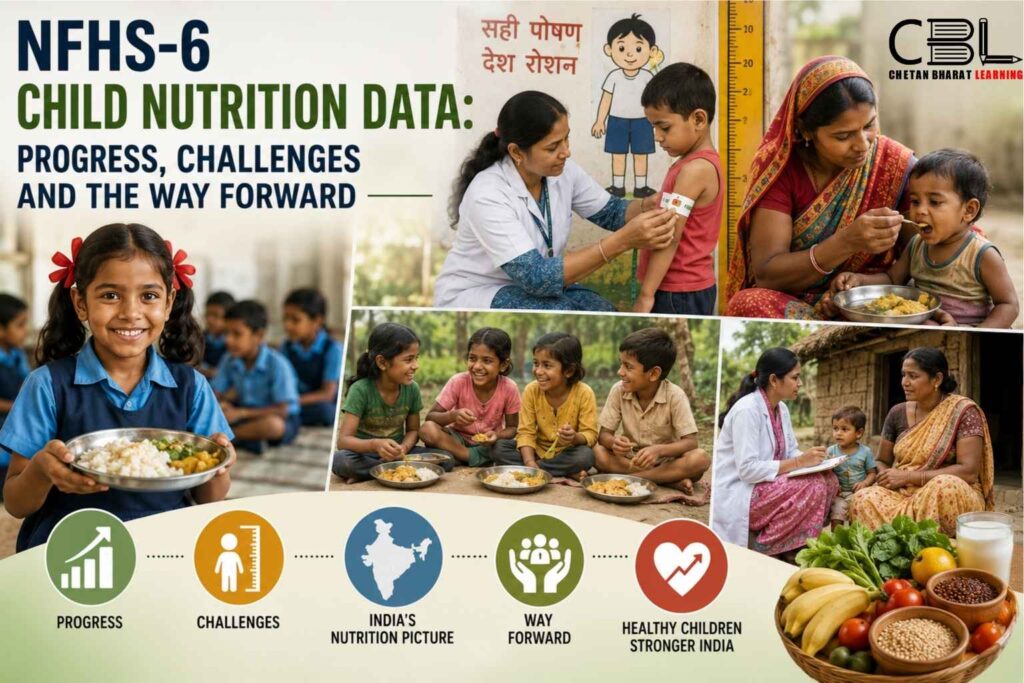
The National Family Health Survey (NFHS) is a large-scale survey conducted periodically to assess India’s health and demographic indicators. It provides valuable information on nutrition, maternal health, child health, fertility, and healthcare access.
NFHS-6 serves as an important tool for policymakers by measuring the effectiveness of government schemes and identifying areas requiring intervention.
Key Findings from NFHS-6
Decline in Stunting
One of the most encouraging findings is the reduction in stunting among children under five years of age. Stunting reflects chronic malnutrition and affects a child’s physical and cognitive development.
The survey indicates that stunting has declined significantly from 35.5% to 29.3% at the national level. This suggests that long-term nutritional outcomes have improved in many parts of the country.
Wasting Remains a Serious Concern
Despite improvements in stunting, wasting has declined only marginally from 7.7% to 5.2%.
Wasting is a sign of acute malnutrition and is often associated with higher child mortality. Nearly one in five children in India continues to suffer from acute nutritional deficiencies, highlighting the need for stronger interventions.
Underweight Children Still a Major Challenge
The proportion of underweight children has decreased only slightly from 32.1% to 31.8%.
This means nearly one-third of Indian children continue to face nutritional challenges, reflecting the persistent burden of poverty, food insecurity, and inadequate healthcare.
State-Level Disparities in Child Nutrition
The survey reveals significant differences among states.
States such as Kerala have recorded better outcomes, while states like Bihar, Jharkhand, Uttar Pradesh, and Rajasthan continue to struggle with high levels of malnutrition.
For example:
- Kerala’s stunting rate remains relatively low.
- Jharkhand records one of the highest wasting rates.
- Rajasthan and Uttar Pradesh continue to face high levels of underweight children.
These variations indicate that national averages often hide deep regional inequalities.
Dietary Adequacy Remains Poor
One of the most alarming findings of NFHS-6 is the low level of dietary adequacy among young children.
Only a small proportion of children aged 6–23 months receive an adequate and balanced diet.
This is concerning because the first two years of life are critical for physical growth and brain development. Nutritional deficiencies during this period can have lifelong consequences.
Declining Breastfeeding Rates
The survey also highlights a decline in exclusive breastfeeding rates.
Exclusive breastfeeding is one of the most cost-effective public health interventions. It strengthens immunity, improves nutrition, and reduces infant mortality.
However, several states have reported declining breastfeeding rates despite awareness campaigns and government interventions.
Experts believe that better postnatal support systems, counselling services, and maternal healthcare are needed to reverse this trend.
Why Child Nutrition Matters for India
Child nutrition is not merely a health issue; it is also an economic and developmental challenge.
Malnourished children often face:
- Poor educational outcomes
- Reduced cognitive abilities
- Lower productivity in adulthood
- Higher healthcare costs
- Increased vulnerability to diseases
A healthy child population contributes directly to a stronger workforce and sustainable economic growth.
Government Initiatives to Improve Child Nutrition
India has launched several programmes to address malnutrition:
Poshan Abhiyaan
A flagship mission aimed at reducing stunting, undernutrition, anaemia, and low birth weight.
Integrated Child Development Services (ICDS)
Provides supplementary nutrition, health services, and preschool education through Anganwadi centres.
PM POSHAN Scheme
Offers nutritious meals to school children to improve nutritional outcomes and school attendance.
Anaemia Mukt Bharat
Focuses on reducing anaemia among women, children, and adolescents.
Mission Saksham Anganwadi
Strengthens Anganwadi infrastructure and service delivery mechanisms.
Challenges Ahead
Despite progress, several challenges remain.
Regional Inequalities
Nutritional outcomes vary significantly across states, requiring targeted interventions.
Food Security Concerns
Climate-related disruptions and rising food prices can affect access to nutritious food.
Poor Dietary Diversity
Many children continue to consume diets lacking essential micronutrients.
Healthcare Gaps
Limited healthcare infrastructure and awareness affect maternal and child nutrition outcomes.
Declining Breastfeeding Practices
The fall in exclusive breastfeeding rates remains a major public health concern.
Significance for UPSC Aspirants
The NFHS-6 findings are relevant for:
Prelims
- Child nutrition indicators
- Poshan Abhiyaan
- ICDS
- Health and Nutrition Schemes
Mains GS Paper II
- Welfare Schemes
- Health Sector Reforms
- Human Development
- Social Justice
Essay Topics
- Nutrition and Human Capital
- Public Health Challenges in India
- Inclusive Growth and Social Development
Students preparing through UPSC Coaching in Chandigarh can use NFHS-6 data as valuable evidence in answers related to governance and social development. Similarly, aspirants enrolled in IAS Coaching in Chandigarh can strengthen their Mains answers with updated nutrition statistics and policy analysis.
FAQs
What is NFHS-6?
NFHS-6 is the sixth round of the National Family Health Survey that assesses health, nutrition, and demographic indicators across India.
What is stunting?
Stunting refers to low height for age caused by chronic malnutrition and poor health conditions.
Why is wasting important?
Wasting indicates acute malnutrition and increases the risk of child mortality.
What is exclusive breastfeeding?
Exclusive breastfeeding means feeding infants only breast milk for the first six months without additional food or liquids.
Why is NFHS-6 important for UPSC?
NFHS-6 provides updated data on nutrition, healthcare, and social development, making it highly relevant for UPSC Prelims, Mains, and Essays.
Conclusion
NFHS-6 offers encouraging evidence of progress in reducing stunting and improving several child health indicators. However, the survey also highlights serious concerns related to wasting, undernutrition, dietary adequacy, and declining breastfeeding rates. Addressing these challenges requires stronger policy implementation, improved healthcare delivery, and targeted interventions in high-burden states.
As India aims to achieve inclusive and sustainable development, improving child nutrition must remain a national priority. The findings of NFHS-6 serve as both a reminder of the progress achieved and a warning about the work that still lies ahead.
Related Current Affairs
Preparing for UPSC, PCS or HCS?
Talk to a mentor at Chetan Bharat Learning, Chandigarh. Free guidance on choosing the right exam and building a study plan.
Chat on WhatsAppCall 97793 53345UPSC / IAS / PCS coaching in Chandigarh · Trusted by aspirants across Punjab & Haryana
Leave a Reply
You must be logged in to post a comment.