
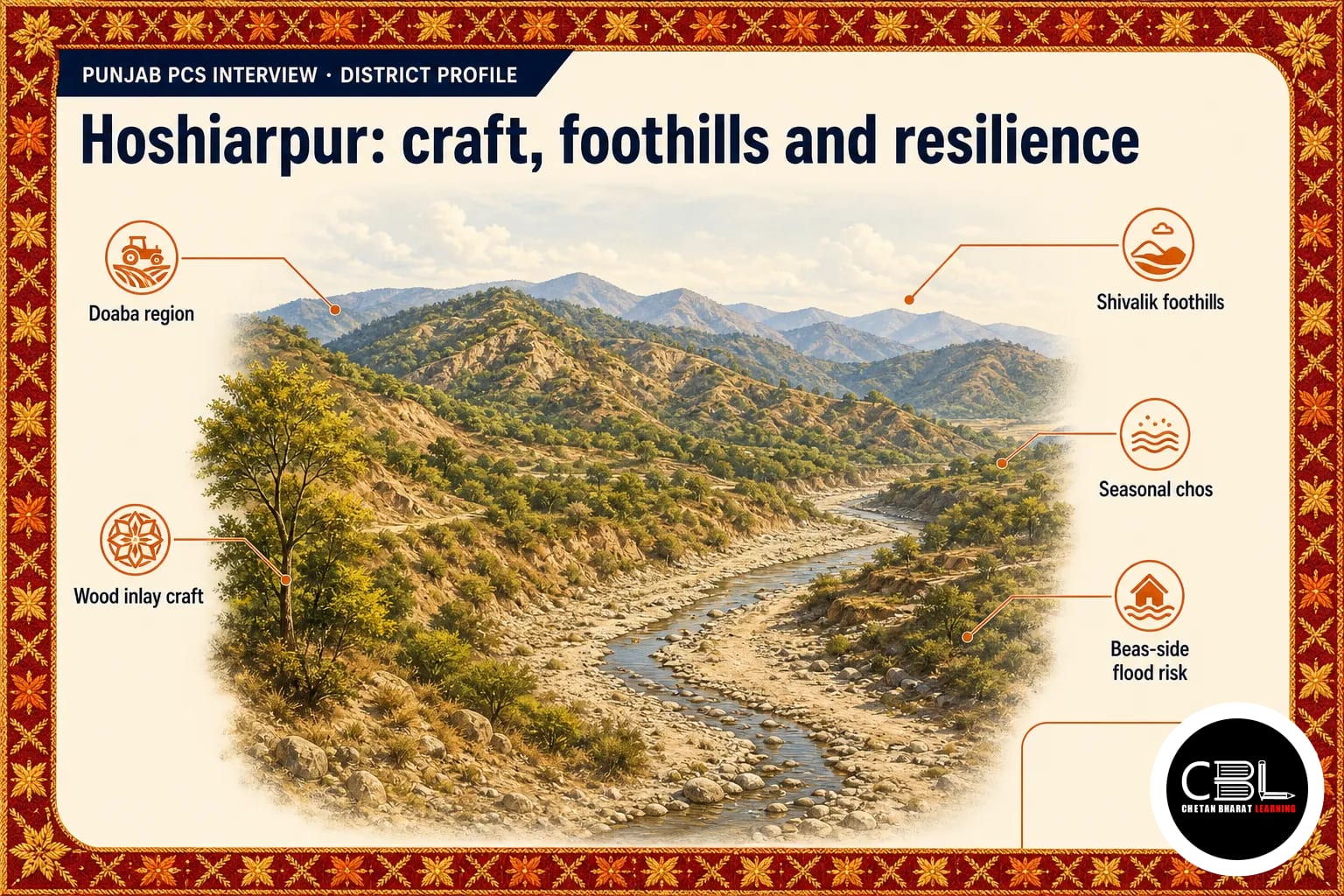
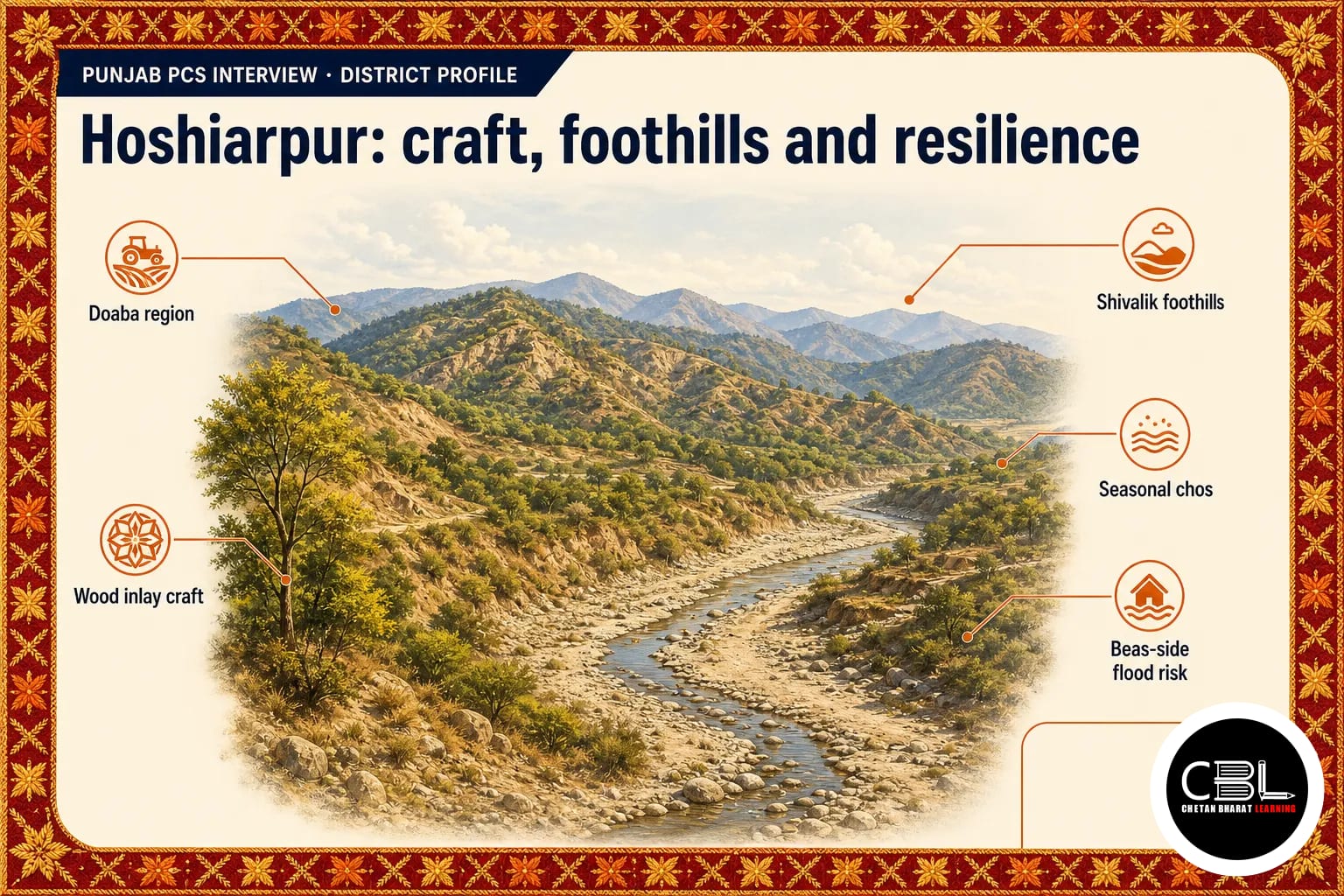
Hoshiarpur lies in Punjab’s Doaba region, adjoining Himachal Pradesh. Its Shivalik foothills, wood inlay craft and association with the Bhrigu Samhita are distinctive. Seasonal torrents called chos cause erosion and flash floods in the kandi belt. In August and September 2025, Beas-side villages in the Mukerian and Dasuya areas flooded. A Deputy Commissioner (DC) must balance flood preparedness with long-term soil and water conservation.
Timeline: Hoshiarpur in 5 stops
- 1849Punjab annexedAnnexation
Punjab was annexed by the British; Hoshiarpur became part of British-ruled Punjab.
- 1947Partition eraPartition
After Partition, Hoshiarpur became part of Indian Punjab.
- 1966State reorganisationReorganisation
Hoshiarpur remained in Punjab after the state was reorganised.
- Aug–Sept 2025Beas floodsFlood
Villages along the Beas flooded in the Mukerian and Dasuya areas.
- 2026Road maintenanceRepairs
The district administration ordered a road-repair drive with quality monitoring committees.
Know your district
| Point | Details |
|---|---|
| Headquarters | Hoshiarpur |
| Region | Doaba |
| Rivers and terrain | Shivalik foothills and kandi belt; seasonal chos; the Beas along the western edge. |
| Borders | Himachal Pradesh |
| Known for | Wood inlay craft, the Bhrigu Samhita tradition and kandi development. |
| Economy | Agriculture and craft; the district also has a large non-resident Indian (NRI) population. |
Places and people the board may ask about
- Hoshiarpur wood inlay: The district is known for decorative wood inlay craft.
- Bhrigu Samhita: This astrology tradition is associated with Hoshiarpur.
- Mukerian: The area is associated with a hydel channel and includes Beas-side villages affected by floods.
- Dasuya: Villages along the Beas in the area were flooded in 2025.
- Talwara: It lies near Pong Dam on the Beas, in Himachal Pradesh.
- Garhshankar: Its subdivision features in the proposal for an Anandpur Sahib district.
Strengths and challenges
Strengths
- Recognisable wood inlay craft and cultural traditions.
- Foothill landscapes and established kandi development programmes.
- Diaspora links through its NRI population.
Challenges
- Chos cause soil erosion and flash floods in the foothills.
- Beas-side settlements face flood risks.
- Road quality and access need monitoring, especially after damage.
What happened in 2025-26
- Aug–Sept 2025: Beas-side villages in the Mukerian and Dasuya areas flooded. See the Punjab floods 2025 interview brief for wider lessons.
- 2025–26: The proposed Anandpur Sahib district may include Garhshankar subdivision. The district bar association protested; the Punjab and Haryana High Court dismissed a public interest litigation (PIL) against the proposal and held that the state government is free to decide on merger of districts.
- 2026: The district administration ordered a road-repair drive with quality monitoring committees.
If you were DC of Hoshiarpur
- Flood readiness: Map vulnerable Beas-side settlements with local officials and practise warnings, evacuation and relief coordination before the monsoon.
- Kandi conservation: Identify erosion-prone cho catchments and use eligible works under the Mahatma Gandhi National Rural Employment Guarantee Act for soil and water conservation.
- Road quality: Have monitoring committees inspect materials and completed repairs, and create a channel for residents to report defects.
- Craft livelihoods: Work with artisans and relevant departments to improve access to training and markets for wood inlay products.
- Public consultation: Listen to residents and professional associations on administrative access, and communicate any state decisions clearly.
Likely interview questions
Tell us about your home district, Hoshiarpur.
Answer pointers:
- Locate it in Doaba, beside Himachal Pradesh.
- Mention the Shivalik foothills, wood inlay and Bhrigu Samhita tradition.
- Close with flood management and kandi development.
Are the Shivalik foothills an asset or a challenge for Hoshiarpur?
Answer pointers:
- Recognise the landscape and its development potential.
- Explain cho-led erosion and flash floods.
- Suggest catchment conservation alongside local livelihoods.
As DC, how would you respond to flooding in a Beas-side village?
Answer pointers:
- Issue warnings and coordinate safe evacuation.
- Arrange accessible relief, health support and accurate information.
- Assess damage and strengthen preparedness for the next monsoon.
What is distinctive about Hoshiarpur’s wood inlay craft?
Answer pointers:
- Identify it as a recognised local decorative craft.
- Discuss its cultural and livelihood value.
- Suggest artisan-led training and better market access.
How does the proposal involving Garhshankar raise questions of administrative access?
Answer pointers:
- Distinguish a proposal from a completed boundary change.
- Consider public access to offices and views of affected communities.
- Recommend transparent consultation and clear communication.
Take pride in Hoshiarpur’s craft and foothills without exaggeration. Acknowledge flood risks and offer a practical preparedness measure.
Prelims Practice Corner
Q1. Hoshiarpur belongs to which region of Punjab?
(a) Majha (b) Doaba (c) Malwa (d) Pothohar
Show answer
Answer: (b) because Hoshiarpur lies in the Doaba region.
Q2. What are the seasonal torrents of Hoshiarpur’s foothills called?
(a) Chos (b) Canals (c) Deltas (d) Lagoons
Show answer
Answer: (a) because seasonal foothill torrents are called chos.
Q3. Which craft is Hoshiarpur known for?
(a) Blue pottery (b) Wood inlay (c) Bell metal casting (d) Bamboo weaving
Show answer
Answer: (b) because wood inlay is a recognised Hoshiarpur craft.
Frequently Asked Questions
What is Hoshiarpur district famous for?
Hoshiarpur is known for wood inlay craft and the Shivalik foothills. It is also associated with the Bhrigu Samhita astrology tradition.
Which region of Punjab is Hoshiarpur in?
Hoshiarpur is in Doaba. It borders Himachal Pradesh and includes part of the kandi belt.
What are chos in Hoshiarpur?
Chos are seasonal torrents in the foothill area. They can cause soil erosion and flash floods.
Sources: The Tribune, The Tribune, The Tribune
Related Current Affairs
More Punjab district profiles
Preparing for UPSC, PCS or HCS?
Talk to a mentor at Chetan Bharat Learning, Chandigarh. Free guidance on choosing the right exam and building a study plan.
Chat on WhatsAppCall 97793 53345UPSC / IAS / PCS coaching in Chandigarh · Trusted by aspirants across Punjab & Haryana


Leave a Reply
You must be logged in to post a comment.