
UPSC Syllabus Mapping
- GS Paper: GS-III (Indian Economy, Employment, Inclusive Growth) and GS-I (Society)
- Subject: Employment, Manufacturing, Women Empowerment
- Prelims: PLFS, LFPR, WPR, Labour Force concepts
- Mains: Manufacturing-led growth, female labour force participation, industrial policy
Article
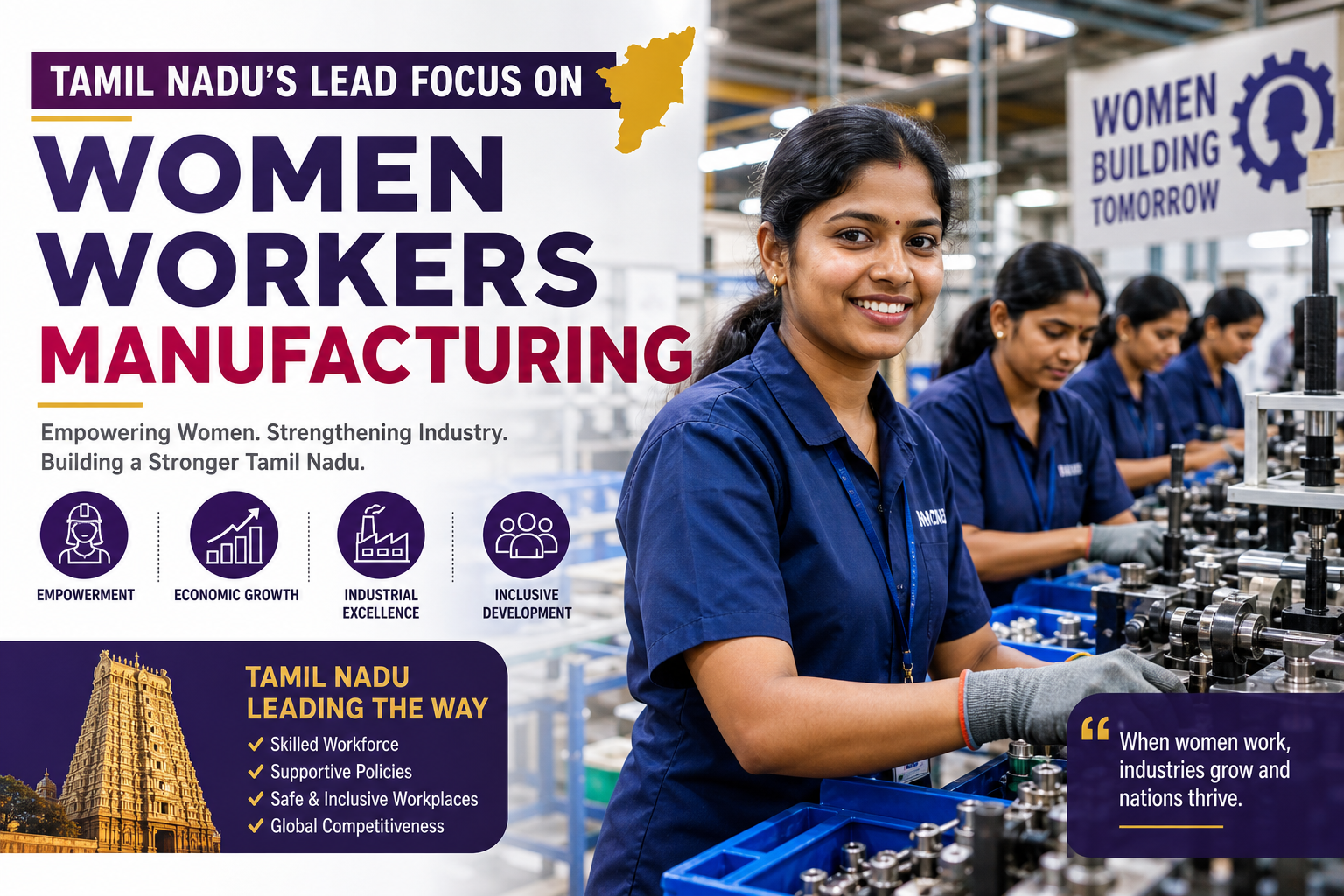
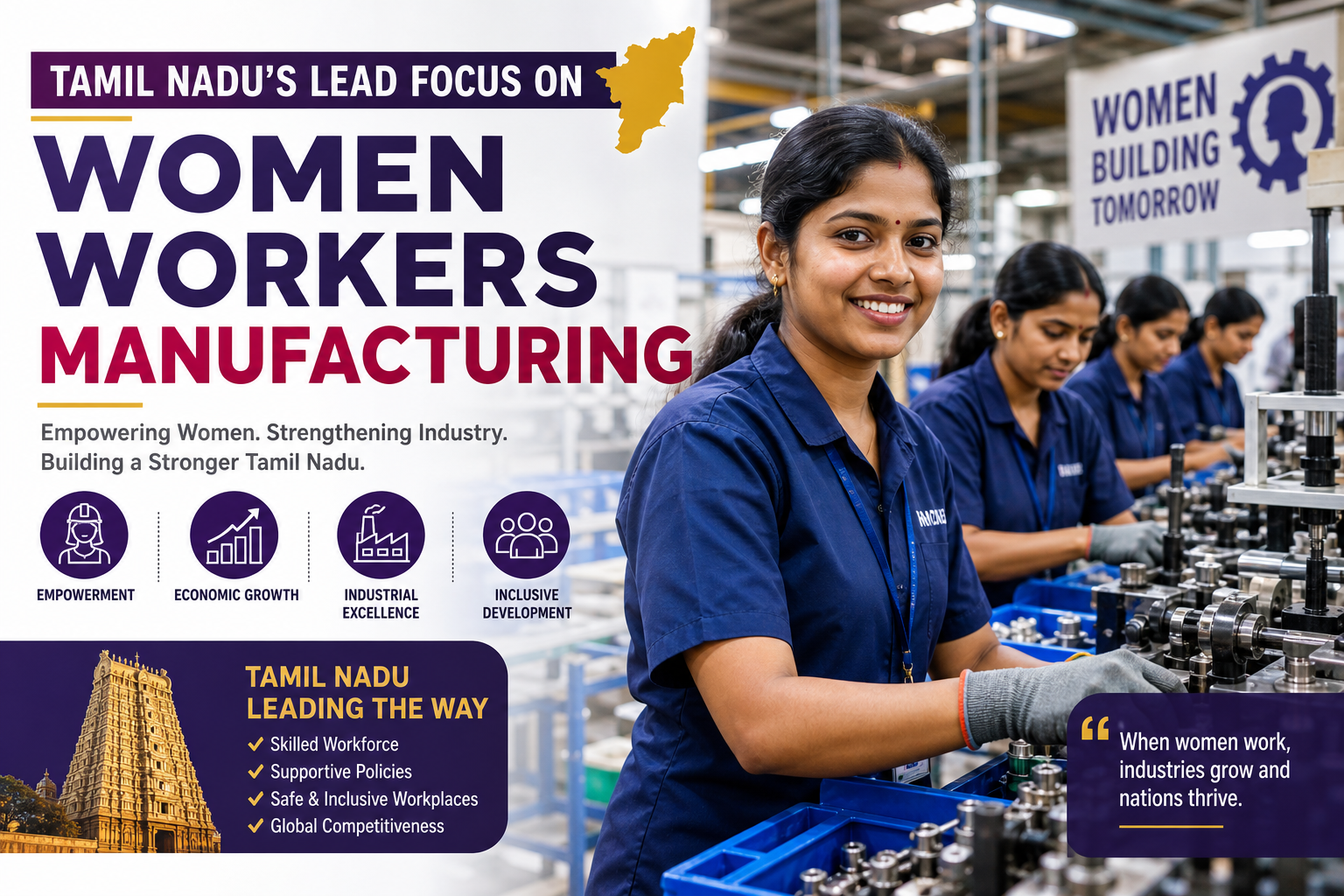
Women Workers Manufacturing has gained attention after the latest labour market data showed Tamil Nadu leading major Indian states in female labour participation, supported by rapid growth in electronics manufacturing and worker accommodation infrastructure. The development highlights how employment-oriented industrial policy can simultaneously improve manufacturing competitiveness and women’s economic participation.
Why in News
- Recent labour market estimates indicate Tamil Nadu has one of the highest female labour participation rates among major states.
- The expansion of electronics manufacturing has increased demand for women workers.
- Industrial dormitories and women-focused worker housing are emerging as enabling infrastructure.
Key Dimensions of Women Workers Manufacturing
The electronics manufacturing ecosystem relies on precision assembly, disciplined production systems and large-scale employment. Tamil Nadu has attracted global electronics manufacturers through industrial clusters, logistics connectivity, policy support and worker housing. This approach resembles elements of East Asian export-oriented manufacturing where labour availability, infrastructure and supply-chain integration reinforce industrial competitiveness.
Important Concepts for UPSC
| Concept | Meaning |
|---|---|
| Labour Force | Employed persons plus those actively seeking work. |
| LFPR | Share of working-age population participating in the labour market. |
| WPR | Percentage of working-age population actually employed. |
| PLFS | Periodic Labour Force Survey conducted by NSO to estimate employment indicators. |
Significance
- Promotes inclusive economic growth.
- Strengthens India’s electronics manufacturing ecosystem.
- Enhances export competitiveness.
- Improves household incomes and women’s financial autonomy.
- Supports the Make in India and semiconductor ecosystem.
Challenges
- Safe housing and transport.
- Occupational safety.
- Gender wage gaps.
- Career progression and skilling.
- Balancing labour flexibility with worker protection.
Way Forward
- Expand industrial hostels for women.
- Strengthen skill development.
- Improve childcare and public transport.
- Promote equal pay and safe workplaces.
- Deepen manufacturing clusters with social infrastructure.
For related topics visit UPSC Current Affairs Hub. Refer to the official government portal for official releases.
Prelims Practice Corner (5 MCQs)
Q1. PLFS is conducted by: (a) RBI (b) NSO (c) NITI Aayog (d) Labour Ministry
Answer: (b) NSO conducts PLFS.
Q2. LFPR measures: (a) Employment only (b) Labour market participation (c) Unemployment only (d) Wages
Answer: (b).
Q3. Which sector has significantly increased female employment in Tamil Nadu? (a) Mining (b) Electronics manufacturing (c) Shipping (d) Oil refining
Answer: (b).
Q4. Which initiative supports domestic manufacturing? (a) PM-KISAN (b) Make in India (c) Jal Jeevan Mission (d) PMGSY
Answer: (b).
Q5. Higher female labour participation generally contributes to: (a) Lower productivity (b) Inclusive growth (c) Higher inflation only (d) Lower exports
Answer: (b).
Mains Practice Questions & Answer Structure
Q1. Discuss the role of female labour force participation in India’s manufacturing-led growth.
Introduction: Employment and demographic dividend.
Body: Manufacturing clusters, social infrastructure, exports, challenges, policy reforms.
Conclusion: Inclusive industrialisation.
Q2. Evaluate how worker housing can become productive economic infrastructure.
Introduction: Labour mobility.
Body: Safety, retention, productivity, urban planning, state support.
Way Forward: Integrated industrial ecosystems.
FAQs
What is LFPR?
It measures the share of working-age people participating in the labour market.
Why is Tamil Nadu performing well?
Industrial clusters, electronics manufacturing and worker-support infrastructure have boosted employment opportunities for women.
Why is this topic important for UPSC?
It links Economy, Society, employment data, industrial policy and inclusive growth, making it relevant for both Prelims and GS-III Mains.
Related Current Affairs
Preparing for UPSC, PCS or HCS?
Talk to a mentor at Chetan Bharat Learning, Chandigarh. Free guidance on choosing the right exam and building a study plan.
Chat on WhatsAppCall 97793 53345UPSC / IAS / PCS coaching in Chandigarh · Trusted by aspirants across Punjab & Haryana
Leave a Reply
You must be logged in to post a comment.