
UPSC Syllabus Mapping
GS Paper: GS-III
Subject: Indian Economy, Start-up Ecosystem and Investment
Syllabus Pointers: Prep with our comprehensive UPSC Current Affairs Hub analysis guidelines.
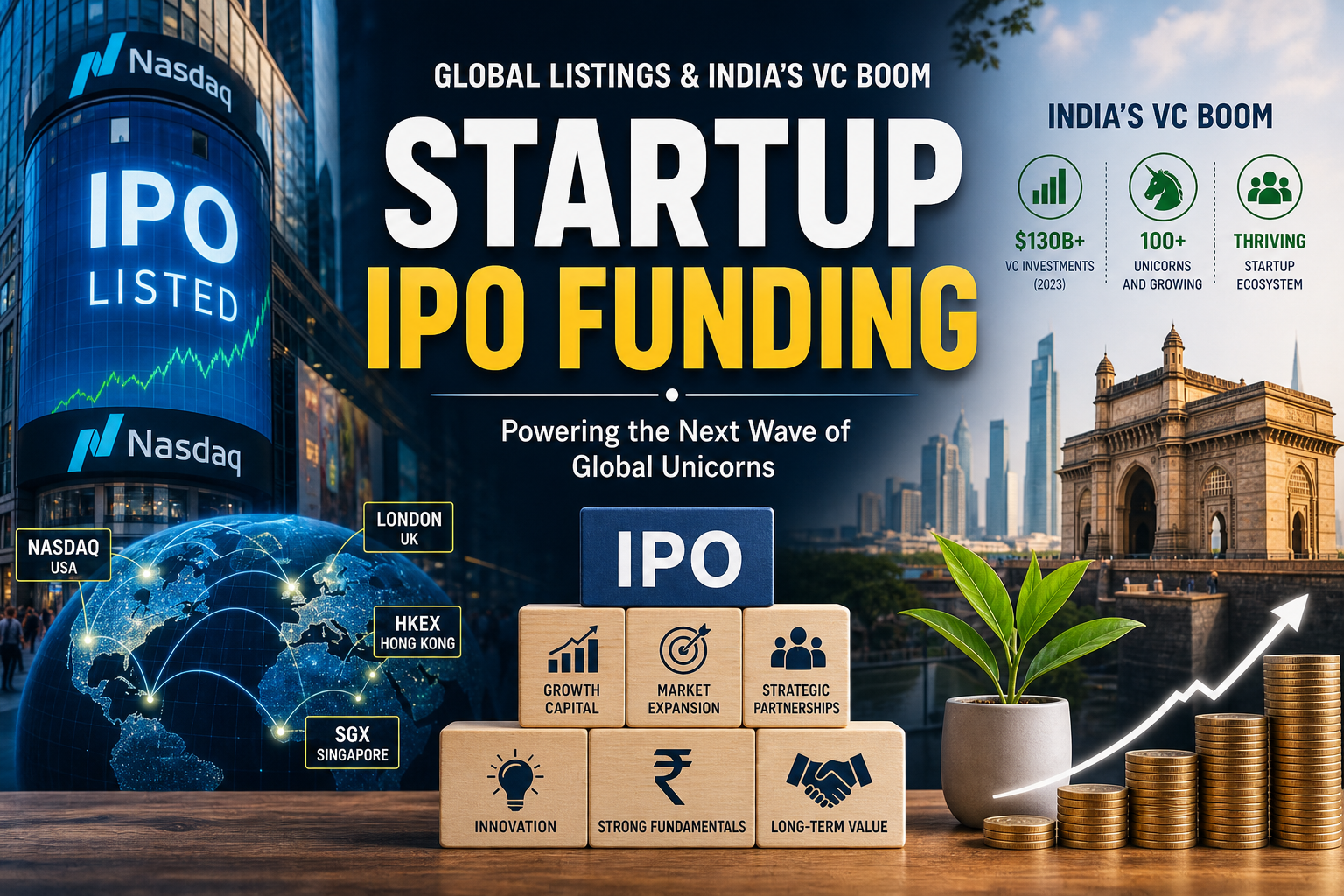
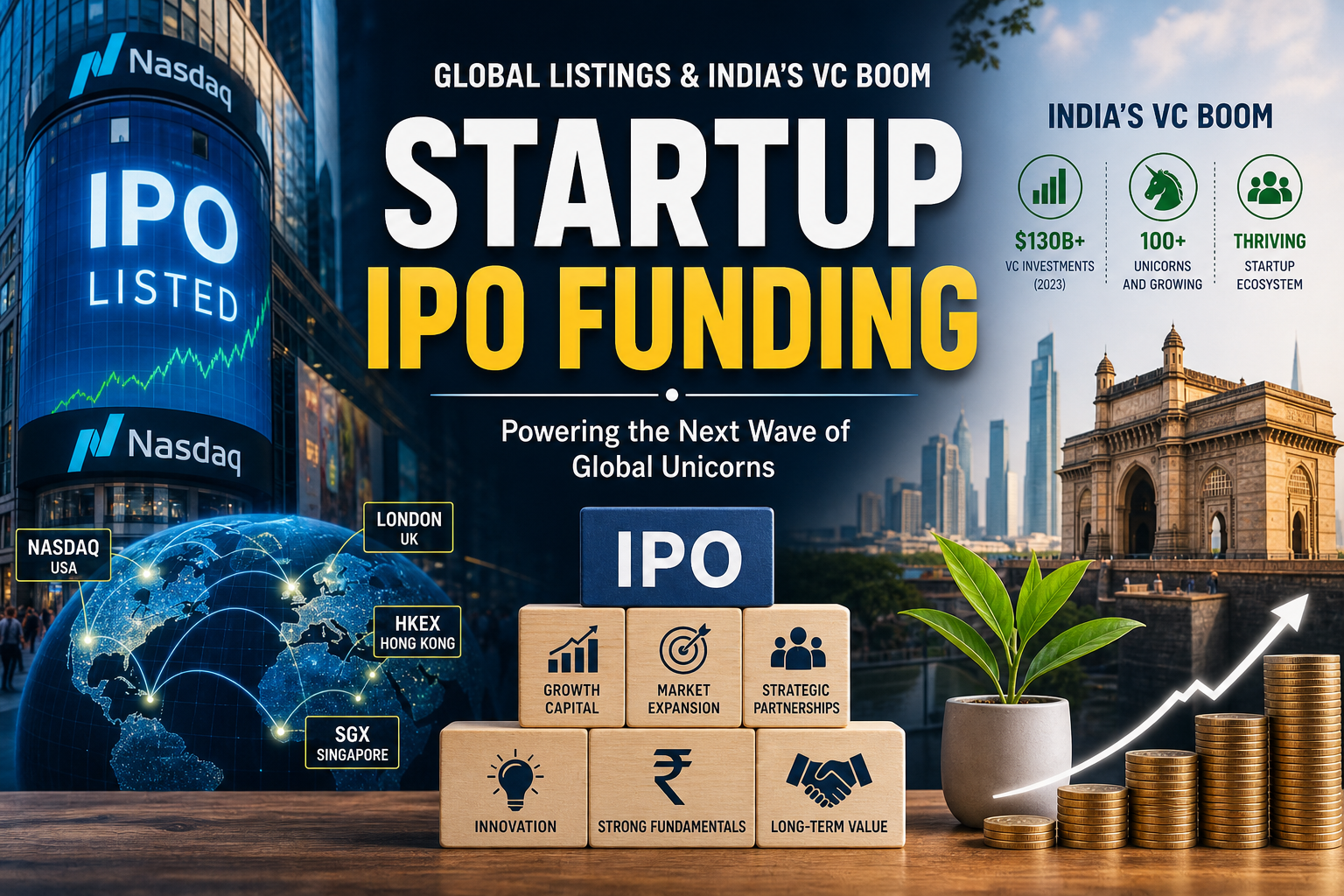
Recent developments regarding Startup IPO Funding suggest that the anticipated public listings of major global technology companies such as SpaceX and AI firms could generate fresh liquidity for global venture capital (VC) and private equity (PE) investors. Successful exits may lead to capital recycling, increasing the availability of funds for high-growth startups, including those in India.
Key Dimensions of Startup IPO Funding
A start-up is an innovative enterprise, usually technology-driven, that operates with high growth potential and relies heavily on external funding during its early stages. Start-ups generally progress through funding rounds beginning with founder savings, angel investment and seed funding before raising capital through venture capital, private equity and eventually an Initial Public Offering (IPO).
An Initial Public Offering (IPO) is the process through which a private company offers its shares to the public for the first time and becomes a listed company. IPOs provide early investors with an opportunity to realise returns and enable companies to access larger pools of capital for future expansion.
Capital Recycling: The Main Concept
When venture capital or private equity investors exit through successful IPOs, they recover their invested capital along with any gains. Instead of remaining locked in mature companies, this capital is often reinvested into new start-ups. This process is known as capital recycling and is a key driver of innovation ecosystems.
Because many global venture funds have also invested in Indian technology companies, successful exits abroad can strengthen their financial capacity to invest further in India’s start-up ecosystem over the medium term.
Venture Capital and Private Equity
Venture Capital (VC) primarily finances early-stage, high-risk, innovation-driven enterprises with strong growth potential. VC investors expect high returns by supporting promising start-ups from their initial stages.
Private Equity (PE), in contrast, generally invests larger amounts in relatively mature companies, focusing on scaling operations, improving profitability and creating value before eventual exits.
Implications for India
India hosts one of the world’s largest start-up ecosystems. Greater availability of global venture capital can support innovation in fintech, artificial intelligence, health technology, climate technology, space technology, deep-tech and manufacturing start-ups.
However, fresh funding is unlikely to arrive immediately after IPOs. Capital first flows back to investors and limited partners before being allocated to new investment funds. Therefore, any positive impact on Indian start-ups is expected to emerge over the medium term rather than instantly.
For additional background on venture capital, refer to global developmental tracking frameworks.
Way Forward
India should continue improving ease of doing business, deepen domestic venture capital markets, encourage innovation-friendly regulations, strengthen research-commercialisation linkages and promote patient capital for deep-technology sectors. Stable policy, strong digital infrastructure and sustained entrepreneurship will enhance India’s position as a global innovation hub.
Prelims Practice Corner
Q1. An Initial Public Offering (IPO) refers to:
- (a) Government borrowing from banks
- (b) The first sale of a private company’s shares to the public
- (c) Foreign Direct Investment by governments
- (d) A merger between two listed companies
Answer: (b) An IPO marks the transition of a private company into a publicly listed company by offering shares to public investors.
Q2. Venture Capital primarily invests in:
- (a) Mature government enterprises
- (b) Early-stage, high-growth and high-risk start-ups
- (c) Public sector banks
- (d) Sovereign bonds
Answer: (b) Venture capital supports innovative early-stage businesses with high growth potential in exchange for equity.
Mains Practice Question
“Successful global technology IPOs can indirectly strengthen India’s start-up ecosystem through capital recycling. Discuss the role of venture capital, IPO exits and policy support in promoting innovation-led economic growth.” (150 Words, 10 Marks)
FAQs
What is capital recycling in the start-up ecosystem?
Capital recycling is the reinvestment of funds recovered by investors after successful exits, such as IPOs, into new start-ups and innovation-driven businesses.
Related Current Affairs
Preparing for UPSC, PCS or HCS?
Talk to a mentor at Chetan Bharat Learning, Chandigarh. Free guidance on choosing the right exam and building a study plan.
Chat on WhatsAppCall 97793 53345UPSC / IAS / PCS coaching in Chandigarh · Trusted by aspirants across Punjab & Haryana
Leave a Reply
You must be logged in to post a comment.