
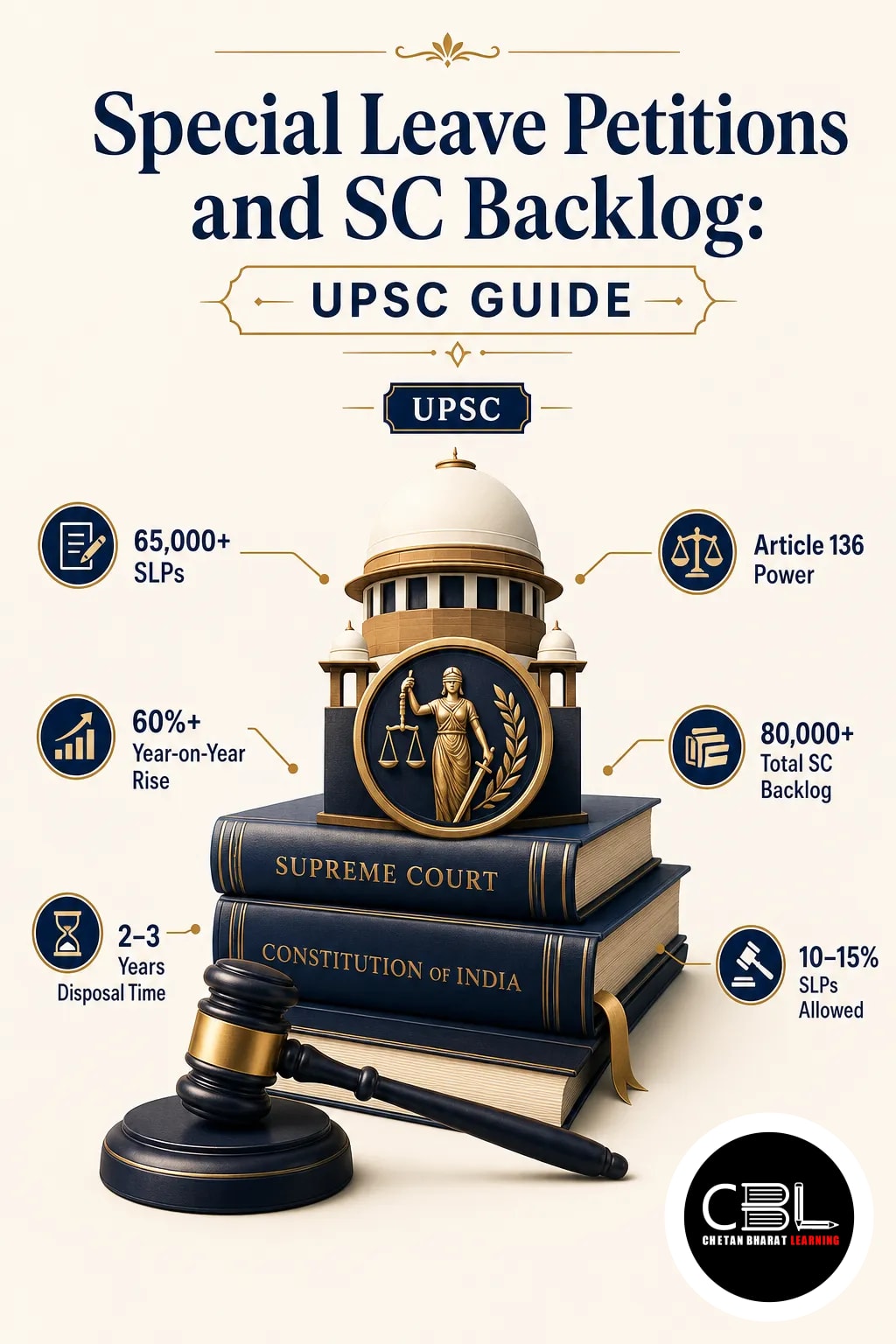
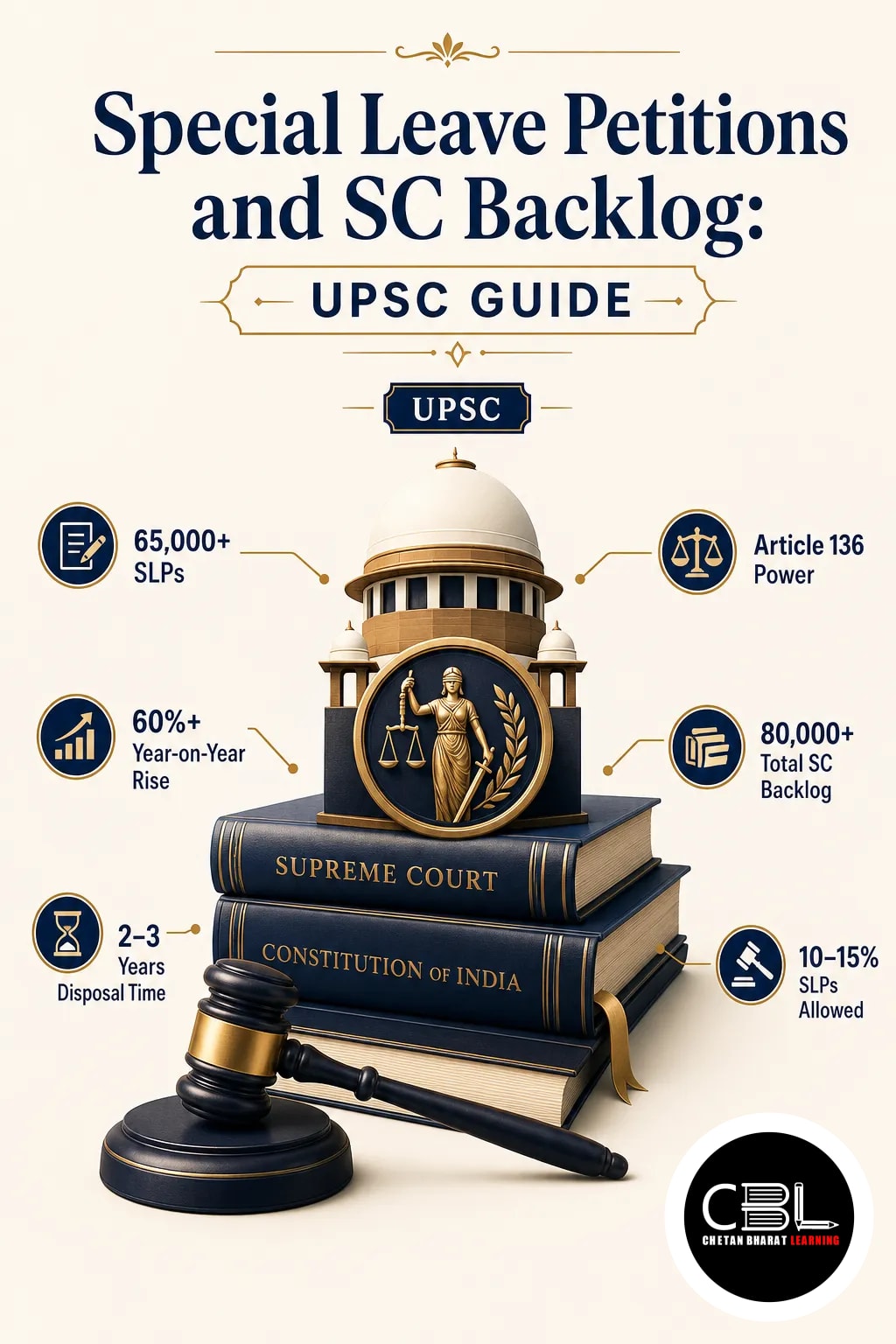
Special Leave Petitions are drawing attention because the Supreme Court may be spending too much time on them. Current affairs coverage around judicial workload makes this issue relevant for UPSC polity preparation.
What the Court Held
The central concern is not the validity of Special Leave Petitions, but their scale and effect on judicial time. Under Article 136, the Supreme Court can grant special leave against judgments, decrees, or orders from any court or tribunal.
This power is extraordinary and discretionary. It lets the Court step in where a case raises serious injustice, but it was never meant to function as an ordinary appeal channel.
Background of the Case
The news report points to a larger institutional problem: too many matters reach the apex court through the SLP route. When routine disputes enter the Supreme Court, the Court spends less time on constitutional interpretation and national legal questions.
This creates pressure on the docket and affects final disposal of serious matters. The concern also links to the long-standing debate on whether the Court should remain a court of constitutional importance rather than a regular appellate forum.
Constitutional and Legal Provisions
| Article/Act | What it says |
|---|---|
| Article 136 | Gives the Supreme Court discretionary power to grant special leave from any judgment, decree, determination, sentence, or order. |
| Supreme Court Rules | Provide the procedural framework for filing and hearing matters before the Court. |
| Constitutional scheme | Places the Supreme Court at the apex of the judicial hierarchy, with both appellate and constitutional functions. |
Implications
- Backlog pressure increases when the Court hears large numbers of SLPs, reducing time for matters of wider legal significance.
- Selective justice review becomes harder when the Court must filter many petitions with similar factual disputes.
- Lower court confidence can weaken if litigants treat the Supreme Court as a routine second appeal forum.
- Institutional focus may shift away from constitutional adjudication, which is one of the Court’s core roles.
Criticism and Concerns
- Overuse of discretion can blur the line between exceptional review and regular appellate supervision.
- Delay in justice grows when meritorious constitutional cases wait behind numerous private disputes.
- Uneven filtering may occur because admission decisions depend heavily on judicial discretion.
- Access burden rises for litigants when the apex court becomes crowded and harder to navigate.
Source: Indian Express Explained, 26 Oct 2026
This topic fits directly into Indian Polity and the working of the judiciary, which are regular areas in Punjab PCS and Haryana HCS. It also helps in understanding how constitutional discretion, judicial backlog, and access to justice affect governance and citizen rights.
Frequently Asked Questions
What is the main purpose of a Special Leave Petition?
An SLP asks the Supreme Court to permit an appeal in exceptional cases. It is meant to correct serious injustice, not replace ordinary appeals.
Why do too many SLPs matter?
A large volume of SLPs can crowd the Supreme Court’s schedule. That leaves less time for constitutional matters and broad legal questions.
Which Article gives this power to the Supreme Court?
Article 136 gives the Supreme Court discretionary power to grant special leave. The Court decides whether a case deserves that exceptional hearing.
Related Current Affairs
Preparing for UPSC, PCS or HCS?
Talk to a mentor at Chetan Bharat Learning, Chandigarh. Free guidance on choosing the right exam and building a study plan.
Chat on WhatsAppCall 97793 53345UPSC / IAS / PCS coaching in Chandigarh · Trusted by aspirants across Punjab & Haryana
Leave a Reply
You must be logged in to post a comment.