
Important For:
UPSC / HCS / PCS Aspirants
GS Paper 2: Constitution, Fundamental Rights, Judiciary
GS Paper 4: Ethics & Social Reform
Essay Topics: Religion vs Constitutional Morality, Social Reform in India
Why in News?
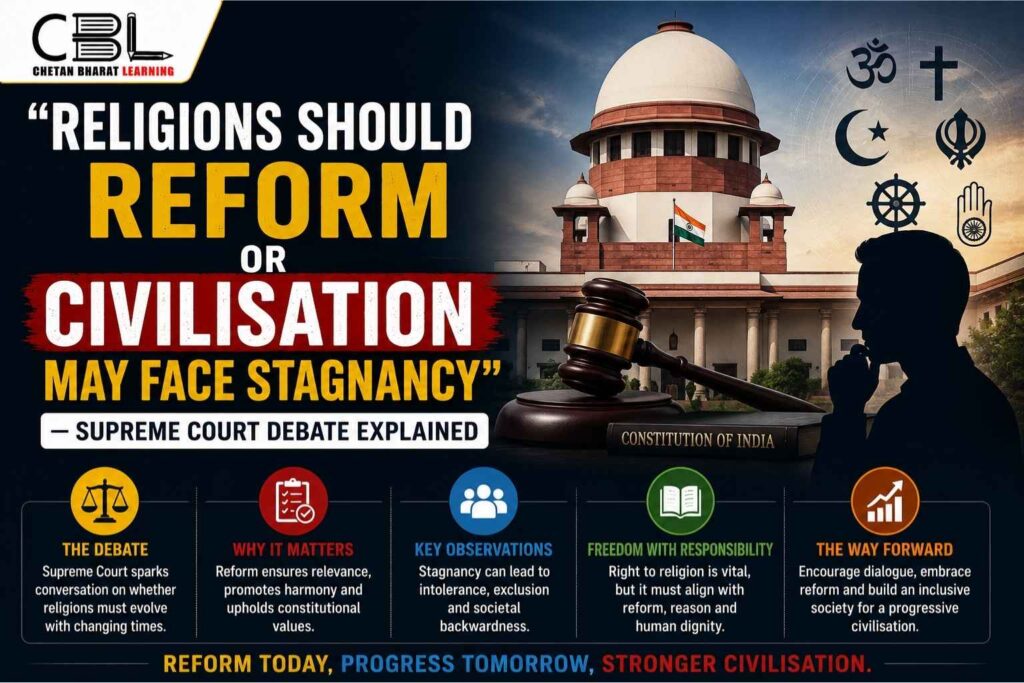
During hearings related to the Sabarimala review case, senior advocates argued before the Supreme Court that:
➤ Religions must evolve and reform
otherwise
➤ Civilisations may become stagnant.
The debate focused on:
- Religious practices
- Constitutional morality
- Social reform
- Fundamental rights
Core Constitutional Debate
The issue raises a major constitutional question:
Can religious customs continue if they violate fundamental rights?
The Supreme Court is examining:
✔ Equality
✔ Dignity
✔ Freedom of religion
✔ Constitutional morality
Relevant Constitutional Provisions
Article 25
Provides:
➤ Freedom of religion
subject to:
- Public order
- Morality
- Health
- Other fundamental rights
Article 14
Guarantees:
➤ Equality before law
Article 13
States that:
➤ Laws inconsistent with fundamental rights can be declared void.
What is Constitutional Morality?
Constitutional morality means:
➤ Governance and practices must align with:
- Equality
- Liberty
- Justice
- Dignity
even if social traditions oppose them.
Why Social Reform Matters
India has a long history of reform movements against:
- Untouchability
- Gender discrimination
- Social exclusion
- Harmful customs
Social reform helped strengthen:
✔ Democracy
✔ Human rights
✔ Inclusive society
Key Concerns in the Debate
1. Religious Freedom vs Equality
Balancing:
➣ Religious autonomy
with
➣ Fundamental rights
remains difficult.
2. Judicial Intervention in Faith
Critics argue:
➤ Courts should avoid excessive interference in religious matters.
3. Social Progress vs Tradition
Supporters of reform say:
✔ Societies must evolve with changing constitutional values.
Important Judicial Principle
The Supreme Court has repeatedly emphasised:
➤ Constitutional values are supreme.
Customs violating dignity and equality may face judicial scrutiny.
Broader Significance for India
This debate reflects larger questions about:
- Gender justice
- Minority rights
- Social transformation
- Role of judiciary in reforms
Special Note for Aspirants
Students preparing through UPSC Coaching Chandigarh and IAS Coaching Chandigarh should focus on:
- Fundamental Rights
- Constitutional morality
- Judicial activism
- Social reform movements
These themes are highly important for:
✔ GS Paper 2
✔ Essay
✔ Ethics & Interview
Analytical Insight
A democratic civilisation survives not merely through traditions,
but through:
➣ Its ability to reform while protecting constitutional values.
PRELIMS PRACTICE QUESTIONS
Q1. Article 25 of the Constitution deals with:
A. Right to property
B. Freedom of religion
C. Right to education
D. Emergency provisions
✅ Answer: B
Q2. Constitutional morality is primarily associated with:
A. Religious rituals
B. Social customs only
C. Constitutional values and principles
D. Foreign policy
✅ Answer: C
Q3. Article 14 guarantees:
A. Religious freedom
B. Equality before law
C. Freedom of speech only
D. Right against exploitation
✅ Answer: B
UPSC Mains Practice Question
“Constitutional morality and social reform often come into conflict with traditional religious practices.” Discuss in the context of Indian democracy.
FAQs
1. What is constitutional morality?
Respect for constitutional values like equality, liberty, and dignity.
2. Why is the Sabarimala case important?
It raises questions about religion, gender equality, and judicial intervention.
3. Can courts review religious practices?
Yes, if practices violate constitutional principles or fundamental rights.
4. Why are social reforms important in democracy?
They help ensure equality and protection of human rights.
Related Current Affairs
Preparing for UPSC, PCS or HCS?
Talk to a mentor at Chetan Bharat Learning, Chandigarh. Free guidance on choosing the right exam and building a study plan.
Chat on WhatsAppCall 97793 53345UPSC / IAS / PCS coaching in Chandigarh · Trusted by aspirants across Punjab & Haryana
Leave a Reply
You must be logged in to post a comment.