
Important for:
UPSC, Haryana HCS, Punjab PCS
Prelims: Coal gasification, Syngas, Energy security, Ammonia & Methanol
Mains: GS Paper 3 — Energy, Infrastructure, Clean Technology, Industrial Policy
Why in News?
The Union Cabinet has approved a revised ₹37,500 crore scheme to promote coal gasification projects in India.
The initiative aims to:
- Reduce import dependence
- Improve domestic energy security
- Encourage cleaner utilisation of coal resources
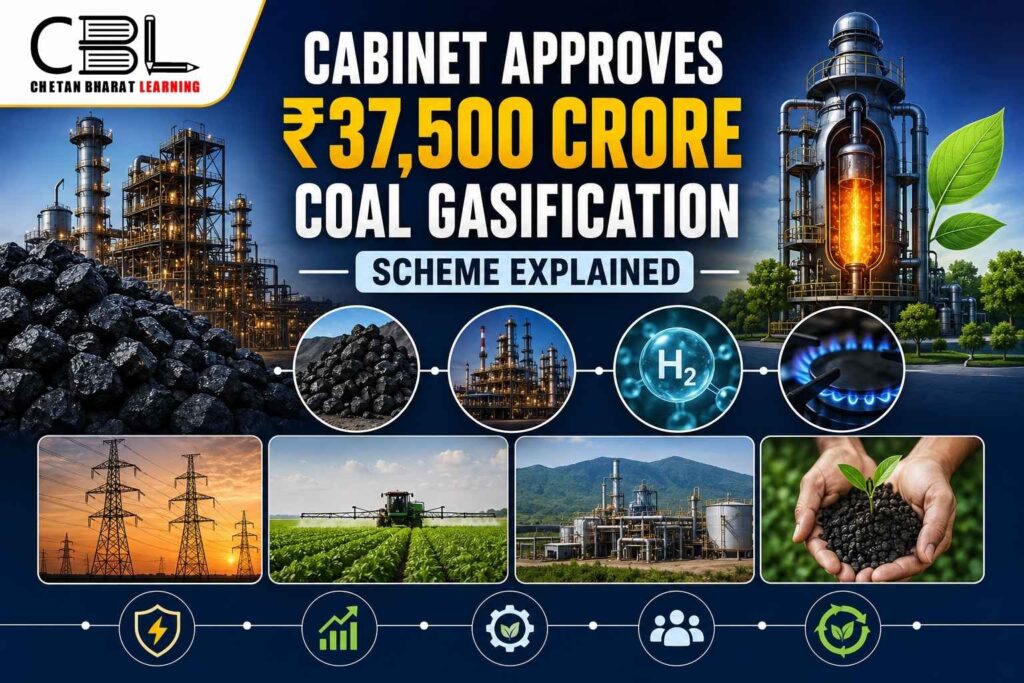
What is Coal Gasification?
Coal gasification is a process in which:
➤ Coal is converted into synthetic gas (Syngas).
Syngas mainly contains:
- Carbon monoxide (CO)
- Hydrogen (H₂)
- Methane (CH₄)
Uses of Coal Gasification
Syngas can be used for:
✔ Power generation
✔ Fertiliser production
✔ Methanol production
✔ Chemicals industry
✔ Industrial fuel
Key Features of the Scheme
1. ₹37,500 Crore Incentive Scheme
Government support for:
➤ Coal gasification projects
2. Import Reduction
India imports:
- Fertilisers
- Natural gas
- Methanol
Coal gasification can reduce dependence.
3. Energy Security
Supports:
➤ Domestic fuel and chemical production
4. Target for 2030
Goal:
➤ 100 million tonnes coal gasification capacity
Why is Coal Gasification Important?
1. Better Coal Utilisation
India has large coal reserves.
Gasification allows:
➤ Cleaner and efficient usage.
2. Reduces Import Bill
Helps save foreign exchange.
3. Industrial Development
Boosts:
- Chemical industry
- Fertiliser sector
- Manufacturing
4. Strategic Energy Security
Reduces vulnerability to:
- Global energy shocks
- Supply disruptions
Concerns & Challenges
1. Environmental Concerns
Coal remains:
➤ A fossil fuel
Carbon emissions remain a challenge.
2. High Initial Investment
Gasification plants require:
➤ Large capital investment
3. Technology Dependence
Advanced technology and infrastructure are required.
Global Context
Countries using coal gasification:
- China
- South Africa
- USA
China has major coal-to-chemical projects.
India-Specific Relevance
India aims to balance:
✔ Energy security
✔ Industrial growth
✔ Cleaner technology transition
while utilising domestic coal resources.
Special Note for Aspirants
Students preparing through UPSC Coaching Chandigarh and IAS Coaching Chandigarh should focus on:
- Energy transition
- Clean coal technologies
- Import dependence
- Industrial policy reforms
These are highly relevant for GS Paper 3.
Key Insight for UPSC
➤ India’s energy strategy is moving toward:
✔ Diversification
✔ Domestic production
✔ Strategic self-reliance
while managing environmental concerns.
PRELIMS PRACTICE QUESTIONS
Q1. Coal gasification converts coal into:
A. Crude oil
B. Syngas
C. Uranium
D. Ethanol
✅ Answer: B
Q2. Syngas mainly contains:
A. Nitrogen and oxygen
B. Carbon monoxide and hydrogen
C. Helium and neon
D. Sulphur and chlorine
✅ Answer: B
Q3. Coal gasification helps reduce imports of:
A. Gold only
B. Fertilisers and methanol
C. Smartphones
D. Textiles
✅ Answer: B
Q4. Coal gasification is associated with:
A. Space science
B. Energy and chemical production
C. Tourism
D. Banking
✅ Answer: B
Q5. Energy security means:
A. Dependence on imports
B. Stable and reliable energy supply
C. Closing industries
D. Reducing electricity generation
✅ Answer: B
CBL Mains Practice Question
“Coal gasification can strengthen India’s energy security and industrial growth, but environmental concerns remain significant.” Discuss.
FAQs
1. What is coal gasification?
A process converting coal into synthetic gas (syngas).
2. What is syngas?
A mixture of carbon monoxide and hydrogen.
3. Why is coal gasification important?
It reduces import dependence and supports energy security.
4. What products are made through coal gasification?
Methanol, ammonia, fertilisers, and chemicals.
5. Which GS paper covers this topic?
GS Paper 3.
Related Current Affairs
Preparing for UPSC, PCS or HCS?
Talk to a mentor at Chetan Bharat Learning, Chandigarh. Free guidance on choosing the right exam and building a study plan.
Chat on WhatsAppCall 97793 53345UPSC / IAS / PCS coaching in Chandigarh · Trusted by aspirants across Punjab & Haryana
Leave a Reply
You must be logged in to post a comment.