
UPSC Syllabus Mapping
- GS Paper: GS-III
- Subject: Indian Economy, Banking and External Sector
What is RBI Dollar Intervention?
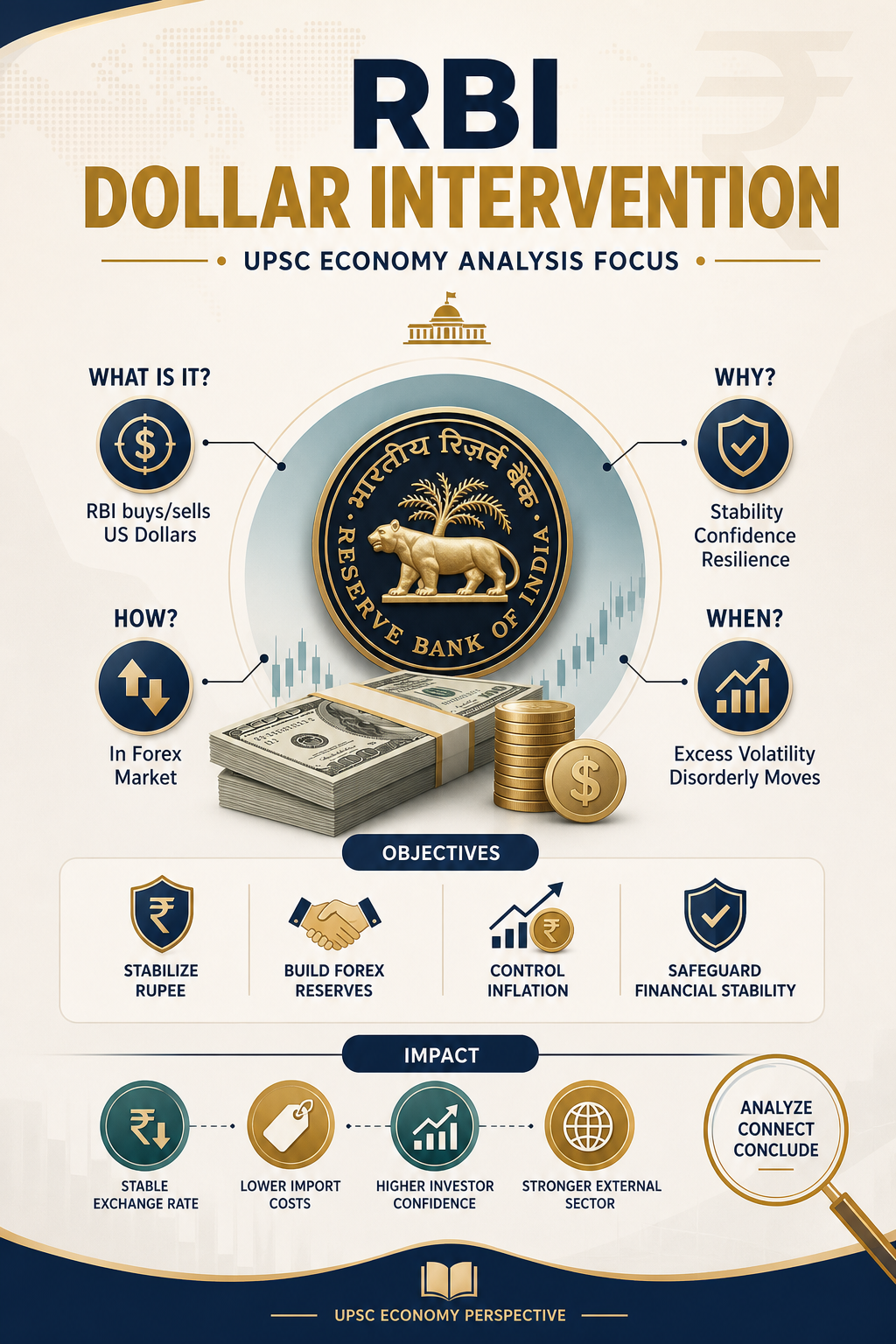
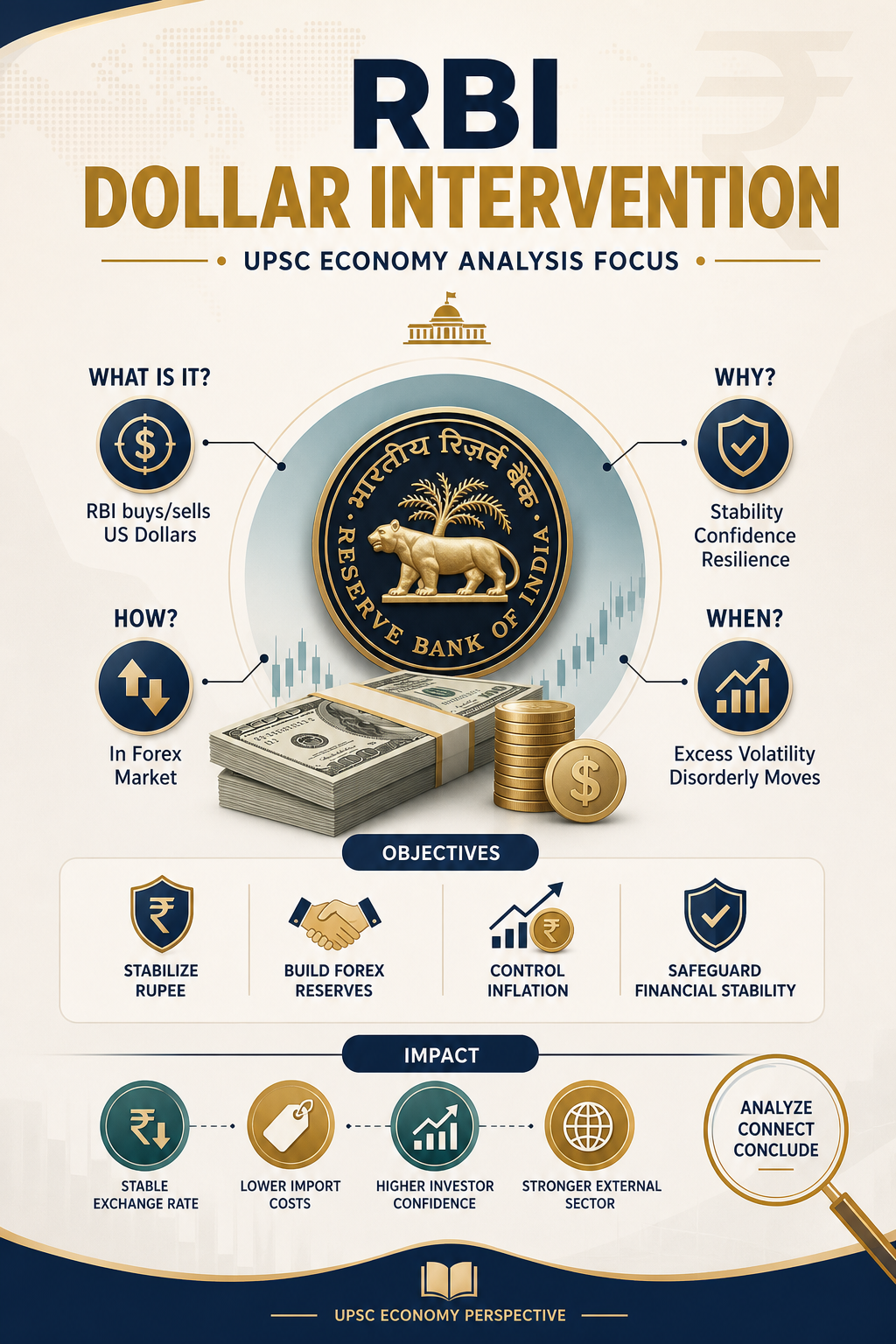
RBI Dollar Intervention refers to the purchase or sale of foreign currency by the Reserve Bank of India to moderate excessive fluctuations in the value of the Indian rupee. Such interventions are undertaken through the foreign exchange market using India’s forex reserves.
The objective is not to maintain a fixed exchange rate but to prevent disorderly market movements that may adversely affect inflation, trade, investment and financial stability.
Why is RBI Dollar Intervention in News?
According to reports, the RBI recorded a net sale of about US$6.1 billion in May despite continued resilience in India’s external sector. Geopolitical uncertainty, crude oil prices and capital flows have increased pressure on exchange rate movements.
The intervention demonstrates the central bank’s commitment to limiting excessive volatility while preserving confidence in the Indian economy. For official information refer to Reserve Bank of India.
Key Features of RBI Dollar Intervention
- Uses India’s foreign exchange reserves.
- Reduces excessive rupee volatility.
- Supports financial market confidence.
- Helps contain imported inflation.
- Maintains orderly functioning of the foreign exchange market.
- Supports macroeconomic stability without targeting a fixed exchange rate.
Challenges Related to RBI Dollar Intervention
Persistent intervention can reduce forex reserves if external shocks remain prolonged. High crude oil imports, geopolitical tensions and global monetary tightening can increase pressure on the rupee. Excessive intervention may also influence domestic liquidity conditions.
For related economy topics, explore the UPSC current affairs library.
Way Forward for RBI Dollar Intervention
India should continue maintaining adequate forex reserves, strengthen export competitiveness, diversify energy imports and attract stable long-term capital inflows. Sound macroeconomic fundamentals remain the best defence against external shocks.
Further reading is available through PIB Official Release.
Prelims Practice Corner
- Who manages India’s foreign exchange reserves? Answer: RBI
- Imported inflation is primarily caused by which factor? Answer: Depreciation of domestic currency and higher import prices
- Forex intervention is mainly undertaken to? Answer: Reduce excessive exchange rate volatility
- India imports the largest share of which energy resource? Answer: Crude oil
- Current Account Deficit belongs to which account of the Balance of Payments? Answer: Current Account
Mains Practice Questions
- Discuss the role of the Reserve Bank of India in managing exchange rate volatility.
Outline: Forex reserves, intervention, inflation, capital flows, financial stability. - Examine how exchange rate depreciation affects India’s economy.
Outline: Imports, inflation, CAD, exports, external debt.
FAQs on RBI Dollar Intervention
What is RBI Dollar Intervention?
It is RBI’s purchase or sale of foreign currency to reduce excessive exchange rate volatility.
Why is it important for UPSC?
It connects monetary policy, inflation, forex reserves and external sector management.
Does RBI target a fixed exchange rate?
No. RBI primarily aims to ensure orderly market conditions rather than defend a fixed value of the rupee.
Related Current Affairs
Preparing for UPSC, PCS or HCS?
Talk to a mentor at Chetan Bharat Learning, Chandigarh. Free guidance on choosing the right exam and building a study plan.
Chat on WhatsAppCall 97793 53345UPSC / IAS / PCS coaching in Chandigarh · Trusted by aspirants across Punjab & Haryana
Leave a Reply
You must be logged in to post a comment.