
UPSC Syllabus Mapping
| GS Paper | GS-II |
|---|---|
| Subject | Social Justice, Inclusion and Empowerment of Persons with Disabilities |
What is Mixed Disability Ashes?
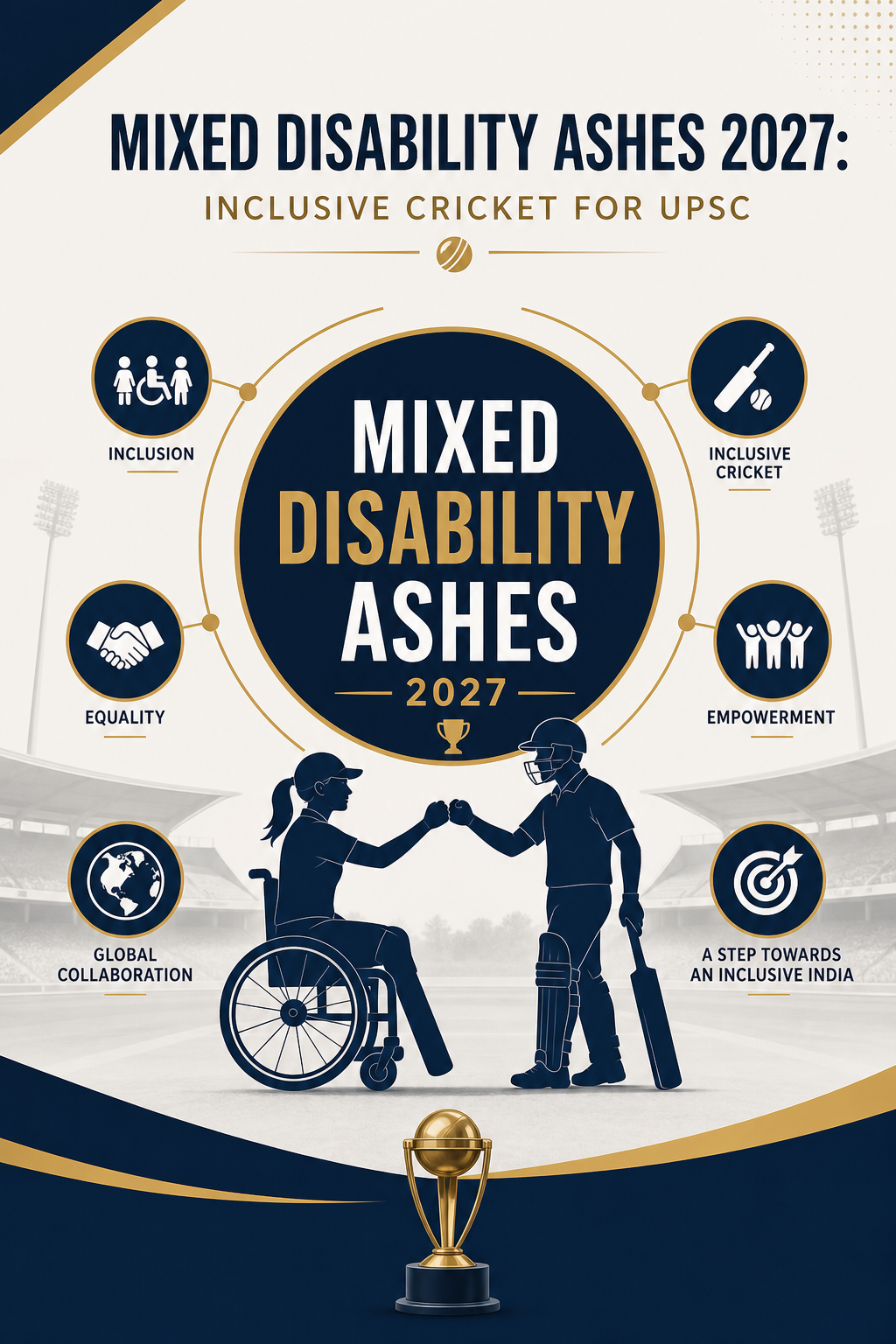
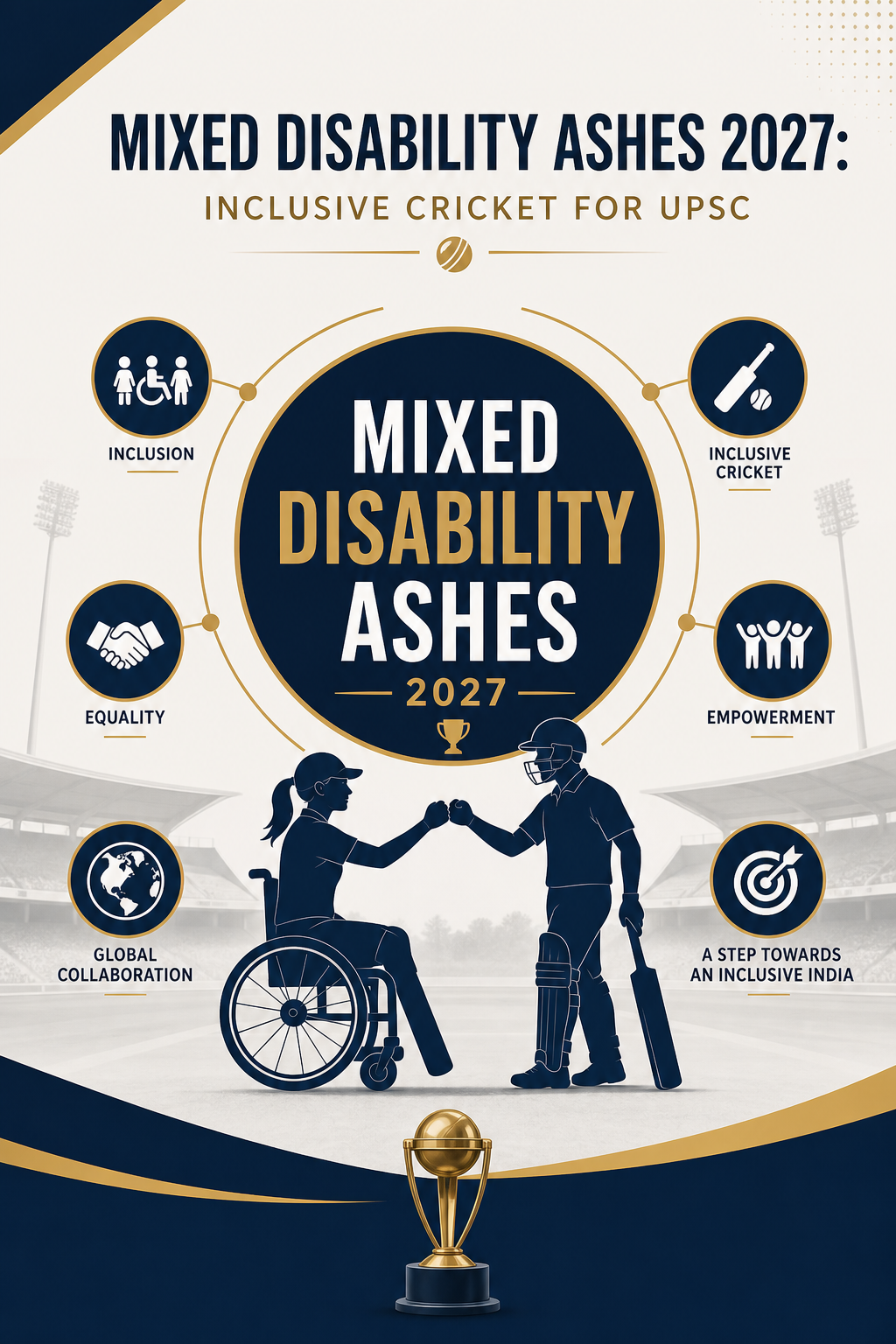
The competition is a bilateral cricket series between England and Australia involving mixed disability men’s teams. The inaugural edition is scheduled to be hosted by England in 2027. It extends the traditional Ashes sporting rivalry into disability cricket and provides players with different disabilities an opportunity to participate within an elite international competitive structure.
Mixed disability cricket creates a framework in which players representing different disability groups can participate within a common team structure. The concept has significance beyond sporting competition because it emphasises athletic ability rather than treating disability sport solely through a welfare perspective. Elite fixtures, international exposure and professional sporting environments can help normalise the participation of persons with disabilities in mainstream sporting culture.
Why is Mixed Disability Ashes in News?
England is set to host Australia for the first edition in 2027. The competition is planned as part of England’s wider Ashes summer and will be staged alongside the Men’s and Women’s Ashes programmes. This scheduling is symbolically important because disability cricket is being associated with the wider international cricket calendar rather than being presented entirely as a separate sporting activity.
The contest is planned in the T20 format, while detailed venues and scheduling are to be announced. The development also follows growing bilateral activity in disability cricket, including competition involving England and India. Aspirants can refer to the England and Wales Cricket Board for official information concerning English cricket and disability cricket programmes.
Key Features of Inclusive Cricket
The inaugural series represents an effort to create a stronger competitive pathway for disability cricketers. International fixtures matter because sporting inclusion requires more than opportunities for recreational participation. Athletes also need structured pathways through coaching, selection, high-performance training and international competition if disability sport is to develop on comparable institutional foundations.
- Historic edition: England will host Australia for the inaugural contest in 2027.
- International rivalry: It extends the England-Australia Ashes tradition to mixed disability cricket.
- T20 format: The bilateral competition is planned in the shorter cricket format.
- Integrated scheduling: It will form part of a season that also features the Men’s and Women’s Ashes.
- Elite pathway: The competition provides disability cricketers with an additional platform for high-level international sport.
Its broader significance lies in visibility. When disability competitions are connected with major sporting calendars, audiences, sponsors, administrators and young athletes are more likely to recognise them as elite sport. Greater visibility can encourage participation at the grassroots level while creating demand for accessible facilities, specialised coaching and stronger domestic competition structures.
Challenges Related to Disability Sports
Persons with disabilities can face multiple barriers to sporting participation, including inaccessible infrastructure, limited access to suitable equipment, inadequate coaching opportunities and smaller competitive calendars. Financial constraints may be particularly significant for athletes who require adapted equipment, accessible transport or additional support. These barriers can reduce the pool of athletes able to progress from recreational participation to elite competition.
Visibility and institutional investment are equally important. Mainstream competitions generally receive greater media coverage, sponsorship and commercial attention than disability sport. This can create a cycle in which lower visibility restricts investment, while insufficient investment limits the quality and frequency of competitions. Sustainable inclusion therefore requires long-term institutional structures rather than dependence on occasional high-profile events.
The issue has direct relevance to social justice because equality does not necessarily mean identical treatment. Persons facing structural barriers may require reasonable accommodation and accessible environments to exercise opportunities on an equal basis. This distinction connects disability sport with substantive equality and dignity.
Way Forward for Inclusive Sports
Inclusive sport requires a pipeline extending from accessible grassroots participation to elite competition. Sporting bodies can invest in accessible grounds, coaching programmes, talent identification and regular domestic tournaments. Schools and community institutions can also expand opportunities for children with disabilities to participate in physical activity and organised sport, helping identify talent at an early stage.
International federations and national sporting bodies can increase the number and regularity of bilateral and multilateral competitions. Integrating disability fixtures with major sporting events, where appropriate, can improve visibility without compromising the distinct competitive requirements of athletes. Broadcasting, sponsorship and professional contracts are also important for ensuring that elite disability sport develops as a sustainable sporting ecosystem.
For India, the wider principle aligns with the rights-based approach embodied in the Rights of Persons with Disabilities Act, 2016, which recognises participation in cultural life, recreation and sporting activities. At the international level, the UN Convention on the Rights of Persons with Disabilities provides the broader framework for equal participation and inclusion. Sport can consequently function not only as recreation but also as a means of empowerment, representation and social participation.
Prelims Practice Corner
- Q1. The inaugural Mixed Disability Ashes is scheduled to be held between:
(a) India and England
(b) Australia and India
(c) England and Australia
(d) South Africa and Australia
Answer: (c) England and Australia. - Q2. The first edition is scheduled to be hosted by:
(a) Australia
(b) England
(c) India
(d) New Zealand
Answer: (b) England is scheduled to host the inaugural edition in 2027. - Q3. The proposed competition will primarily use which format?
(a) Test
(b) ODI
(c) T20
(d) Ten-over cricket
Answer: (c) The series is planned in the T20 format. - Q4. The Rights of Persons with Disabilities Act in India was enacted in:
(a) 2005
(b) 2010
(c) 2016
(d) 2020
Answer: (c) The Rights of Persons with Disabilities Act was enacted in 2016. - Q5. The UN Convention on the Rights of Persons with Disabilities is primarily associated with:
(a) Protection of wildlife habitats
(b) Rights and inclusion of persons with disabilities
(c) International sporting regulations only
(d) Intellectual property rights
Answer: (b) The Convention promotes and protects the rights, dignity and inclusion of persons with disabilities.
Mains Practice Questions
- Q1. Discuss the role of sports in promoting social inclusion and empowerment of persons with disabilities. (10 marks)
Outline: Introduce sport as a tool of inclusion; discuss dignity, representation, physical well-being and social participation; identify infrastructure, financial and attitudinal barriers; highlight reasonable accommodation; conclude with inclusive sporting ecosystems.
- Q2. Substantive equality requires institutions to remove barriers rather than merely provide identical opportunities. Examine with reference to persons with disabilities. (15 marks)
Outline: Distinguish formal and substantive equality; explain accessibility and reasonable accommodation; use sport as an illustration; connect with the RPwD Act and UN disability-rights framework; discuss institutional and social barriers; conclude with a rights-based approach to inclusion.
FAQs on Inclusive Disability Cricket
When will the Mixed Disability Ashes begin?
The inaugural edition is scheduled to be hosted by England in 2027 as part of its wider Ashes summer.
Why is the competition significant?
It extends a prestigious international cricket rivalry to elite disability cricketers and can improve competitive opportunities, visibility and institutional support for disability cricket.
Why is this development relevant for UPSC?
It can be connected with GS-II themes concerning social justice, empowerment of vulnerable sections, disability rights and inclusive development, as well as Essay topics on sport, equality and social inclusion.
Related Current Affairs
Preparing for UPSC, PCS or HCS?
Talk to a mentor at Chetan Bharat Learning, Chandigarh. Free guidance on choosing the right exam and building a study plan.
Chat on WhatsAppCall 97793 53345UPSC / IAS / PCS coaching in Chandigarh · Trusted by aspirants across Punjab & Haryana
Leave a Reply
You must be logged in to post a comment.