
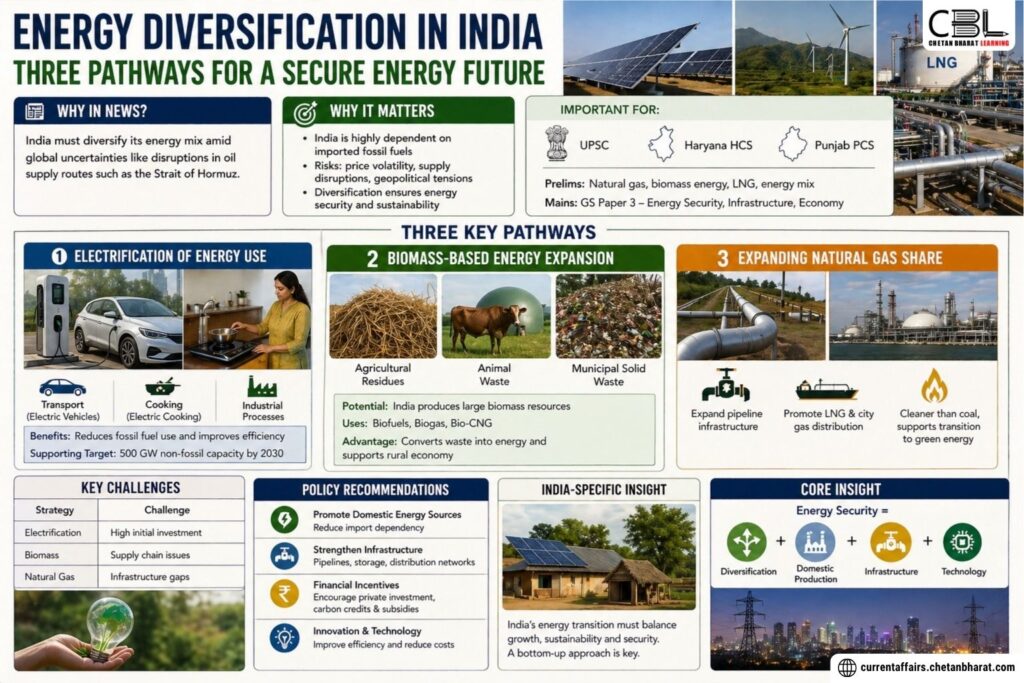
Important for:
UPSC, Haryana HCS, Punjab PCS
Prelims: Natural gas, biomass energy, LNG, energy mix
Mains: GS Paper 3 — Energy Security, Infrastructure, Economy
Why in News?
An editorial highlights the need for India to diversify its energy mix amid global uncertainties such as disruptions in oil supply routes like the Strait of Hormuz.
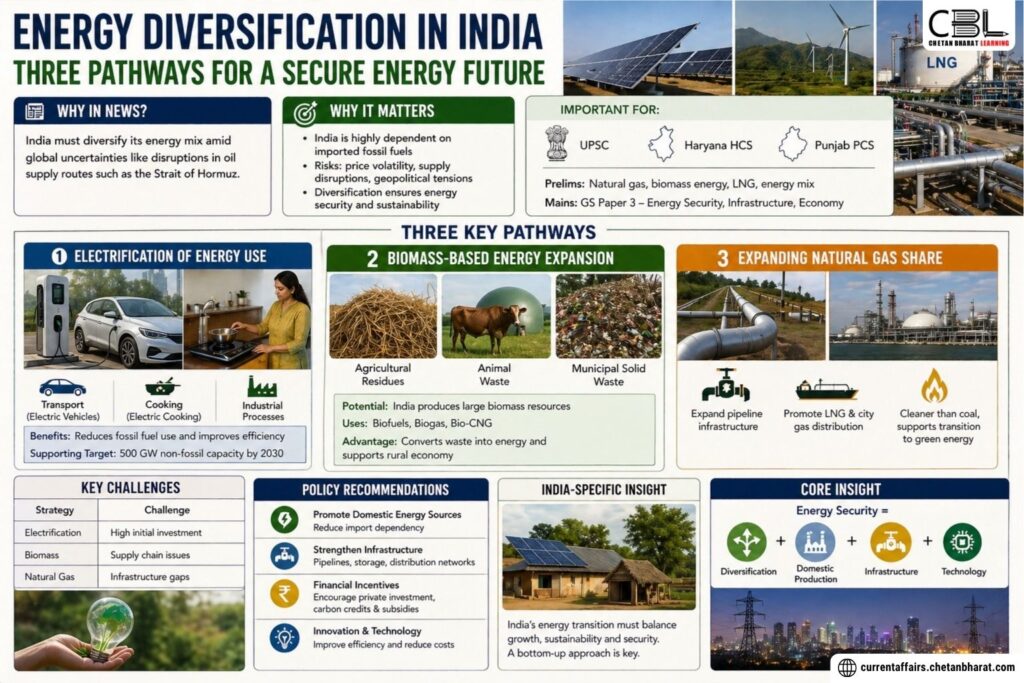
Why Energy Diversification Matters
- India heavily depends on:
→ Imported fossil fuels - Risks:
- Price volatility
- Supply disruptions
- Geopolitical tensions
➤ Solution:
Diversify energy sources and strengthen domestic capacity
Three Key Pathways Explained
1. Electrification of Energy Use
Focus Areas:
- Transport (Electric Vehicles)
- Cooking (electric cooking)
- Industrial processes
➤ Benefits:
- Reduces fossil fuel use
- Improves efficiency
➤ Supporting targets:
- 500 GW non-fossil capacity by 2030
2. Biomass-Based Energy Expansion
Sources:
- Agricultural residues
- Animal waste
- Municipal solid waste
➤ Potential:
- India produces large biomass resources
Uses:
- Biofuels
- Biogas
- Bio-CNG
➤ Advantage:
- Converts waste into energy
- Supports rural economy
3. Expanding Natural Gas Share
Current Issue:
- Natural gas share is low in India
Strategy:
- Expand pipeline infrastructure
- Promote LNG & city gas distribution
➤ Benefit:
- Cleaner than coal
- Supports transition to green energy
Key Challenge
| Strategy | Challenge |
|---|---|
| Electrification | High initial investment |
| Biomass | Supply chain issues |
| Natural gas | Infrastructure gaps |
Economic & Infrastructure Constraints
- Logistics challenges in:
- Biomass collection
- Transportation
- Need:
- Financial support
- Private sector participation
Policy Recommendations
✔ Promote Domestic Energy Sources
- Reduce import dependency
✔ Strengthen Infrastructure
- Pipelines, storage, distribution networks
✔ Financial Incentives
- Encourage private investment
- Carbon credits & subsidies
✔ Innovation & Technology
- Improve efficiency
- Reduce costs
Global Context
- Energy diversification is key for:
➤ Energy security
➤ Climate goals
India-Specific Insight
➤ Energy transition must balance:
- Growth
- Sustainability
- Security
Core Insight (VERY IMPORTANT)
➤ Energy security =
✔ Diversification
✔ Domestic production
✔ Infrastructure
✔ Technology
PRELIMS PRACTICE QUESTIONS
Q1. Energy diversification means:
A. Using one source
B. Using multiple energy sources
C. Exporting energy
D. Reducing population
✅ Answer: B
Q2. Biomass energy includes:
- Agricultural waste
- Animal waste
- Coal
A. 1 and 2 only
B. 2 and 3 only
C. 1 only
D. 1, 2 and 3
✅ Answer: A
Q3. Natural gas is:
A. Highly polluting
B. Cleaner fossil fuel
C. Renewable energy
D. Nuclear fuel
✅ Answer: B
Q4. LNG stands for:
A. Liquid Natural Gas
B. Liquefied Natural Gas
C. Low Natural Gas
D. Linear Natural Gas
✅ Answer: B
Q5. Which of the following improves energy security?
A. Dependence on imports
B. Diversification
C. Single source reliance
D. No infrastructure
✅ Answer: B
Q6. Electrification helps in:
A. Increasing emissions
B. Reducing fossil fuel use
C. Increasing coal usage
D. None
✅ Answer: B
CBL Mains Practice Question
“Energy diversification is essential for ensuring India’s energy security and sustainable growth.”
Discuss with reference to current strategies. (250 words)
FAQs
1. What is energy diversification?
Using multiple energy sources to reduce dependency.
2. Why is it important?
To ensure energy security and reduce risks.
3. What are key pathways?
Electrification, biomass, and natural gas.
4. Which GS paper covers this topic?
GS Paper 3 — Energy and Economy.
5. What is the main challenge?
Infrastructure and financing gaps.
Related Current Affairs
Preparing for UPSC, PCS or HCS?
Talk to a mentor at Chetan Bharat Learning, Chandigarh. Free guidance on choosing the right exam and building a study plan.
Chat on WhatsAppCall 97793 53345UPSC / IAS / PCS coaching in Chandigarh · Trusted by aspirants across Punjab & Haryana
Leave a Reply
You must be logged in to post a comment.