
UPSC Syllabus Mapping
GS Paper: GS-I & GS-III
Subject: Geography, Environment, Disaster Management and Energy
Syllabus Pointers: Prep with our comprehensive UPSC Current Affairs Hub analysis guidelines.
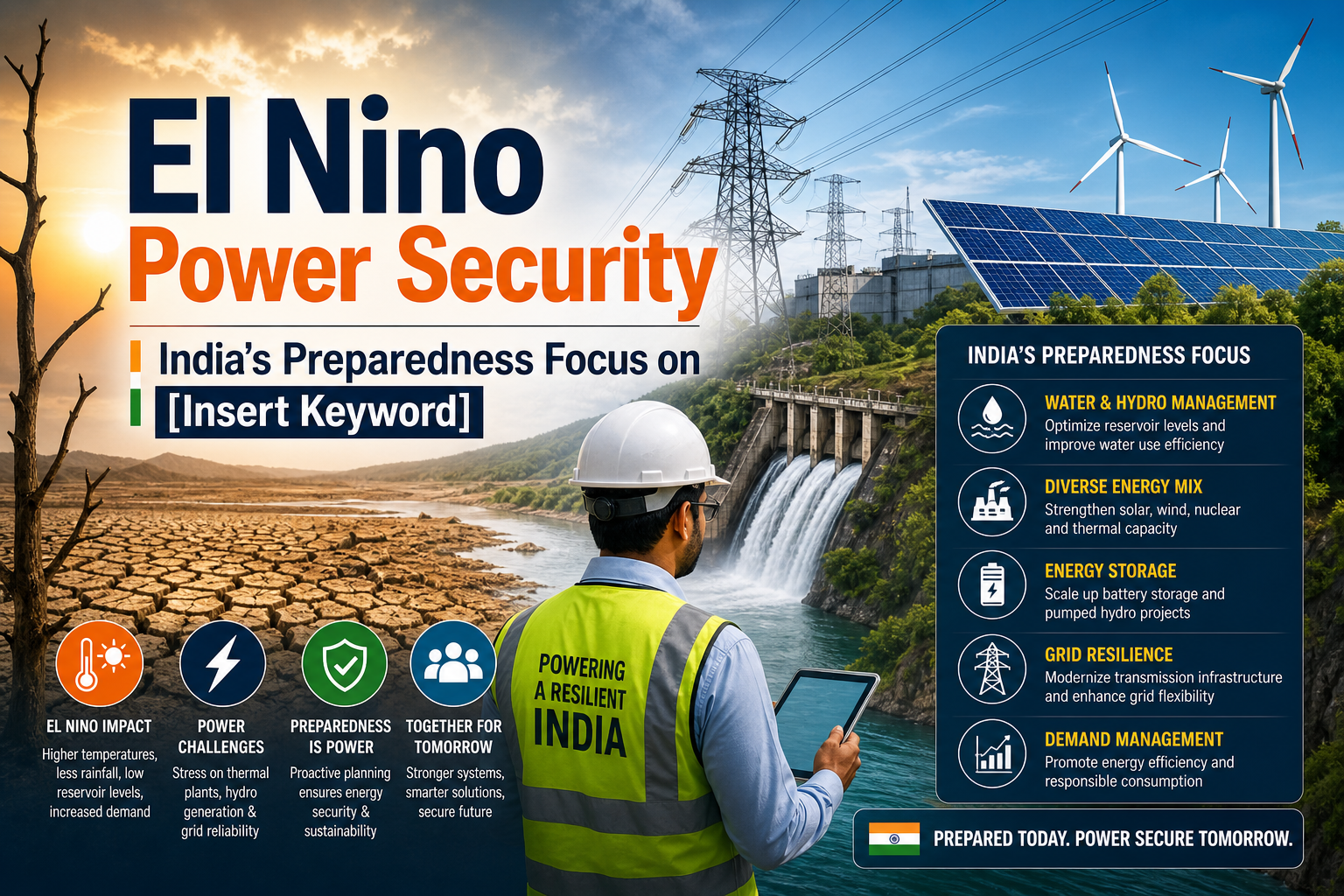
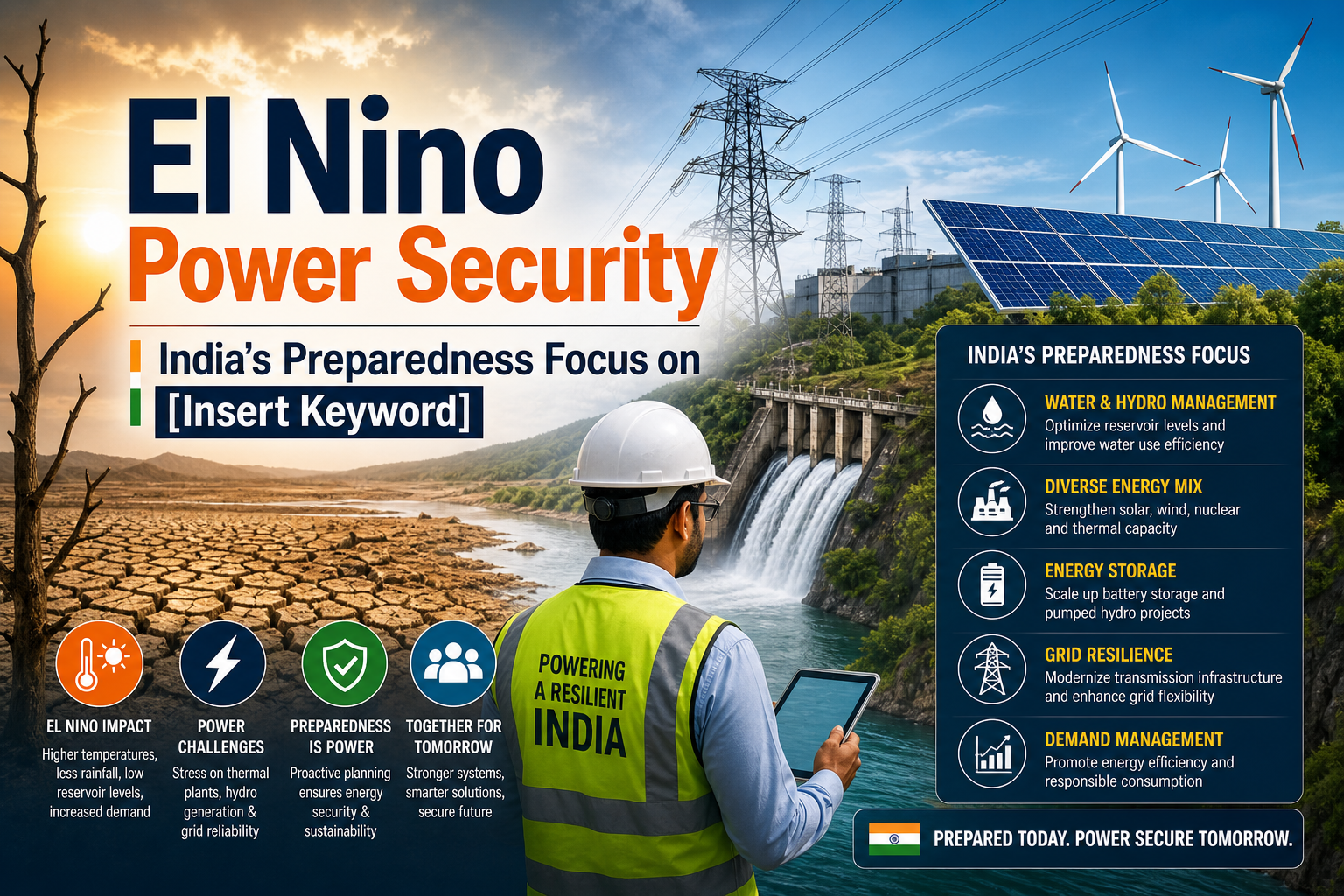
Recent updates regarding El Nino Power Security highlight the government’s advisory to states for maintaining reliable electricity supplies during adverse weather conditions. The advisory focuses on ensuring adequate coal stocks, improving thermal power plant readiness, strengthening transmission infrastructure and adopting demand-side management measures to minimise disruptions.
Key Dimensions of El Nino Power Security
El Niño is the warm phase of the El Niño–Southern Oscillation (ENSO), characterised by abnormal warming of sea surface temperatures in the central and eastern equatorial Pacific Ocean. It weakens the Indian summer monsoon, affecting rainfall distribution and water availability.
Reduced rainfall lowers hydropower generation and limits cooling water availability for thermal power plants. Higher temperatures also increase electricity demand for cooling, placing additional stress on the power system.
Impact on India’s Power Sector
Hydropower output may decline due to reduced reservoir inflows. Thermal power plants require uninterrupted coal supplies and adequate water for cooling, making fuel logistics and water management critical during El Niño years.
India’s electricity mix remains dominated by coal, while renewable energy continues to expand. Effective grid balancing becomes essential to integrate variable renewable energy and ensure uninterrupted power supply.
Government Preparedness Measures
The advisory recommends maintaining sufficient coal stocks, preventive maintenance of generating stations, protecting transmission lines, coordinating between the Centre and States and deploying demand-side management (DSM). Measures such as shifting agricultural load to daytime hours help reduce peak electricity demand and improve grid efficiency.
Key institutions involved include the Central Electricity Authority (CEA), Regional Load Dispatch Centres and State Load Dispatch Centres, which continuously monitor grid stability, generation and transmission.
For broader scientific context on ENSO, refer to global developmental tracking frameworks.
Way Forward
India should diversify its energy mix, strengthen transmission infrastructure, expand renewable energy with storage systems and modernise smart grids. Long-term climate resilience requires integrated planning for water, energy and disaster management while improving interstate coordination and forecasting capabilities.
Prelims Practice Corner
Q1. El Niño is associated with:
- (a) Cooling of the equatorial Pacific Ocean
- (b) Warming of the central and eastern equatorial Pacific Ocean
- (c) Warming of the Indian Ocean only
- (d) Cooling of the Atlantic Ocean
Answer: (b) El Niño is the warm phase of ENSO caused by abnormal warming of sea surface temperatures in the central and eastern Pacific Ocean.
Q2. Demand-Side Management (DSM) in the power sector primarily aims to:
- (a) Increase electricity demand
- (b) Improve electricity demand patterns and grid efficiency
- (c) Reduce power generation permanently
- (d) Replace renewable energy
Answer: (b) DSM shifts or reduces peak electricity demand, improving grid reliability and operational efficiency.
Mains Practice Question
“Climate variability, especially El Niño events, poses significant challenges to India’s energy security.” Discuss the impacts and evaluate the preparedness measures required to build a climate-resilient power sector. (150 Words, 10 Marks)
FAQs
Why is El Niño important for UPSC? It influences the Indian monsoon, agriculture, water resources, disaster management, food security and energy security, making it relevant across multiple GS papers.
Related Current Affairs
Preparing for UPSC, PCS or HCS?
Talk to a mentor at Chetan Bharat Learning, Chandigarh. Free guidance on choosing the right exam and building a study plan.
Chat on WhatsAppCall 97793 53345UPSC / IAS / PCS coaching in Chandigarh · Trusted by aspirants across Punjab & Haryana
Leave a Reply
You must be logged in to post a comment.