
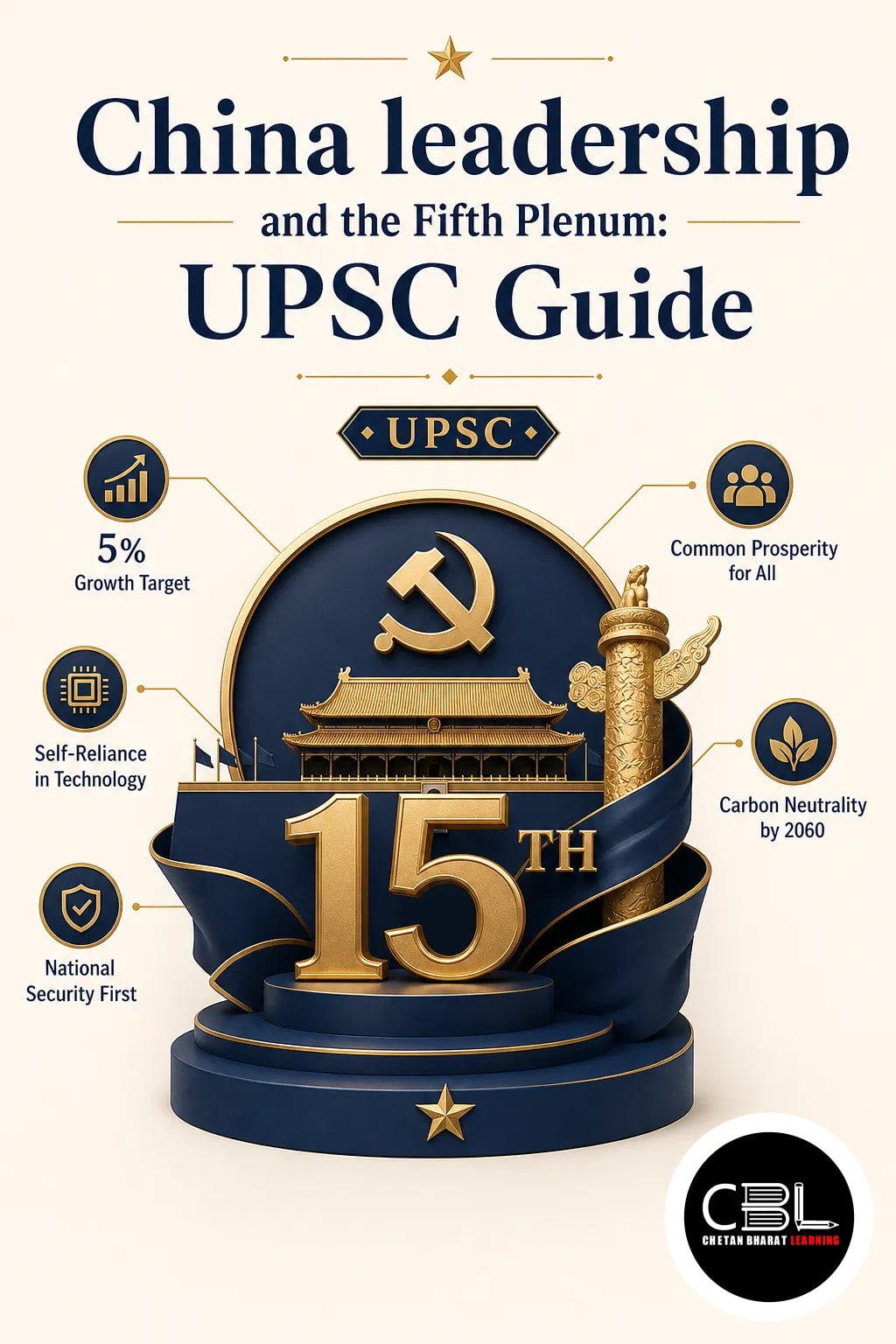
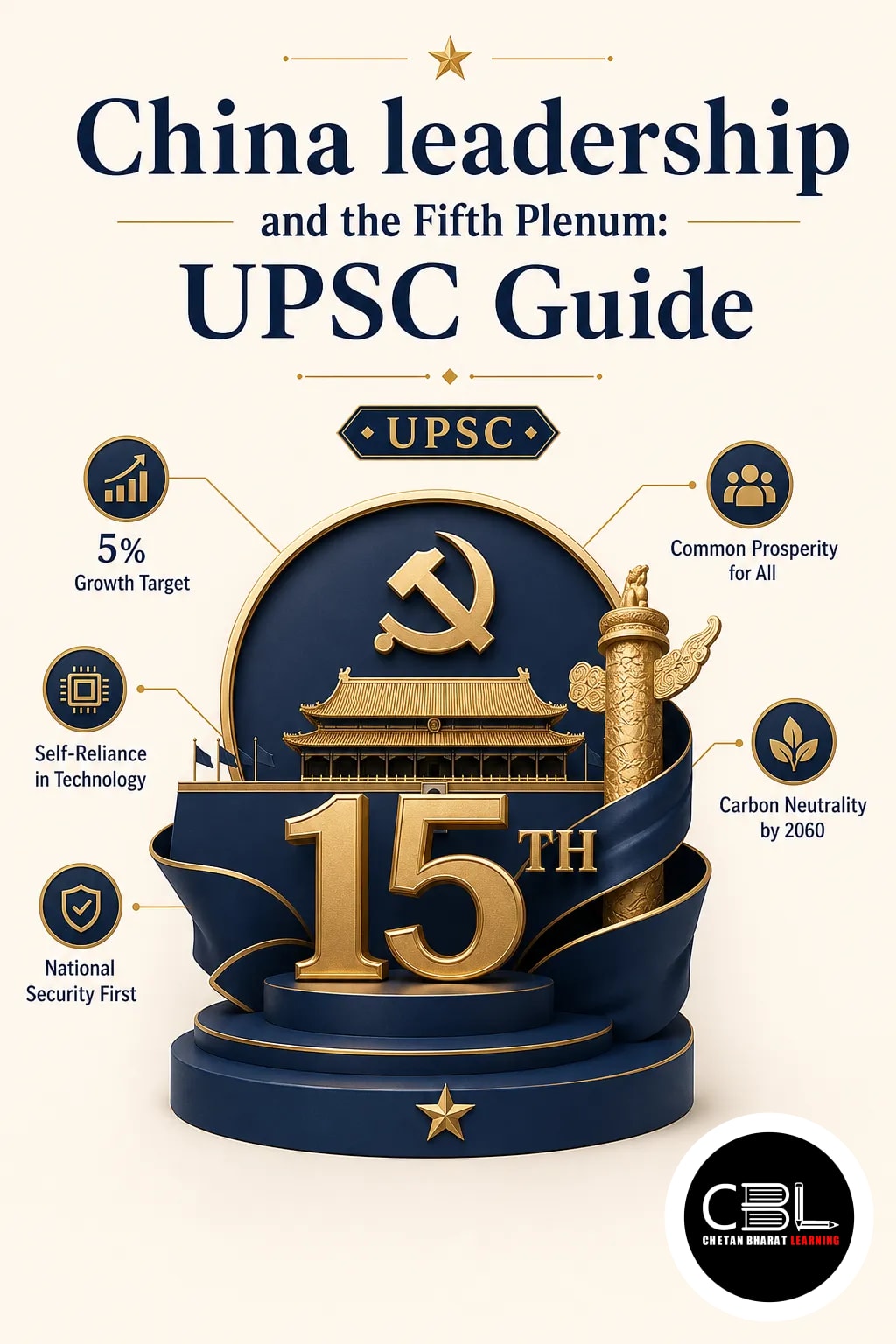
China leadership is back in focus as the latest current affairs coverage examines the Communist Party’s Fifth Plenum and its wider meaning. The meeting matters because party gatherings in China often shape economic direction, political messaging, and elite coordination.
What is China Leadership?
In the Chinese political system, China leadership refers to the Communist Party’s top-level control over the state, military, and policy agenda. The party does not merely supervise government work; it directs the broad political line that state institutions implement.
A plenum is a major meeting of a party committee, and the Fifth Plenum is one such session within the Party’s central decision-making cycle. These meetings are closely watched because they can signal policy priorities, кадровing trends, and the balance of influence inside the party.
Why in News?
The Fifth Plenum has drawn attention because analysts view it as an important moment in China’s internal political calendar. Such meetings often come at a time when the party wants to project unity and clarify the next phase of governance.
For UPSC, the topic is useful because it links party structure, authoritarian governance, and foreign policy interpretation. China’s leadership meetings can shape how it responds to economic stress, strategic competition, and domestic control.
Key Features
- Party-centred decision-making: The Communist Party remains the core authority, and government bodies act within that framework.
- Policy signalling role: A plenum often indicates the broad direction of reform, discipline, or stability that the leadership wants to emphasise.
- Elite coordination: Such gatherings help align senior party members around common priorities and messages.
- Strategic messaging: The meeting can project confidence to domestic audiences and external observers at the same time.
- Control over agenda: The leadership uses the format to frame political continuity and maintain discipline within the system.
Challenges
- Limited transparency: The closed nature of such meetings makes it difficult to assess real debates and disagreements.
- Centralisation risk: Strong concentration of power can narrow policy feedback and weaken internal checks.
- Economic pressure: Leadership messaging must manage growth concerns, employment issues, and investor confidence.
- External scrutiny: Foreign governments closely read every signal, which can amplify diplomatic sensitivities.
Way Forward
For exam purposes, the main takeaway is that China leadership works through party institutions rather than open electoral competition. The Fifth Plenum should be understood as part of the Communist Party’s larger method of steering state power.
A good analytical approach is to connect such meetings with Chinese political structure, policy continuity, and the party-state model. That helps explain why a seemingly routine internal meeting receives global attention.
Source: Indian Express Explained, 2026-10-26
This topic can appear under international relations and comparative politics in state PCS exams. It helps candidates understand how a major power’s internal leadership structure affects diplomacy, trade, and regional security.
FAQ
What is the Fifth Plenum in China’s system?
It is a major meeting of the Communist Party’s central leadership body. Such meetings help set political priorities and send policy signals.
Why do such meetings matter for UPSC?
They help explain how China governs through the party-state model. This is useful for international relations and comparative politics questions.
Does the plenum affect only domestic politics?
No, it can also shape external perceptions of China’s stability and strategic direction. That is why it attracts global attention.
Related Current Affairs
Preparing for UPSC, PCS or HCS?
Talk to a mentor at Chetan Bharat Learning, Chandigarh. Free guidance on choosing the right exam and building a study plan.
Chat on WhatsAppCall 97793 53345UPSC / IAS / PCS coaching in Chandigarh · Trusted by aspirants across Punjab & Haryana
Leave a Reply
You must be logged in to post a comment.