
Important for:
UPSC, Haryana HCS, Punjab PCS
Prelims: Diabetes, insulin, screening
Mains: GS Paper 2 & 3 — Health Policy, Human Development
Why in News?
India has introduced a standardised national framework for managing childhood diabetes, ensuring early detection and free treatment through the public health system.
What is Diabetes?
➤ A disease where:
- Body cannot regulate blood sugar levels
➤ Caused by:
- Lack of insulin or improper insulin use
Key Features of the New Framework
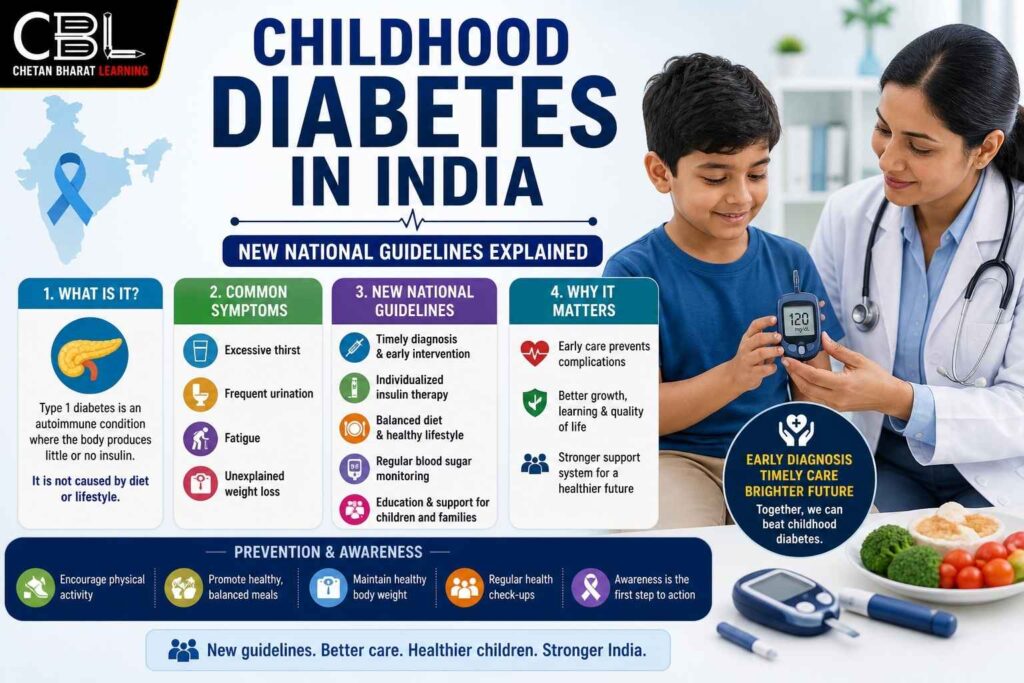
1. Universal Screening
- Covers all children from birth to 18 years
2. Free Treatment
- Includes:
- Insulin
- Diagnostic services
- Monitoring
3. Early Detection (“4Ts”)
- Toilet
- Thirst
- Tiredness
- Thinness
4. Integrated Care System
- From:
→ Community level → hospitals
5. Family Involvement
- Awareness & training for caregivers
Why is This Important?
1. Rising Cases
- Childhood diabetes increasing
2. Long-Term Impact
- Can cause:
- Heart disease
- Kidney damage
3. Health Equity
- Free care reduces financial burden
Global Context
- Recognised by WHO as:
→ Major non-communicable disease
India-Specific Significance
- Improves:
→ Public health infrastructure - Strengthens:
→ Universal healthcare
Key Insight for UPSC
➤ Health policies must focus on:
✔ Prevention + Early detection
PRELIMS PRACTICE QUESTIONS
Q1. Diabetes affects:
A. Blood sugar
B. Bones
C. Skin
D. Hair
✅ Answer: A
Q2. Insulin helps regulate:
A. Temperature
B. Blood sugar
C. Blood pressure
D. Oxygen
✅ Answer: B
Q3. “4Ts” relate to:
A. Agriculture
B. Diabetes symptoms
C. Trade
D. Tax
✅ Answer: B
Q4. Universal screening means:
A. Limited testing
B. Testing for all
C. Only hospital testing
D. No testing
✅ Answer: B
Q5. Diabetes is a:
A. Communicable disease
B. Non-communicable disease
C. Viral disease
D. Bacterial disease
✅ Answer: B
CBL Mains Practice Question
“Early detection and universal access to treatment are key to addressing non-communicable diseases in India.”
Discuss with reference to childhood diabetes.
FAQs
1. What is childhood diabetes?
A condition where children cannot regulate blood sugar.
2. What is the new initiative?
A national framework for screening and treatment.
3. What are the 4Ts?
Toilet, Thirst, Tiredness, Thinness.
4. Why is it important?
Prevents complications and ensures treatment.
5. Which GS papers cover this?
GS2 and GS3.
Preparing for UPSC, PCS or HCS?
Talk to a mentor at Chetan Bharat Learning, Chandigarh. Free guidance on choosing the right exam and building a study plan.
Chat on WhatsAppCall 97793 53345UPSC / IAS / PCS coaching in Chandigarh · Trusted by aspirants across Punjab & Haryana
Leave a Reply
You must be logged in to post a comment.