
UPSC Mapping
| UPSC Themes | Agriculture; food security; external sector; supply-chain resilience. |
|---|
Article
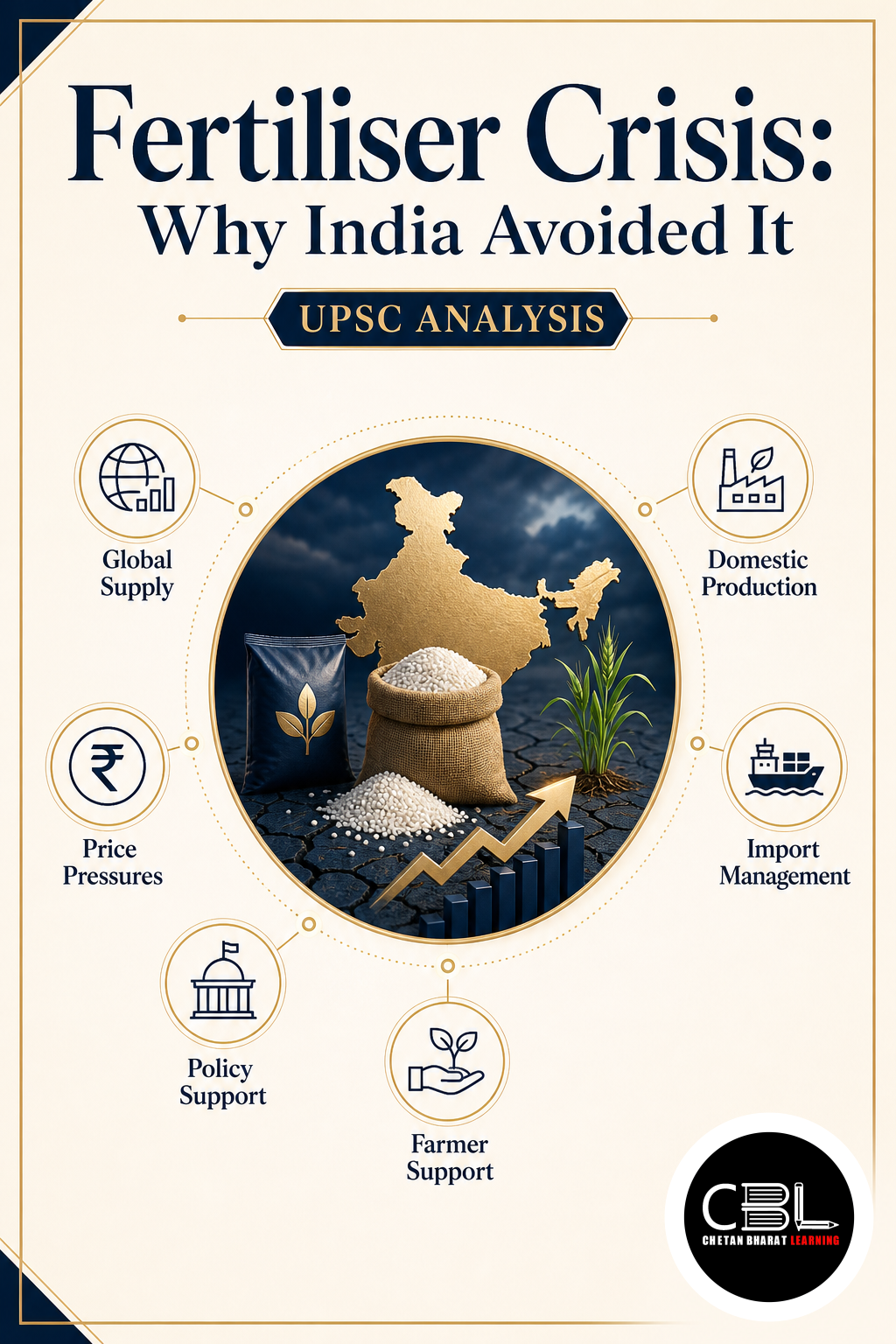
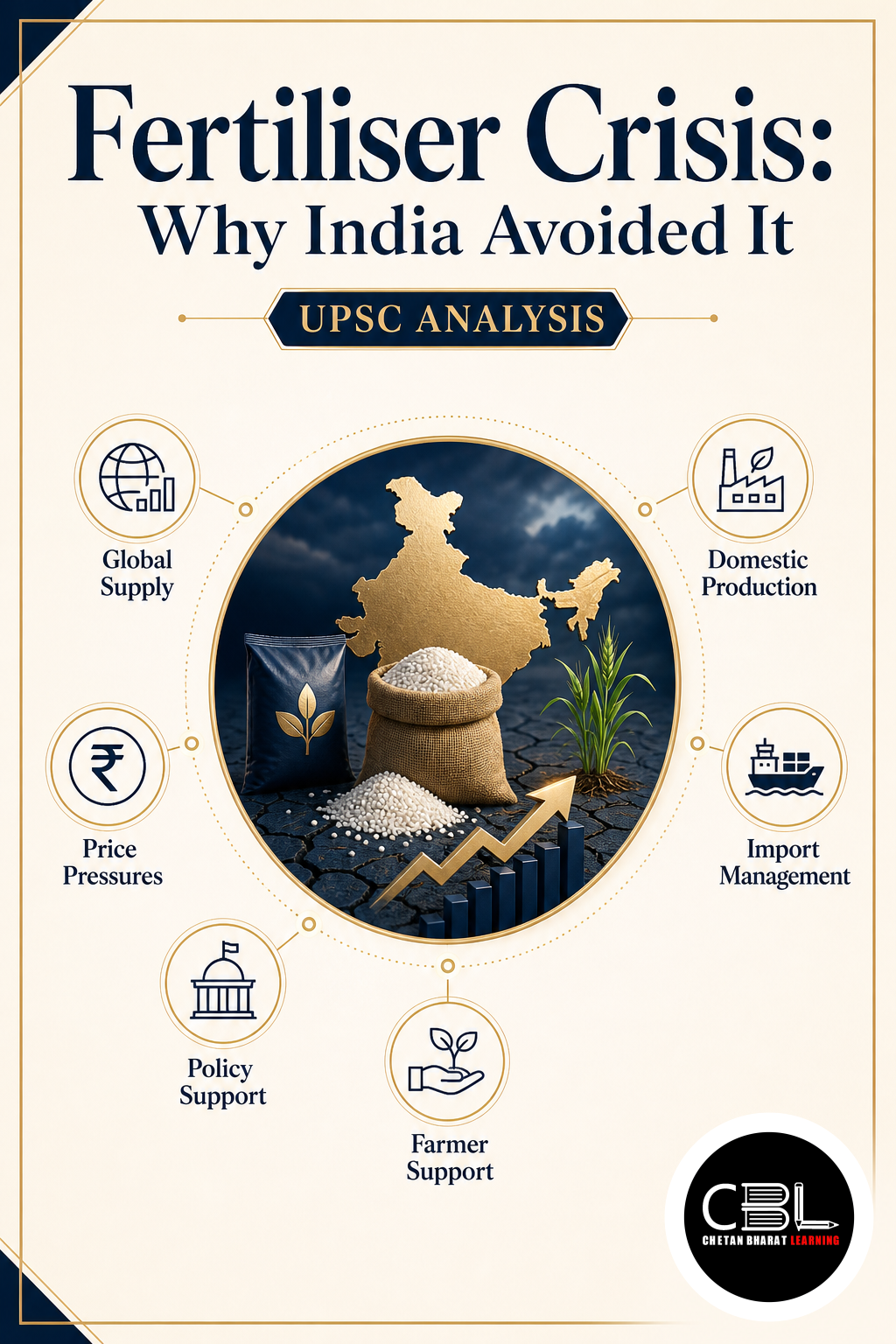
Fertiliser crisis is in the news after reports explained why India escaped major fertiliser shortages despite concerns arising from the Iran conflict and possible disruptions around the Strait of Hormuz. The passage highlights how proactive government measures, diversified imports and favourable domestic conditions helped maintain fertiliser availability across the country.
Why in News
According to the passage, fears of supply disruption emerged because the Iran conflict threatened important global shipping routes and the movement of raw materials used in fertiliser production. Despite these concerns, India did not experience a major fertiliser crisis due to timely policy intervention and supply-chain management.
Quick Facts
| Issue | Concerns over fertiliser supply disruption during the Iran conflict. |
|---|---|
| Major Factors | Diversified imports; increased domestic production; government intervention; weak monsoon reducing demand. |
What is the Fertiliser Crisis?
The term refers to the possibility of shortages and price spikes in fertilisers because of disruptions in global supply chains. Such disruptions can arise from geopolitical conflicts, shipping bottlenecks or interruptions in the supply of critical raw materials.
Fertiliser availability is directly linked to agricultural productivity, food security and rural incomes, making uninterrupted supplies strategically important.
Why is this Issue Important?
- Agriculture: Fertilisers are essential for crop productivity.
- Food Security: Stable fertiliser supply supports national food production.
- Energy Security: Fertiliser manufacturing depends on energy and imported inputs.
- Supply Chain Resilience: Global disruptions can affect availability and prices.
- Government Subsidies: Public intervention plays a major stabilising role.
Fertiliser Basics
- Nitrogen (N): Promotes leaf and vegetative growth.
- Phosphorus (P): Supports root development and flowering.
- Potassium (K): Improves disease resistance and overall plant health.
Major Fertilisers Used in India
- Urea: Nitrogen-based fertiliser.
- DAP (Di-Ammonium Phosphate): Source of nitrogen and phosphorus.
- MOP (Muriate of Potash): Supplies potassium.
- SSP (Single Super Phosphate): Provides phosphorus and sulphur.
- Complex Fertilisers: Contain combinations of N, P and K nutrients.
Why Did the Iran Conflict Threaten Supplies?
The conflict affected shipping through the Strait of Hormuz, an important global trade route. It also highlights that materials such as LNG, ammonia, phosphoric acid and other fertiliser inputs could face disruption, increasing concerns over availability and prices.
Raw Materials Used in Fertiliser Production
- Urea: Produced using natural gas and ammonia.
- DAP and Complex Fertilisers: Require ammonia, phosphoric acid, sulphur and rock phosphate.
The infographic notes that India imports a substantial share of these raw materials.
Why India Avoided a Fertiliser Crisis
- Diversified imports from multiple countries reduced dependence on any single source.
- Higher domestic production improved availability.
- Adequate stocks and buffer inventories supported uninterrupted supply.
- Government subsidies absorbed higher import costs.
Diversified Imports
India sourced fertiliser-related imports from several countries, reducing concentration risk and strengthening resilience against geopolitical disruptions.
Role of Domestic Production
Higher domestic urea production reduced dependence on imports and ensured adequate market availability during the period of uncertainty.
Monsoon’s Hidden Role
The infographic highlights that a delayed or weak monsoon reduced sowing and fertiliser demand, thereby lowering immediate pressure on supply chains.
Climate and Fertiliser Demand
- Good Monsoon: Higher crop area and increased fertiliser consumption.
- Weak Monsoon: Lower sowing and relatively lower fertiliser demand.
Government Initiatives Highlighted
- Nutrient Based Subsidy (NBS).
- Urea Subsidy.
- Neem Coated Urea.
- PM-PRANAM.
- Nano Urea.
- Soil Health Card.
Challenges Ahead
- Continued dependence on imported raw materials.
- Geopolitical risks affecting shipping routes.
- Volatility in natural gas prices.
- Rising subsidy burden.
- Climate variability influencing fertiliser demand.
Prelims Practice Questions
Q1. Which nutrient is primarily supplied by Urea? (a) Nitrogen (b) Phosphorus (c) Potassium (d) Sulphur.
Answer: (a).
Q2. DAP primarily supplies: (a) Nitrogen and Phosphorus (b) Potassium only (c) Sulphur only (d) Calcium only.
Answer: (a).
Q3. Which maritime route was highlighted in the passage as strategically important for fertiliser supplies? Answer: Strait of Hormuz.
Q4. Which government initiative promotes balanced nutrient use? Answer: Nutrient Based Subsidy (NBS).
Q5. According to the passage, one reason India avoided a fertiliser crisis was: (a) Ban on fertiliser exports (b) Diversified imports and higher domestic production (c) Complete self-sufficiency in raw materials (d) Removal of subsidies.
Answer: (b).
Mains Practice Questions
Q1 (10 Marks): Discuss how geopolitical conflicts can affect fertiliser security and agricultural production in India.
Q2 (15 Marks): Examine the importance of supply-chain resilience and government intervention in ensuring fertiliser security in India.
FAQs
Why was a fertiliser crisis feared?
The Iran conflict raised concerns over disruptions to shipping routes and fertiliser raw material supplies.
Why did India avoid a major fertiliser crisis?
Diversified imports, increased domestic production, adequate inventories, government subsidies and lower demand due to the monsoon situation helped maintain supplies.
Why is this topic important for UPSC?
It links agriculture, food security, external sector management, subsidies, climate and geopolitical developments within GS Paper III.
Related Current Affairs
Preparing for UPSC, PCS or HCS?
Talk to a mentor at Chetan Bharat Learning, Chandigarh. Free guidance on choosing the right exam and building a study plan.
Chat on WhatsAppCall 97793 53345UPSC / IAS / PCS coaching in Chandigarh · Trusted by aspirants across Punjab & Haryana
Leave a Reply
You must be logged in to post a comment.