
Important for:
UPSC, Haryana HCS, Punjab PCS
Prelims: Fundamental Rights, Article 25, constitutional morality
Mains: GS Paper 2 — Judiciary, Fundamental Rights, Secularism
Why in News?
The Supreme Court observed that entertaining large numbers of petitions challenging religious practices could have “far-reaching consequences” for Indian society and constitutional courts.
The observations came during hearings related to:
→ Sabarimala review case
→ Religious practice petitions
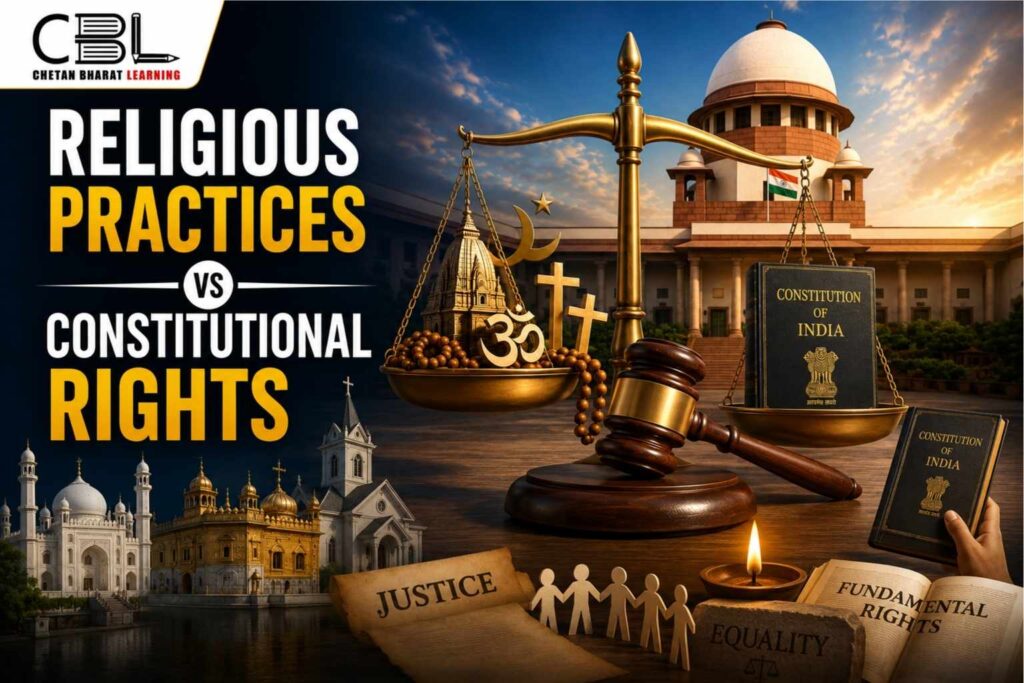
What Did the Supreme Court Say?
The Court highlighted:
✔ Religion is deeply connected to Indian society
✔ Courts must be cautious while intervening in matters of faith
✔ Excessive judicial interference may open floodgates of litigation
The Bench questioned:
→ Whether constitutional courts should decide every religious practice dispute.
Which Constitutional Provisions Are Involved?
Article 25
Provides:
→ Freedom of religion.
Subject to:
✔ Public order
✔ Morality
✔ Health
✔ Other Fundamental Rights
Article 26
Allows religious denominations to:
→ Manage their own religious affairs.
Core Constitutional Debate
1. Religious Freedom vs Fundamental Rights
Question:
→ Can courts strike down religious practices violating equality or dignity?
2. Constitutional Morality
Courts often examine whether practices align with:
✔ Equality
✔ Liberty
✔ Dignity
✔ Non-discrimination
3. Judicial Restraint
The Court hinted that:
→ Every social or religious issue may not require judicial intervention.
Why Is This Issue Sensitive in India?
India is:
✔ Religiously diverse
✔ Constitutionally secular
✔ Socially pluralistic
Judicial intervention in faith-related matters can create:
➤ Social tensions
➤ Political debates
➤ Constitutional challenges
Major Related Cases
✔ Sabarimala case
✔ Triple Talaq case
✔ Hijab controversy
✔ Dawoodi Bohra excommunication case
Special Note for Aspirants
Students preparing through:
UPSC coaching Chandigarh
or
IAS coaching Chandigarh
should carefully prepare:
✔ Fundamental Rights
✔ Secularism
✔ Constitutional morality
✔ Landmark Supreme Court judgments
These topics are highly important for:
→ GS2 + Essay + Interview.
Key Insight for UPSC
➤ Indian constitutionalism constantly balances:
✔ Religious freedom
✔ Social reform
✔ Equality
✔ Judicial restraint
- Link “Supreme Court” → https://currentaffairs.chetanbharat.com/judiciary-current-affairs/
- Link “UPSC coaching Chandigarh” → https://chetanbharat.com/
- Link “IAS coaching Chandigarh” → https://chetanbharat.com/
- Link “UPSC preparation” → https://chetanbharat.com/verticals/upsc-civil-services
PRELIMS PRACTICE QUESTIONS
Q1. Article 25 of the Indian Constitution deals with:
A. Right to Property
B. Freedom of Religion
C. Right to Education
D. Emergency powers
⇢ Answer: B\
Q2. Constitutional morality mainly refers to:
A. Religious customs
B. Parliamentary traditions
C. Constitutional values and principles
D. Judicial salaries
⇢ Answer: C
Q3. The Sabarimala case is related to:
A. Electoral reforms
B. Reservation policy
C. Religious practices and equality
D. Banking regulation
⇢ Answer: C
Q4. Article 26 grants religious denominations the right to:
A. Contest elections
B. Manage religious affairs
C. Amend the Constitution
D. Impose taxes
⇢ Answer: B
Q5. Which GS paper covers secularism and Fundamental Rights?
A. GS1
B. GS2
C. GS3
D. GS4
⇢ Answer: B
CBL Mains Practice Question
“Balancing religious freedom with constitutional morality remains one of the biggest challenges for Indian constitutionalism.”
Discuss with suitable examples.
FAQs
1. What did the Supreme Court say about religious petitions?
The Court warned that excessive intervention may have far-reaching consequences.
2. Which Article guarantees freedom of religion?
Article 25.
3. What is constitutional morality?
It means adherence to constitutional values like equality and dignity.
4. Why is this issue important?
It concerns the balance between faith and constitutional rights.
5. Which GS paper covers this topic?
GS Paper 2.
Related Current Affairs
Preparing for UPSC, PCS or HCS?
Talk to a mentor at Chetan Bharat Learning, Chandigarh. Free guidance on choosing the right exam and building a study plan.
Chat on WhatsAppCall 97793 53345UPSC / IAS / PCS coaching in Chandigarh · Trusted by aspirants across Punjab & Haryana
Leave a Reply
You must be logged in to post a comment.