
Important for:
UPSC, Haryana HCS, Punjab PCS
Prelims: Invasive species, biodiversity, ecosystem disruption
Mains: GS Paper 3 — Environment, Climate Change, Biodiversity Conservation
Why in News?
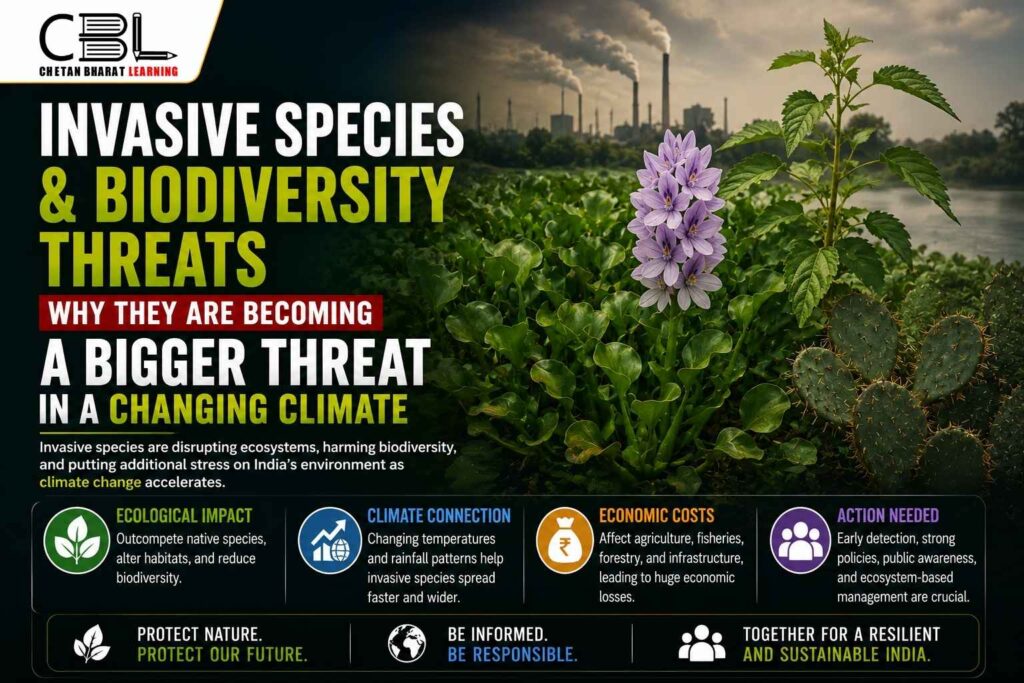
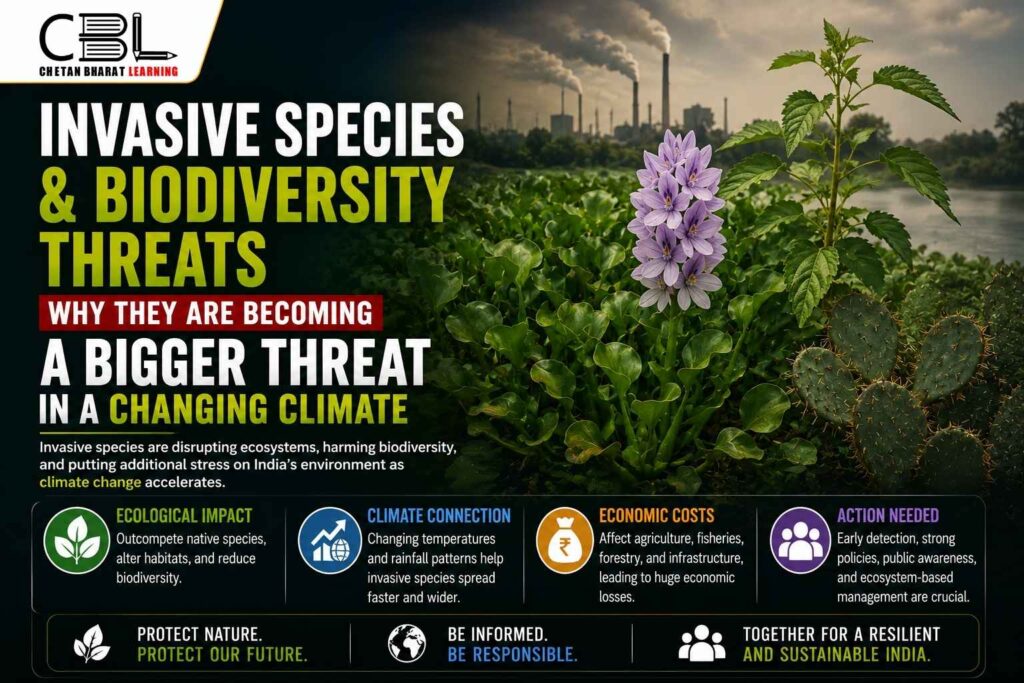
Experts have warned that invasive species are becoming a major ecological challenge across the Indian subcontinent, especially as climate change alters ecosystems and weakens native biodiversity.
What are Invasive Species?
➤ Invasive species are:
✔ Non-native plants or animals
✔ Introduced into a new ecosystem
✔ That spread aggressively and harm local biodiversity
Why Are They Dangerous?
Invasive species can:
1. Destroy Native Biodiversity
They compete with native plants and animals for:
- Food
- Space
- Water
2. Alter Ecosystems
They can disturb:
✔ Soil quality
✔ Water systems
✔ Forest structure
3. Affect Agriculture
Some invasive species damage:
✔ Crops
✔ Grazing land
✔ Fisheries
4. Increase Economic Losses
Governments spend huge resources on:
→ Control and restoration efforts.
How Climate Change Worsens the Problem
Climate change creates:
✔ Warmer temperatures
✔ Irregular rainfall
✔ Extreme weather
These conditions help invasive species spread into new regions faster than native species can adapt.
Examples of Invasive Species in India
1. Prosopis Juliflora
Also called:
→ Vilayati Kikar
Known for damaging grasslands in western India.
2. Water Hyacinth
Blocks water bodies and affects aquatic ecosystems.
3. Lantana Camara
Spreads rapidly in forests and reduces biodiversity.
Impact on Ecosystems
Invasive species threaten:
- Forest ecosystems
- Wetlands
- Grasslands
- Agricultural land
They also reduce habitat quality for wildlife.
Suggested Solutions
1. Early Detection
Monitor invasive spread before large-scale damage occurs.
2. Ecological Restoration
Restore native species and habitats.
3. Community Participation
Local communities help in monitoring and removal.
4. Climate-Resilient Conservation
Integrate biodiversity protection with climate policy.
Special Note for Aspirants
Students preparing through:
UPSC coaching Chandigarh
or
IAS coaching Chandigarh
should focus carefully on:
✔ Biodiversity conservation
✔ Climate change impacts
✔ Invasive species
✔ Ecosystem restoration
These are highly important for:
→ GS3 Environment + Essay + Interview.
Key Insight for UPSC
➤ Climate change and biodiversity loss are now deeply interconnected.
Managing invasive species is becoming:
✔ An ecological issue
✔ An economic issue
✔ A climate governance challenge
PRELIMS PRACTICE QUESTIONS
Q1. Invasive species are:
A. Native forest species
B. Non-native species that spread aggressively
C. Endangered species only
D. Migratory birds only
⇢ Answer: B
Q2. Which of the following is an invasive species in India?
A. Banyan tree
B. Tiger
C. Lantana camara
D. Neem
⇢ Answer: C
Q3. Climate change may increase invasive species spread because of:
A. Stable ecosystems
B. Warmer temperatures and ecosystem stress
C. Reduced rainfall only
D. Lower biodiversity awareness
⇢ Answer: B
Q4. Water hyacinth mainly affects:
A. Desert ecosystems
B. Aquatic ecosystems
C. Mountains only
D. Polar regions
⇢ Answer: B
Q5. Prosopis juliflora is associated with:
A. Marine pollution
B. Grassland invasion
C. Space research
D. Glacier melting
⇢ Answer: B
CBL Mains Practice Question
“Invasive species are emerging as a major ecological challenge in the era of climate change.”
Discuss their impact on biodiversity and suggest suitable management strategies.
FAQs
1. What are invasive species?
Non-native species that spread rapidly and harm ecosystems.
2. Why are invasive species dangerous?
They damage biodiversity and disrupt ecosystems.
3. How does climate change worsen the issue?
Changing climate conditions help invasive species expand faster.
4. Name one invasive species in India.
Lantana camara or Prosopis juliflora.
5. Which GS paper covers this topic?
GS Paper 3.
Related Current Affairs
Preparing for UPSC, PCS or HCS?
Talk to a mentor at Chetan Bharat Learning, Chandigarh. Free guidance on choosing the right exam and building a study plan.
Chat on WhatsAppCall 97793 53345UPSC / IAS / PCS coaching in Chandigarh · Trusted by aspirants across Punjab & Haryana
Leave a Reply
You must be logged in to post a comment.