
The Pulivendula polling clash brought election security into focus during municipal voting in Andhra Pradesh. The incident also raises questions about local election governance.
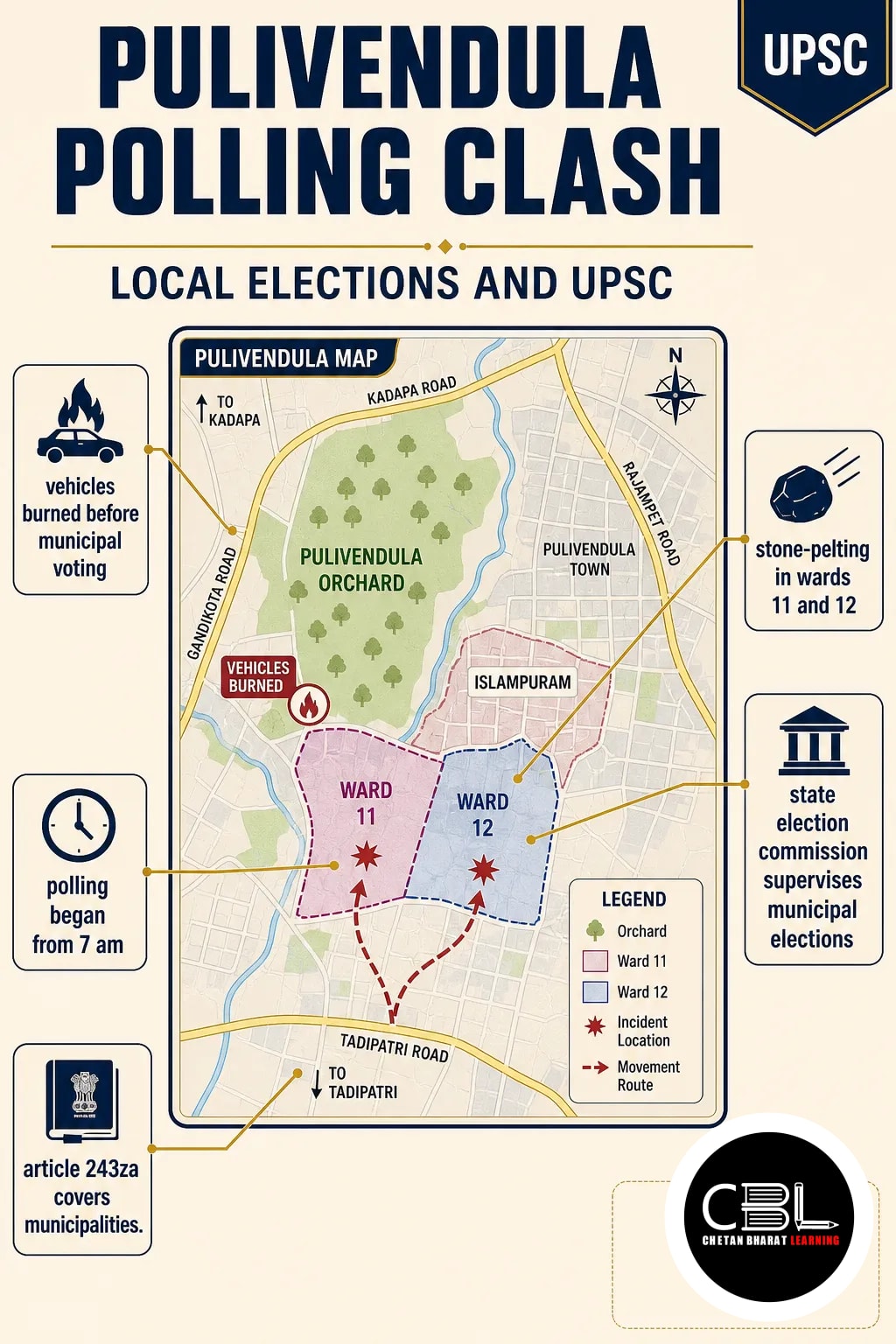
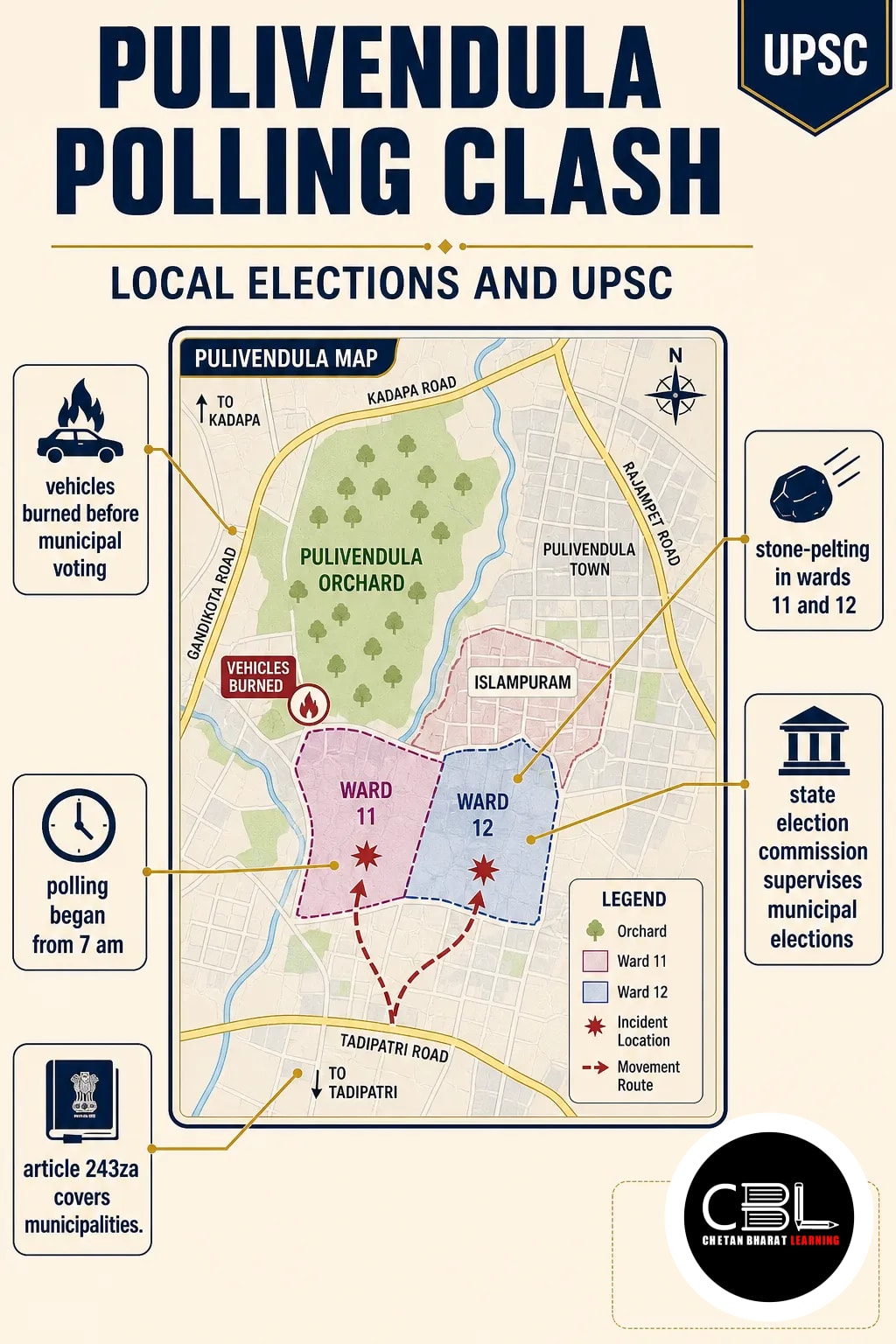
Quick answer: The Pulivendula polling clash occurred around municipal voting in Andhra Pradesh. Three cars, ten motorcycles and a tractor burned near an orchard around midnight before polling. Rival party cadres later jostled, while stone-pelting occurred in two wards. Police intervened, but said the perpetrators of the vehicle burning were unknown.
What happened in Pulivendula?
Vehicles burned before municipal voting, followed by confrontations in several wards. The fire occurred around midnight near an orchard belonging to Madhusudhan Reddy. However, police said it was not immediately known who set the vehicles alight.
Polling began briskly, with voters queuing from 7 am. Meanwhile, cadres of the Telugu Desam Party (TDP) and Yuvajana Sramika Rythu Congress Party (YSRCP) pushed and jostled in several wards. Police intervened and chased fighting cadres away in places including Islampuram.
Wards 11 and 12 saw intense stone-pelting, which the source suggested was intended to frighten voters. However, the report does not establish who burned the vehicles or conclusively identify the motive for that act. The Pulivendula polling clash should therefore be analysed without assigning unverified responsibility.
| Reported fact | Detail |
|---|---|
| Fire location | Near Madhusudhan Reddy’s orchard |
| Vehicles destroyed | Three cars, ten motorcycles and one tractor |
| Party confrontation | TDP and YSRCP cadres jostled in several wards |
| Police response | Intervention in wards including Islampuram |
For related context, see CBL’s coverage of security in Andhra local polls and Andhra local body elections.
Who conducts municipal elections?
The State Election Commission supervises municipal elections under Article 243ZA of the Constitution. The provision applies the election framework in Article 243K to municipal elections, subject to its terms.
Consequently, municipal polls must be distinguished from elections to Parliament and state legislatures. Article 324 vests supervision of the latter elections in the Election Commission of India. State legislatures may also make laws concerning municipal elections, subject to the Constitution.
| Provision | Relevance |
|---|---|
| Article 243K | Provides for the State Election Commission’s role in panchayat elections. |
| Article 243ZA | Vests municipal election supervision in the State Election Commission. |
| Article 324 | Provides for the Election Commission of India’s role in specified national and state elections. |
| Article 243U | Provides for municipal duration and the timing of elections, subject to constitutional conditions. |
Why does polling violence matter for local democracy?
Violence can undermine the ability of voters and candidates to participate freely in local elections. Municipal representatives make decisions affecting urban communities; therefore, confidence in their selection matters for local accountability.
- Voter access: Stone-pelting or threats near polling areas can deter participation, even where voting continues.
- Equal competition: Intimidation can disadvantage candidates and supporters who cannot campaign or vote safely.
- Public confidence: Property destruction and confrontations can weaken trust in a peaceful electoral process.
- Administrative capacity: Election authorities and police must coordinate, while preserving impartiality and accountability.
However, queues in Pulivendula show that voting began; they do not establish that every voter could participate without fear. Similarly, the report provides no turnout figures or evidence about the final electoral impact.
What are the governance challenges?
The immediate challenge is to protect voting while investigating violence fairly. Election-day deployment alone may not prevent incidents before polling begins; therefore, preparation must cover the surrounding period too.
Investigators must separate evidence about the vehicle fire from evidence about later clashes. Otherwise, assumptions about party confrontations could influence conclusions about an unidentified perpetrator. In addition, visible police intervention must be accompanied by consistent treatment of rival groups.
Another challenge is measuring access rather than assuming it from polling activity. For example, administrators can examine complaints about obstruction and identify affected locations. However, any assessment must avoid presenting unverified fears or allegations as established facts.
How can authorities improve local poll security?
Election authorities and police can combine preventive planning with impartial investigation and accessible complaint mechanisms. The following measures are policy responses, not actions confirmed in the Pulivendula report.
- Early assessment: Identify locations with credible risks and plan police deployment before polling.
- Coordination: Establish clear communication between the State Election Commission, district officials and police.
- Voter protection: Provide visible assistance near polling locations and respond promptly to obstruction complaints.
- Evidence-led action: Record incidents, preserve evidence and investigate alleged offences without presuming political responsibility.
- Accountability: Review complaints and the response after polling, while protecting the fairness of any investigation.
Overall, secure voting requires both operational readiness and public confidence in neutral enforcement. Thus, the Pulivendula polling clash offers a case study in protecting local democracy without prejudging individual culpability.
Source: The Hindu, 1 November 2026
Punjab PCS and Haryana HCS may test the State Election Commission’s constitutional role in local elections. They may also ask how district administration and police can support peaceful polling.
Prelims Practice Corner
Mains Practice Questions
Frequently Asked Questions
What happened during the Pulivendula polling clash?
Vehicles burned before municipal voting, and party cadres later confronted each other in several wards. Police also intervened after clashes, while stone-pelting occurred in wards 11 and 12.
Who conducts municipal elections in India?
The State Election Commission supervises municipal elections. Article 243ZA provides the constitutional basis for this role.
Were the people responsible for the vehicle fire identified?
No, police said their identity was not immediately known. Therefore, the reported party clashes cannot establish who caused the fire.
How many vehicles burned in Pulivendula?
Fourteen vehicles burned near the orchard. These included three cars, ten motorcycles and one tractor.
Related Current Affairs
Preparing for UPSC, PCS or HCS?
Talk to a mentor at Chetan Bharat Learning, Chandigarh. Free guidance on choosing the right exam and building a study plan.
Chat on WhatsAppCall 97793 53345UPSC / IAS / PCS coaching in Chandigarh · Trusted by aspirants across Punjab & Haryana

 Ananya RanaIAS · AIR 60
 Aditya SharmaIAS · AIR 70
 Ria Kaur SethiIPS · AIR 89
 Aman AloonIRS · AIR 295
 Sumer Singh VirkIRS · AIR 335
 Shivani PanchalIAS

Leave a Reply
You must be logged in to post a comment.