
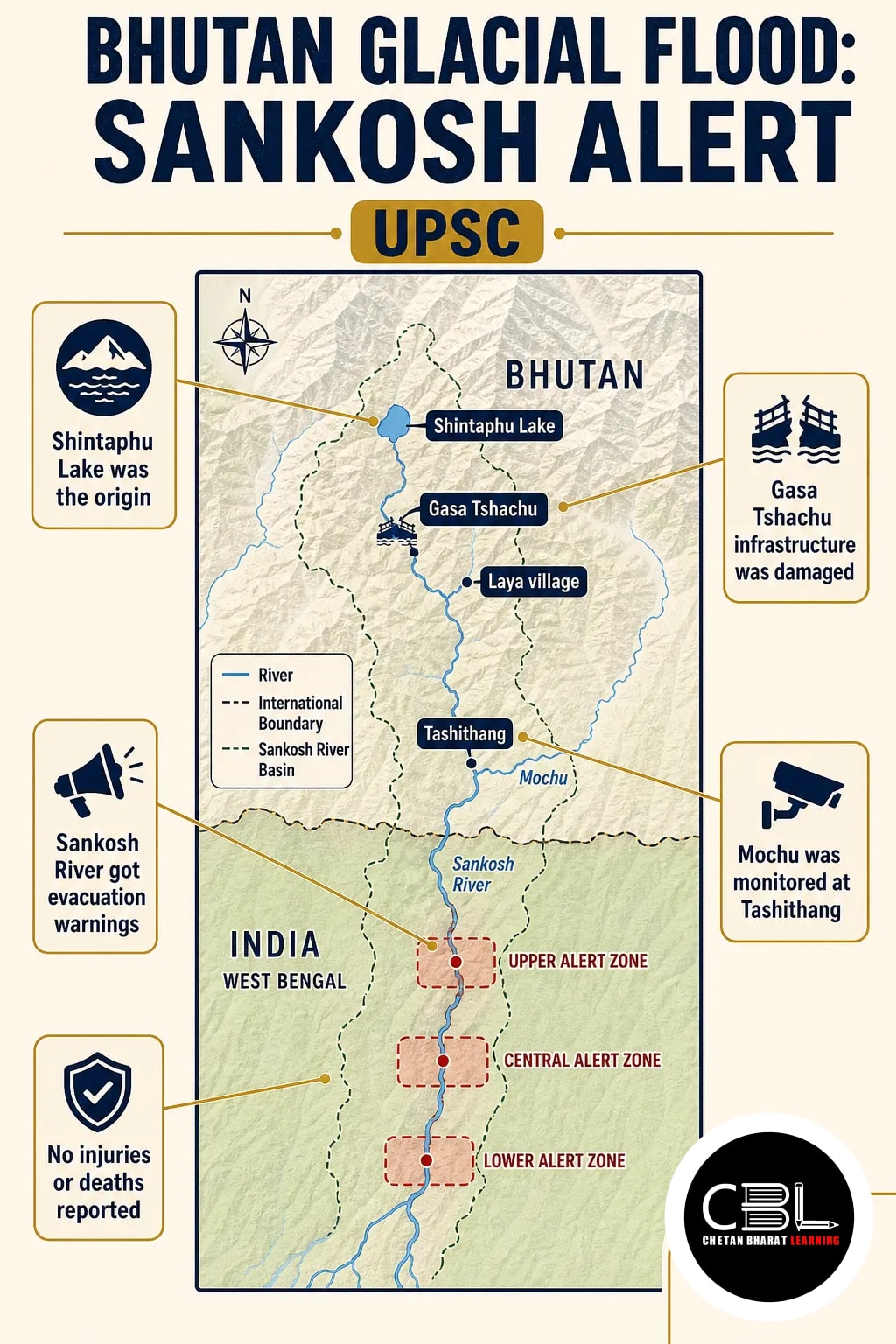
Bhutan glacial flood prompted West Bengal to warn communities along the Sankosh River on 30 October 2026. The event is relevant to geography and disaster management.
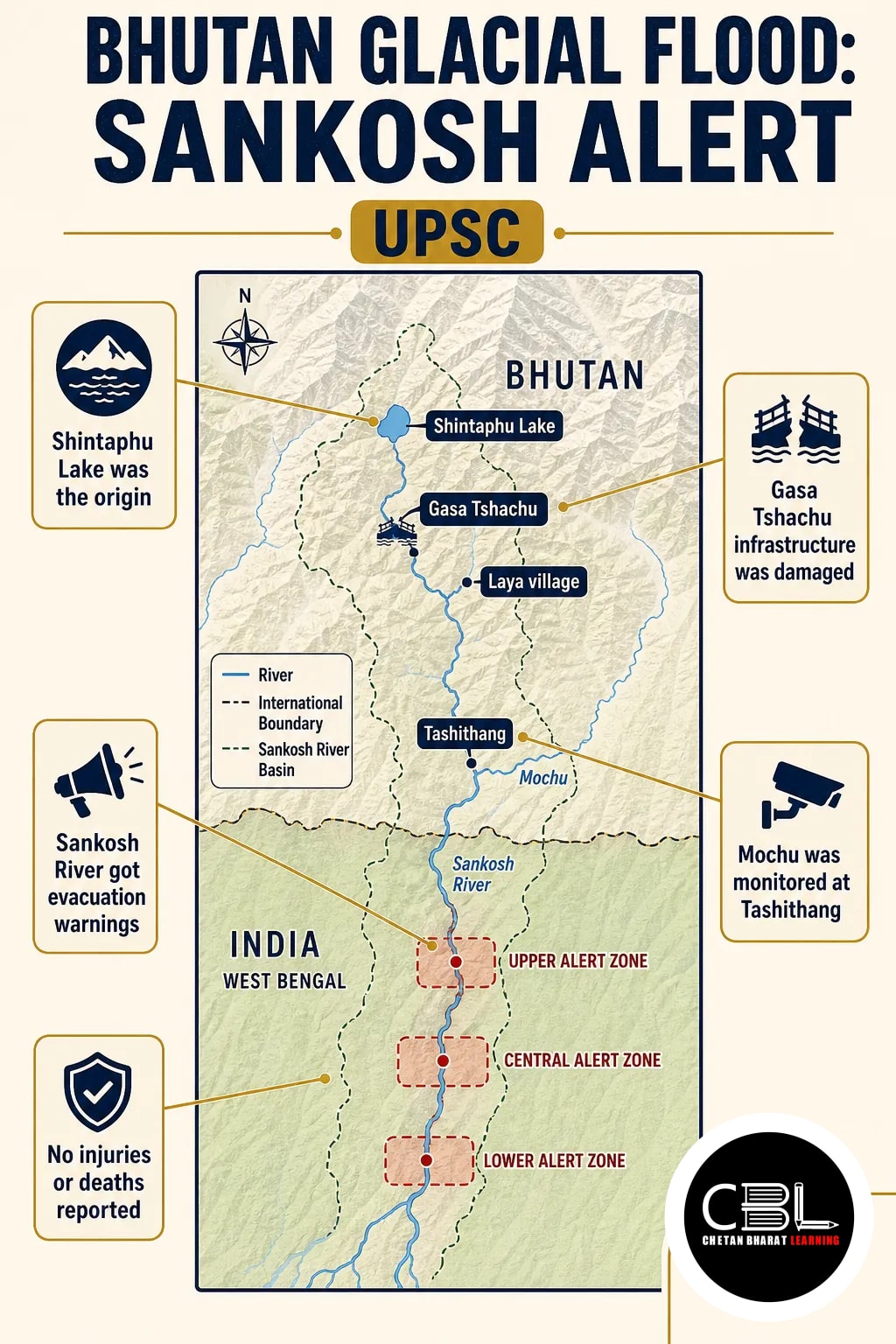
Quick answer: The Bhutan glacial flood began at Shintaphu Lake in Gasa’s Mochu subbasin and damaged infrastructure at Gasa Tshachu hot springs. On 30 October 2026, West Bengal issued high-alert and evacuation warnings along the Sankosh River. Bhutan monitored the Mochu at Tashithang and informed India.
Where did the Bhutan glacial flood occur?
The flood originated at Shintaphu Lake in the Mochu subbasin of Gasa, northern Bhutan. The source also spells the lake name Sintaphu.
| Location | Fact to remember |
|---|---|
| Shintaphu Lake | Glacial lake identified as the flood’s origin |
| Gasa Tshachu | Natural hot springs where infrastructure was damaged |
| Tashithang | Location where Bhutan monitored the Mochu River level |
| Sankosh River | West Bengal issued warnings for riverside settlements |
What is a glacial lake outburst flood?
A glacial lake outburst flood (GLOF) is a sudden release of water from a glacial lake. It can occur when a natural barrier containing the lake fails.
For example, moraine debris or ice can form such a barrier. Rapid water release can therefore carry sediment and debris downstream, damaging roads, bridges and settlements.
For related Himalayan hazards, revise glacier collapse risks near Badrinath. However, a glacier collapse and a lake outburst are distinct processes.
What damage and warnings were reported?
The Bhutan glacial flood washed away infrastructure at Gasa Tshachu, while authorities warned settlements across the border.
- Casualties: Bhutan’s state broadcaster reported no injuries or deaths. However, darkness and strong water flow prevented a full damage assessment.
- Road access: Part of the road to Laya village became impassable; therefore, authorities closed it indefinitely.
- Prior evacuation: The Gasa Tshachu area had been evacuated before the flood arrived. Meanwhile, two portable, prefabricated Bailey bridges may have been washed away; their loss was not confirmed.
- West Bengal alert: Minister Manoj Kumar Oraon named upper Sankosh forest village, NKC Sankosh Tea Garden, Kumargram Community Development block, Chengmari, Valka Barabisa, Jharaguri and Pakriguri.
Oraon said floodwaters were expected downstream within 1 to 1.5 hours and urged evacuation from low-lying areas. That estimate was a warning, not confirmation that floodwaters reached those settlements.
Why does the alert matter?
The alert shows why upstream monitoring and timely communication matter for downstream safety. In addition, the reported evacuation at Gasa Tshachu illustrates the value of moving residents before floodwaters arrive.
Gasa Tshachu had also faced a flash flood in 2021, when the Mochhu River changed course. Thus, the location has experienced more than one flood event, although their immediate causes differed.
Source: The Hindu, 30 October 2026
State PCS General Studies can test the meaning of a GLOF and the locations in this alert. In addition, revise the roles of monitoring, warnings and evacuation in disaster management.
Prelims Practice Corner
Mains Practice Questions
Frequently Asked Questions
Which lake was linked to the Bhutan flood?
Shintaphu Lake was identified as the origin. It lies in the Mochu subbasin of Gasa, Bhutan.
Which river prompted the West Bengal evacuation warning?
The Sankosh River prompted the warning. Authorities therefore urged residents of adjacent low-lying areas to move to safety.
Were deaths reported at Gasa Tshachu?
No deaths or injuries had been reported by Bhutan’s state broadcaster. However, the full extent of damage was not yet known.
Related Current Affairs
Preparing for UPSC, PCS or HCS?
Talk to a mentor at Chetan Bharat Learning, Chandigarh. Free guidance on choosing the right exam and building a study plan.
Chat on WhatsAppCall 97793 53345UPSC / IAS / PCS coaching in Chandigarh · Trusted by aspirants across Punjab & Haryana
Leave a Reply
You must be logged in to post a comment.