
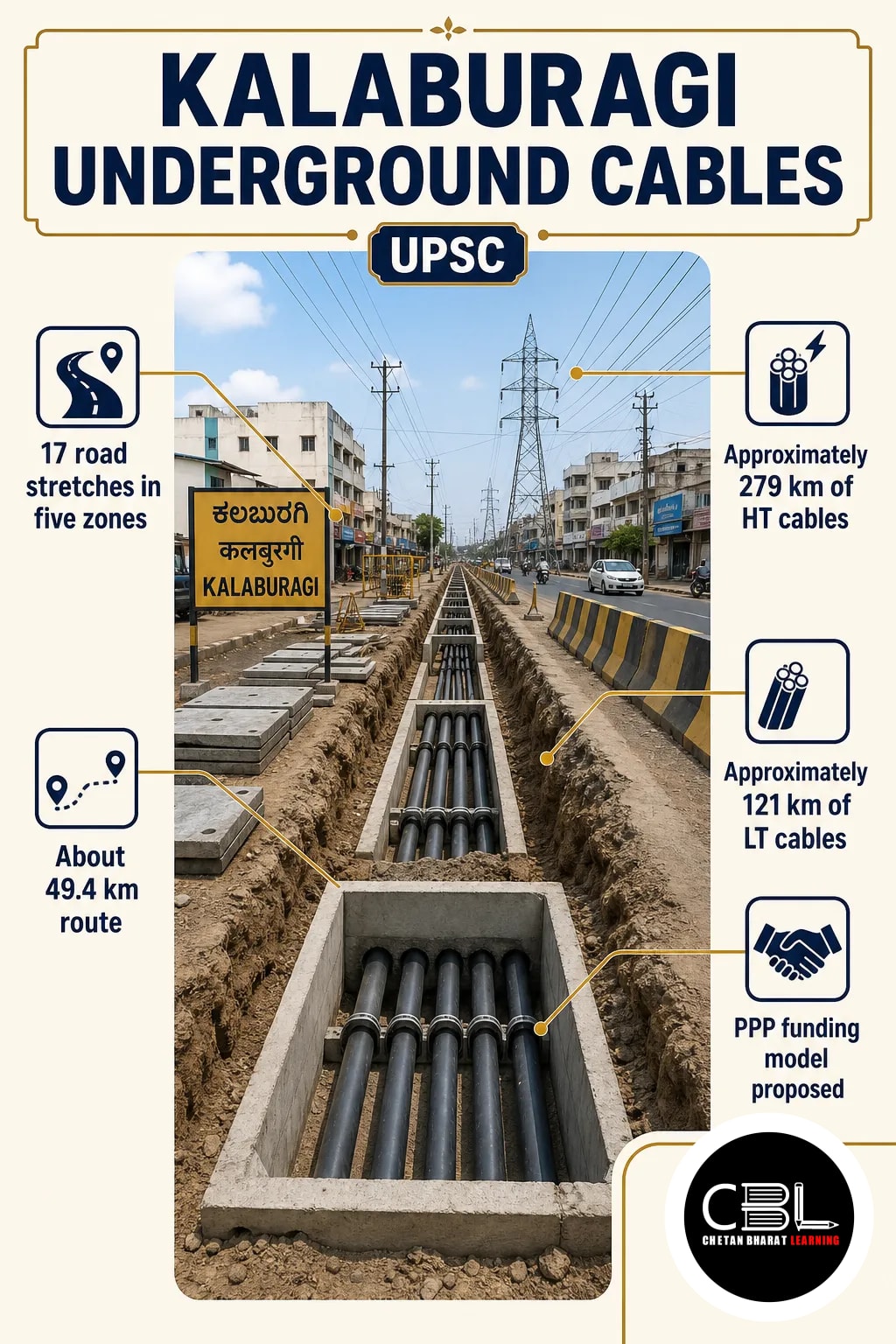

Kalaburagi underground cables are part of a proposed electricity distribution upgrade in Karnataka. The plan offers a case study for national and urban infrastructure.
Quick answer: In October 2026, Gulbarga Electricity Supply Company Limited proposed Kalaburagi underground cables across 17 road stretches in five zones. The plan covers approximately 49.4 route kilometres and aims to improve safety and electricity reliability. However, it still requires the company board’s approval.
What is the Kalaburagi underground cables proposal?
The proposal would replace overhead electricity lines along selected city roads with an underground distribution network. Gulbarga Electricity Supply Company Limited (GESCOM) has grouped the routes into five zones for phased implementation.
GESCOM proposes a public-private partnership (PPP) funding model. However, its board of directors must approve the proposal before it can proceed.
| Feature | Proposed coverage |
|---|---|
| Road stretches and route length | 17 stretches; approximately 49.4 km |
| High-tension (HT) cables | Approximately 279 km |
| Low-tension (LT) cables | Approximately 121 km |
| Existing distribution lines | 11-kilovolt (kV) overhead lines |
The cable lengths and route length measure different things; therefore, aspirants should not treat them as interchangeable.
Why is the proposal in the news?
Kalaburagi district in-charge minister Priyank Kharge discussed the project’s design and feasibility with GESCOM officials in Bengaluru. On 29 October 2026, he outlined its expected benefits for urban infrastructure and electricity distribution.
GESCOM chairperson Praveen Patil Harwal said the proposal aims to reduce disruptions and improve public safety. In addition, removing overhead infrastructure could support future road widening and improve the city’s appearance.
How would the underground network work?
The project would convert existing 11-kV overhead distribution lines into an underground network. First, teams would survey each zone, map existing utilities and prepare a Detailed Project Report.
Next, workers would excavate trenches, install protective ducts and cable chambers, and lay cables. They would also restore affected roads and footpaths.
The technical plan includes Ring Main Units, which are electrical switching and protection equipment, and remote monitoring systems. After testing and commissioning, consumer connections would shift to the new network; only then would crews remove overhead poles and conductors.
Why does undergrounding matter?
Undergrounding can reduce exposure to overhead wires while supporting more orderly urban infrastructure. The proposal also expects lower tree-trimming costs and better distribution reliability, although these outcomes remain prospective.
For comparison, Varanasi completed an underground cable initiative in a 16-square-kilometre area in 2017. According to the source, distribution losses there fell from over 40% to below 10%; this does not establish the outcome for Kalaburagi.
For another urban electricity initiative, see the Vellore LED street-light project.
Source: The Hindu, 30 October 2026
State PCS General Studies can test underground distribution, urban utility planning and PPP financing through this proposal. Also, distinguish proposed infrastructure from projects already approved or completed.
Prelims Practice Corner
Mains Practice Questions
Frequently Asked Questions
Where are the underground cables proposed?
They are proposed in Kalaburagi city, Karnataka. The plan covers 17 road stretches across five zones.
Has the Kalaburagi cable project been approved?
No, GESCOM board approval remains pending. The company also proposes PPP funding.
How much cable does the proposal envisage?
It envisages approximately 279 km of HT and 121 km of LT cables. In contrast, the covered road route measures about 49.4 km.
Related Current Affairs
Preparing for UPSC, PCS or HCS?
Talk to a mentor at Chetan Bharat Learning, Chandigarh. Free guidance on choosing the right exam and building a study plan.
Chat on WhatsAppCall 97793 53345UPSC / IAS / PCS coaching in Chandigarh · Trusted by aspirants across Punjab & Haryana
Leave a Reply
You must be logged in to post a comment.