
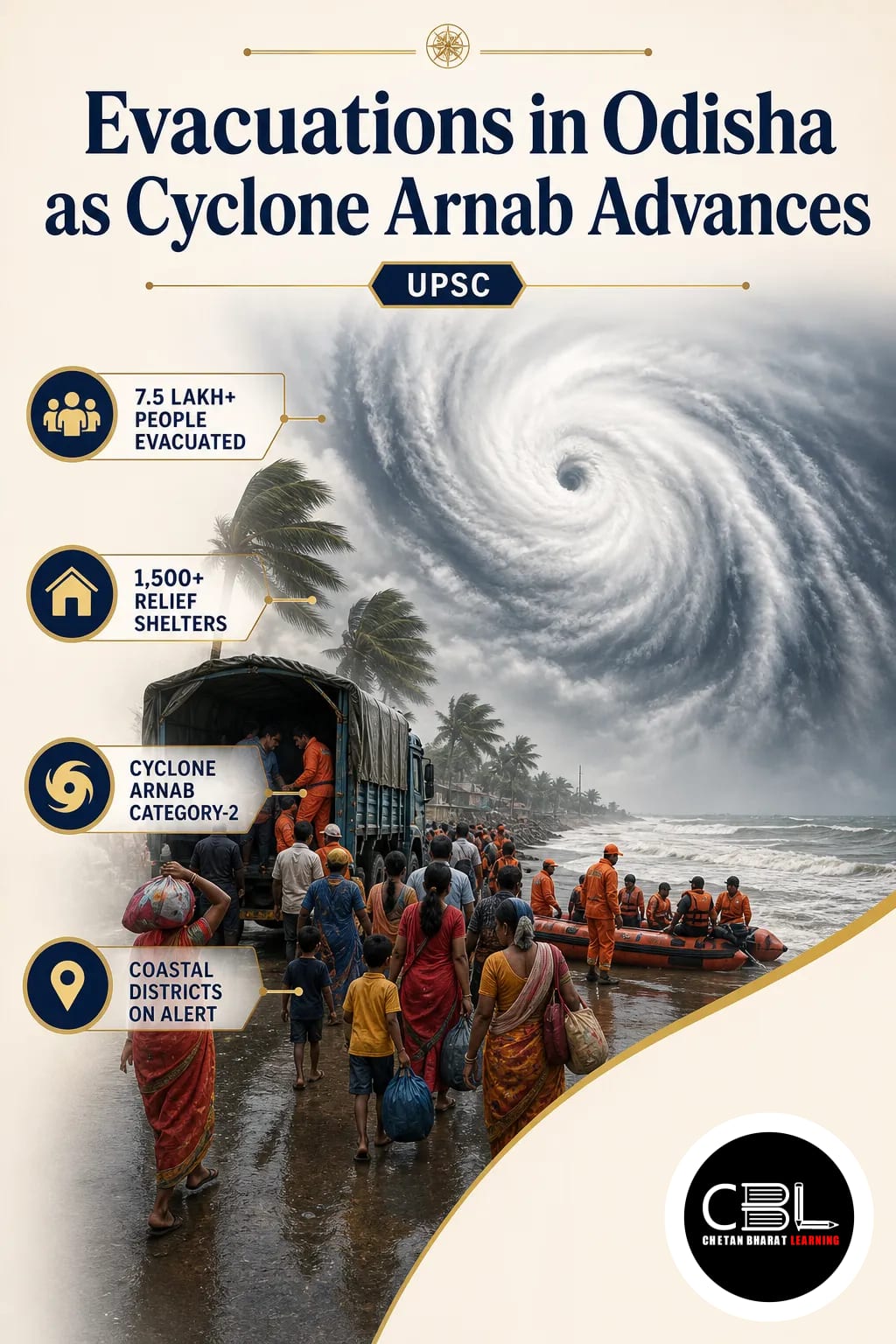
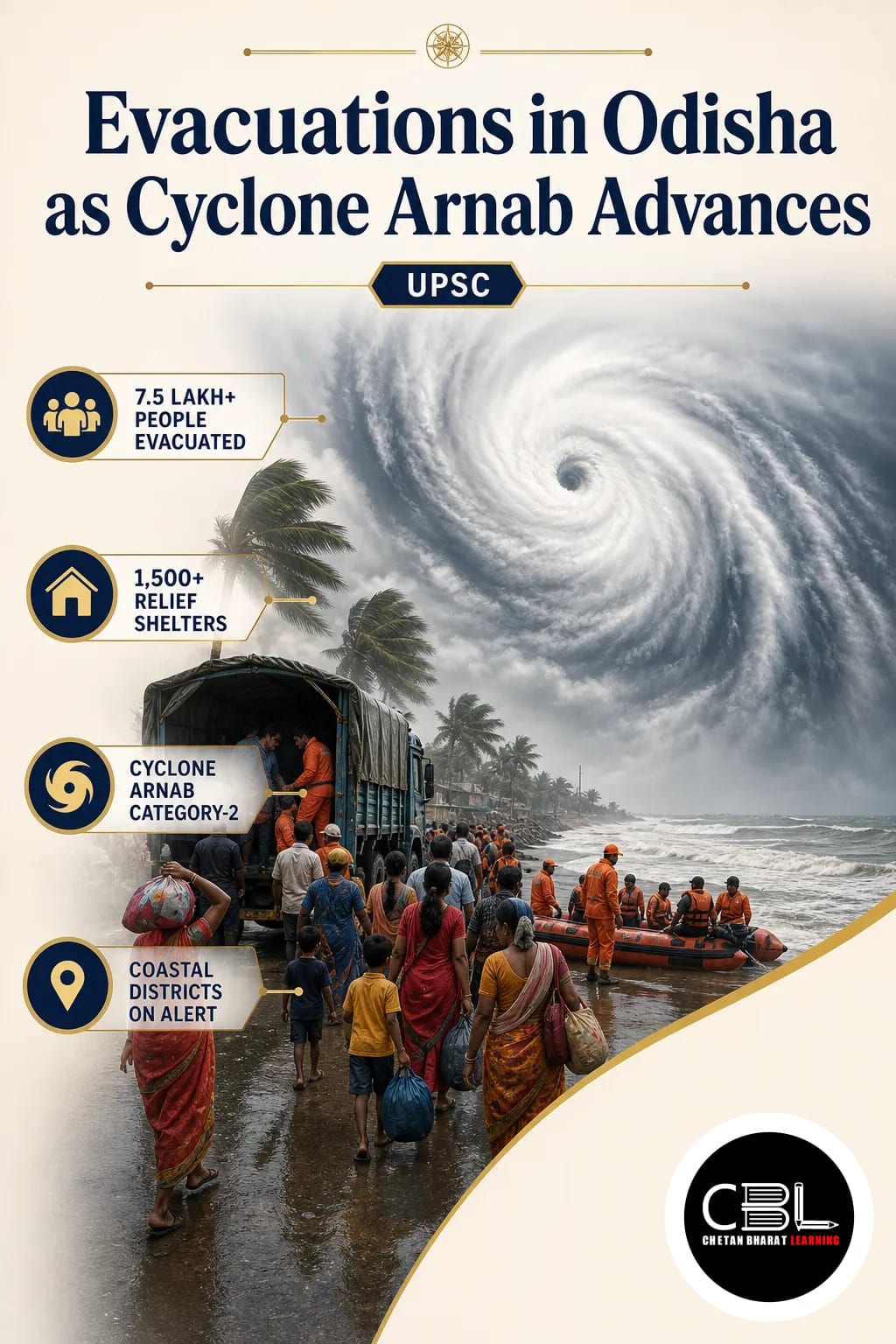
Evacuations in Odisha have begun as the state mobilised personnel and prepared for a very severe cyclone. The move reflects a standard disaster-response approach: reduce exposure first, then protect life, livestock, and essential services.
What is evacuations?
In disaster management, evacuations mean moving people away from threatened areas before impact. Authorities use them to lower casualties during hazards such as cyclones, floods, storm surges, and landslides.
For coastal states, evacuation planning links warnings, transport, shelters, food, and medical support. It also depends on local administration, police, health staff, and community participation.
Why in News?
Odisha has mobilised personnel and ordered evacuations as it braces for a very severe cyclone. The report highlights the state’s precautionary response before landfall-related risks intensify.
Such early action matters because cyclone damage often comes from wind, rain, and water surge, not only the storm centre. Coastal evacuation remains one of the most effective life-saving measures in India’s disaster framework.
Key Features
- Pre-impact risk reduction: Authorities shift vulnerable populations to safer locations before the cyclone reaches the coast.
- Multi-agency response: District administration, police, and disaster response personnel usually coordinate evacuation and shelter management.
- Focus on vulnerable groups: Children, the elderly, pregnant women, persons with disabilities, and coastal residents need priority attention.
- Link with early warning: Evacuation works best when warnings are clear, timely, and repeated through local channels.
- Need for shelter readiness: Safe shelters, drinking water, sanitation, and basic health services support orderly relocation.
Challenges
- Last-mile communication gaps: Warnings may not always reach remote hamlets, fishing communities, or vulnerable households quickly.
- Reluctance to leave homes: People sometimes delay movement because they fear loss of property, livestock, or livelihood.
- Shelter pressure: Large-scale movement can strain cyclone shelters, transport, and local supplies.
- Coordination stress: Multiple departments must act together, and delays can reduce the value of evacuation orders.
- Post-evacuation needs: Relief, health care, and return planning matter after the immediate threat passes.
Way Forward
States should strengthen evacuation drills, shelter mapping, and public awareness before each cyclone season. Local bodies can improve trust when they explain routes, timelines, and safety arrangements in advance.
Technology, community volunteers, and district emergency plans should work together to cut response time. For a cyclone-prone state like Odisha, preparedness must remain continuous, not event-specific.
Source: Indian Express India, 2026-10-25
This topic is relevant for state PCS questions on disaster management, district administration, and emergency planning. It also helps in understanding how states organise evacuation, relief, and coordination during natural hazards under the Disaster Management Act framework.
FAQ
Why do authorities order evacuations before a cyclone?
Authorities order evacuations to move people away from high-risk coastal and low-lying areas before winds, rain, and storm surge strike. This reduces deaths, injuries, and pressure on rescue teams.
What makes evacuation difficult in coastal disasters?
The main difficulties are poor last-mile communication, reluctance to leave property, and logistics for transport and shelters. Local administration must also provide food, water, and medical support after relocation.
How is this topic useful for UPSC and state PCS?
It connects with disaster management, local governance, and administrative preparedness. The topic is also useful for understanding how states respond to cyclone risk through planning and coordination.
Related Current Affairs
Preparing for UPSC, PCS or HCS?
Talk to a mentor at Chetan Bharat Learning, Chandigarh. Free guidance on choosing the right exam and building a study plan.
Chat on WhatsAppCall 97793 53345UPSC / IAS / PCS coaching in Chandigarh · Trusted by aspirants across Punjab & Haryana
Leave a Reply
You must be logged in to post a comment.