
Important for:
UPSC, Haryana HCS, Punjab PCS
Prelims: Alzheimer’s disease, monoclonal antibodies, FDA approval
Mains: GS Paper 2 & 3 — Public Health, Biotechnology, Healthcare Accessibility
Why in News?
India has approved its first treatment for Alzheimer’s disease with the launch of Donanemab, a breakthrough therapy aimed at slowing cognitive decline in early-stage patients.
The therapy has generated major discussion around:
- Public healthcare access
- High treatment costs
- Neurodegenerative diseases
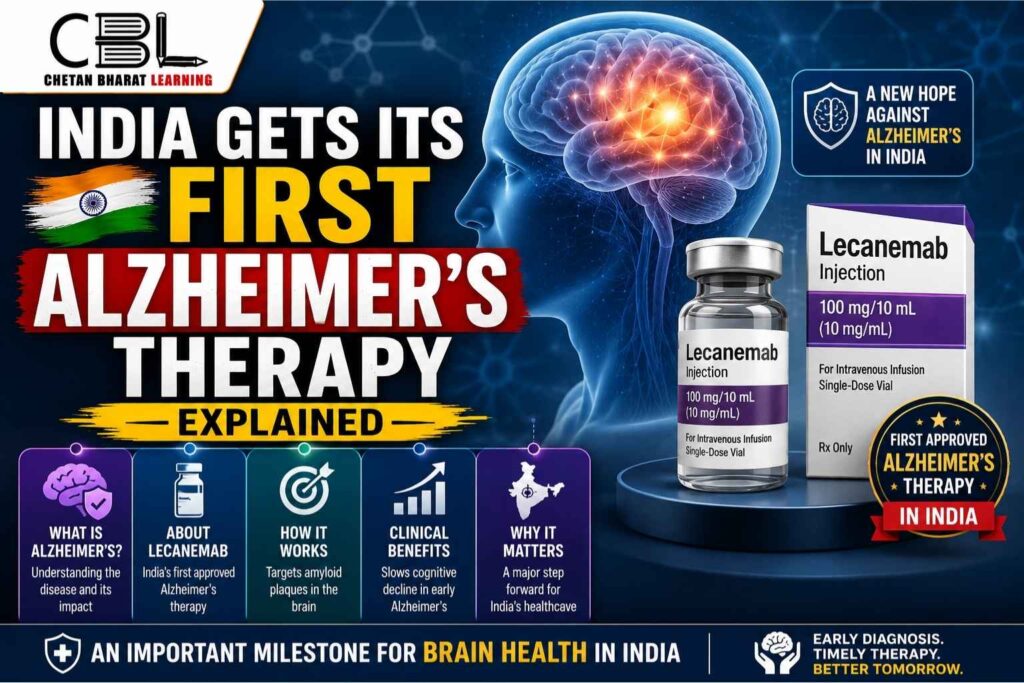
What is Alzheimer’s Disease?
Alzheimer’s is a:
➤ Progressive neurodegenerative disorder
It affects:
- Memory
- Thinking ability
- Cognitive functions
Mainly seen in:
➤ Elderly population
What is Donanemab?
Donanemab is:
➤ A monoclonal antibody drug
Developed by:
➤ Eli Lilly
Brand Name:
➤ Kisunla
How Does the Therapy Work?
The drug targets:
➤ Amyloid beta plaques in the brain
These plaques are associated with:
- Memory decline
- Cognitive impairment
Goal:
✔ Slow disease progression
Key Features of the Therapy
1. First Approved Alzheimer’s Therapy in India
Major milestone in:
➤ Neurological healthcare
2. Early-Stage Treatment
Most effective for:
➤ Mild Alzheimer’s cases
3. Expensive Treatment
Approximate cost:
➤ ₹11 lakh per dose
This raises concerns over:
- Affordability
- Health inequality
4. Infusion-Based Therapy
Given through:
➤ Monthly intravenous infusion
Challenges
1. High Cost
Treatment remains inaccessible for many patients.
2. Limited Infrastructure
India lacks:
- Advanced dementia care systems
- Specialised neuro-care facilities
3. Diagnostic Challenges
Many Alzheimer’s cases remain:
➤ Undiagnosed
Global Context
The US FDA approved Alzheimer’s therapies like:
- Donanemab
- Lecanemab
These are considered major breakthroughs in neurological medicine.
India-Specific Impact
The therapy may:
✔ Improve dementia care awareness
✔ Boost neurological research
✔ Encourage biotech innovation
But also highlights:
➤ Healthcare affordability issues
Special Note for Aspirants
Students preparing through UPSC Coaching Chandigarh and IAS Coaching Chandigarh should focus on:
- Public health reforms
- Biotechnology in healthcare
- Ageing population issues
- Healthcare accessibility
These topics are highly relevant for GS Paper 2 & Essay preparation.
Key Insight for UPSC
➤ Future healthcare debates will increasingly focus on:
✔ Innovation
✔ Affordability
✔ Accessibility
not just medical breakthroughs alone.
PRELIMS PRACTICE QUESTIONS
Q1. Alzheimer’s disease mainly affects:
A. Kidneys
B. Brain
C. Liver
D. Lungs
✅ Answer: B
Q2. Donanemab is a:
A. Vaccine
B. Antibiotic
C. Monoclonal antibody
D. Steroid
✅ Answer: C
Q3. Alzheimer’s disease is associated with:
A. Bone fractures
B. Memory decline
C. Skin infection
D. Heart blockage
✅ Answer: B
Q4. Donanemab targets:
A. Red blood cells
B. Amyloid plaques
C. Kidneys
D. DNA mutation
✅ Answer: B
Q5. Alzheimer’s mostly affects:
A. Children
B. Teenagers
C. Elderly population
D. Athletes
✅ Answer: C
CBL Mains Practice Question
“India’s first Alzheimer’s therapy marks a major medical breakthrough, but affordability and healthcare accessibility remain key concerns.”
Discuss.
FAQs
1. What is Alzheimer’s disease?
A neurodegenerative disease affecting memory and thinking ability.
2. What is Donanemab?
A monoclonal antibody therapy for Alzheimer’s disease.
3. Who developed Donanemab?
Eli Lilly.
4. Why is the therapy important?
It can slow cognitive decline in early Alzheimer’s patients.
5. Which GS papers cover this topic?
GS2 and GS3.
Related Current Affairs
Preparing for UPSC, PCS or HCS?
Talk to a mentor at Chetan Bharat Learning, Chandigarh. Free guidance on choosing the right exam and building a study plan.
Chat on WhatsAppCall 97793 53345UPSC / IAS / PCS coaching in Chandigarh · Trusted by aspirants across Punjab & Haryana
Leave a Reply
You must be logged in to post a comment.