
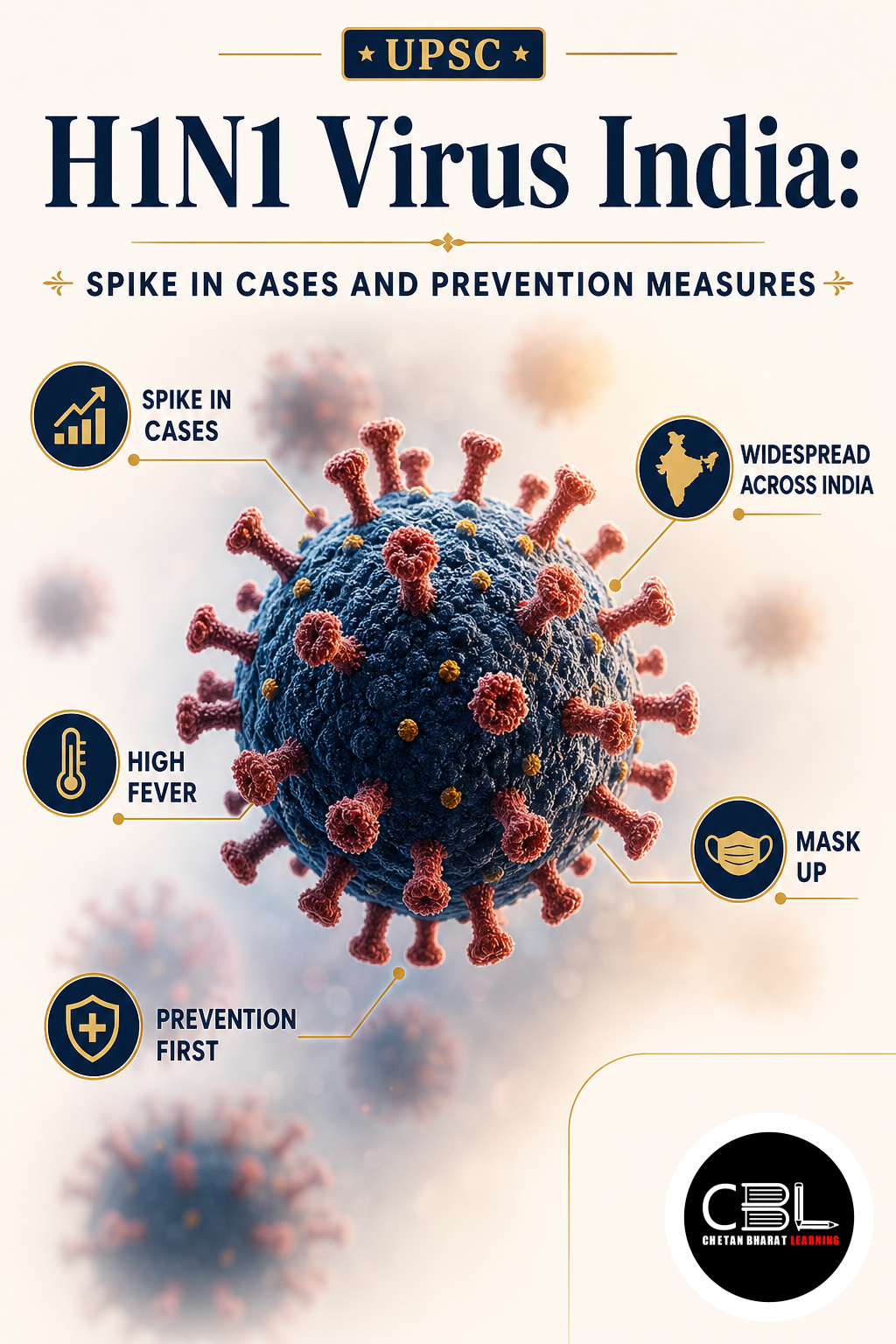
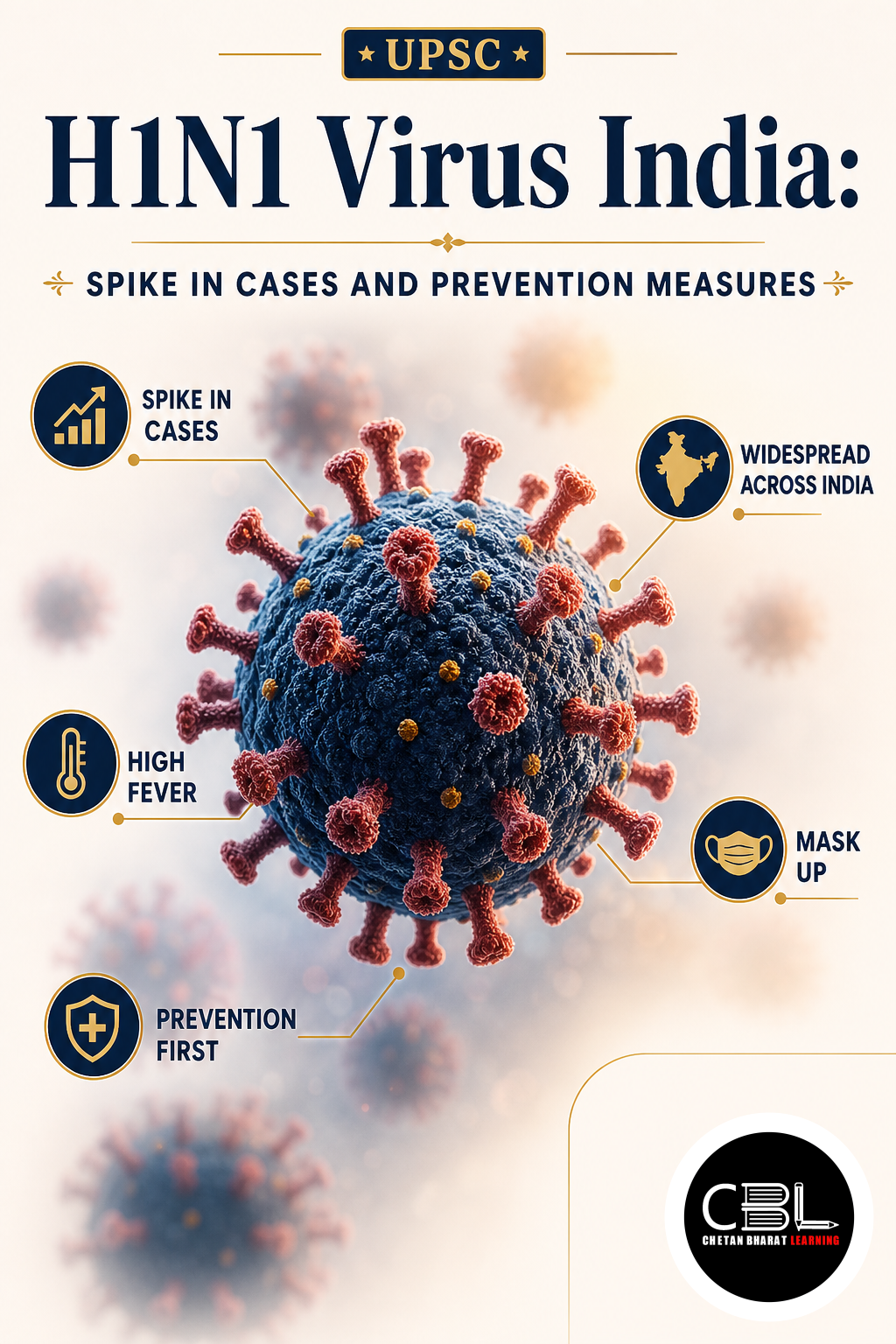
H1N1 Virus India is witnessing a spike in cases across several states, with influenza-like illnesses and respiratory tract infections increasing. H1N1 is a subtype of influenza A virus, originally referred to as ‘swine flu’ because of its genetic similarity to viruses found in pigs. For more such health updates, explore the health archive.
What is H1N1 Virus?
H1N1 Virus is a subtype of influenza A virus. The name H1N1 refers to the two proteins on the virus surface: hemagglutinin (H) and neuraminidase (N). The virus was originally called ‘swine flu’ because laboratory testing showed that many of its genes were similar to influenza viruses that normally occur in pigs in North America. Human seasonal H1N1 viruses have been circulating among people since 1977.
In 2009, a new H1N1 virus emerged in North America and spread rapidly, leading the World Health Organization to declare it a global pandemic in June 2009. Since then, H1N1 has become a seasonal influenza virus. Symptoms include fever, cough, sore throat, body aches, headache, chills, fatigue, and sometimes diarrhoea and vomiting.
Why is H1N1 Virus in News?
H1N1 Virus is in the news because several states in India are recording a spike in H1N1 cases and other influenza-like illnesses. The rise is being monitored by health authorities, who are advising precautions and vaccination. The quadrivalent vaccine (sold as Influvac Tetra 2024/2025) is available for prevention.
The virus spreads mainly person-to-person through coughing or sneezing of infected people. Contact with infected pigs or contaminated environments can also transmit the virus. For more details, refer to this PIB release.
Key Features of H1N1 Virus
H1N1 Virus has several distinctive features:
- Influenza A Subtype: Belongs to the family Orthomyxoviridae.
- Surface Proteins: Hemagglutinin (H) and neuraminidase (N) are key antigens.
- Pandemic History: Caused a global pandemic in 2009-2010.
- Seasonal Circulation: Now a seasonal flu virus, causing annual outbreaks.
- Prevention: Annual vaccination is recommended as different strains emerge.
Challenges in H1N1 Virus Control
Controlling H1N1 Virus faces several challenges:
- Mutation: The virus can mutate, reducing vaccine effectiveness.
- Vaccine Coverage: Low vaccination rates in some populations.
- Healthcare Infrastructure: Overburdened health systems during outbreaks.
- Antiviral Resistance: Some strains may develop resistance to antiviral drugs.
- Public Awareness: Lack of awareness about symptoms and prevention. For more on public health, visit the health section.
Way Forward for H1N1 Virus Control
To control H1N1 Virus, the government should strengthen surveillance and early detection systems. Promoting annual influenza vaccination, especially for high-risk groups, is essential. Public awareness campaigns on hygiene, such as handwashing and covering coughs, can reduce transmission.
Ensuring adequate stockpiles of antiviral medications and protective equipment in hospitals is critical. Research on new vaccines and antivirals can address emerging strains. International cooperation for influenza surveillance and vaccine development is vital. For international best practices, refer to the WHO.
FAQs on H1N1 Virus
What is H1N1 virus?
It is a subtype of influenza A virus that caused a global pandemic in 2009 and now circulates seasonally.
What are the symptoms of H1N1?
Fever, cough, sore throat, body aches, headache, chills, fatigue, and sometimes diarrhoea and vomiting.
How can H1N1 be prevented?
Annual vaccination, hand hygiene, covering coughs, and avoiding contact with infected persons.
Related Current Affairs
Preparing for UPSC, PCS or HCS?
Talk to a mentor at Chetan Bharat Learning, Chandigarh. Free guidance on choosing the right exam and building a study plan.
Chat on WhatsAppCall 97793 53345UPSC / IAS / PCS coaching in Chandigarh · Trusted by aspirants across Punjab & Haryana
Leave a Reply
You must be logged in to post a comment.