
UPSC Syllabus Mapping
GS Paper: GS-II (International Relations) & GS-III (Security)
Subject: Maritime Security, International Humanitarian Law, Global Trade
Prelims: Black Sea, Odesa Port, UNCLOS, Freedom of Navigation
Mains: Russia–Ukraine Conflict, Maritime Security, Global Food Security
Why in News?
- A merchant vessel operating near Ukraine’s Black Sea coast was hit during the ongoing conflict.
- The incident resulted in casualties, including Indian crew members.
- It has revived concerns regarding civilian shipping safety, freedom of navigation and global supply chains.
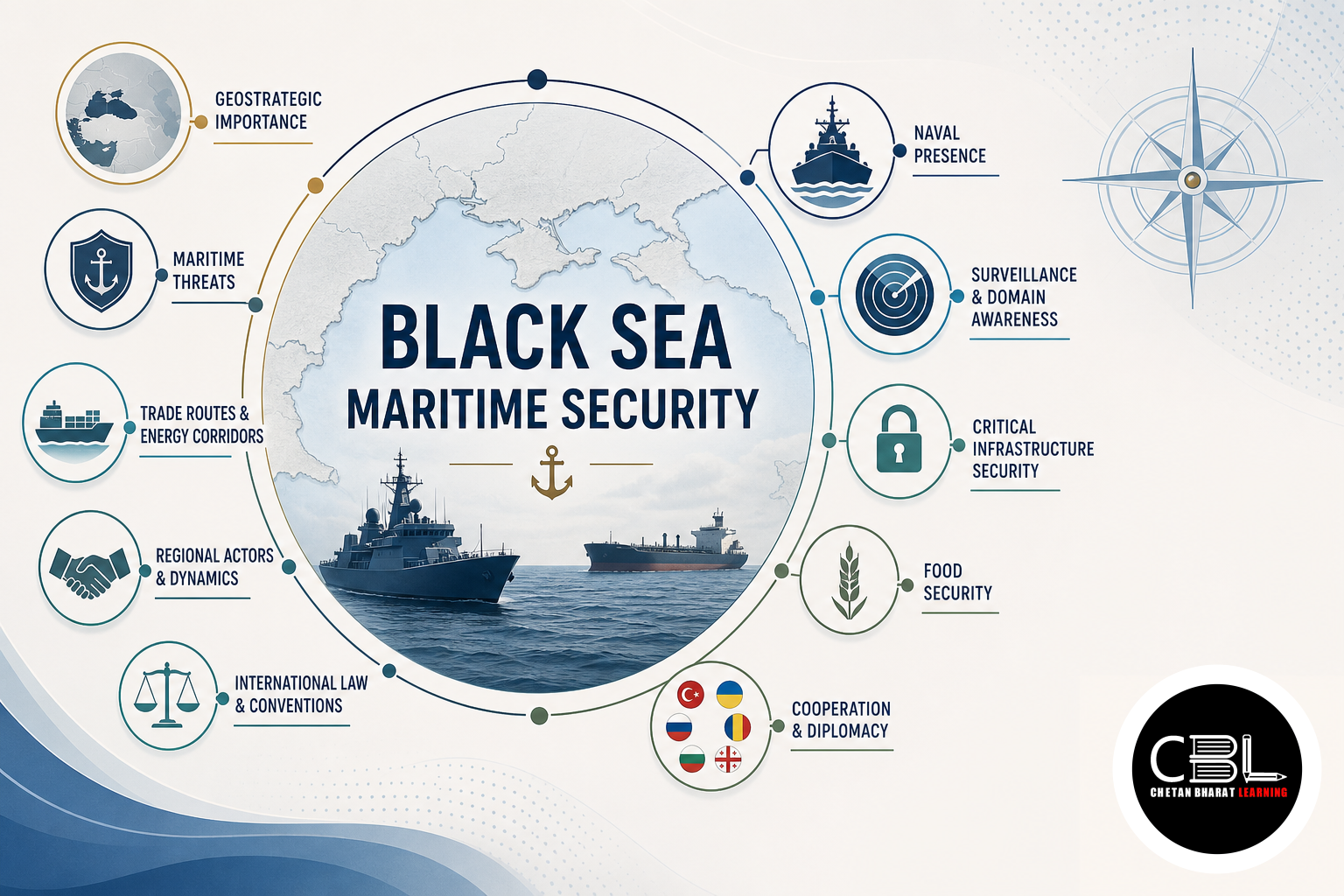
Black Sea Maritime Security has gained renewed attention after a missile strike on a merchant vessel reportedly killed several crew members, including Indian sailors, near Ukraine’s Odesa region. The incident highlights the growing risks to civilian shipping arising from the continuing Russia–Ukraine conflict and its wider implications for international trade and maritime security.
Background: Russia–Ukraine Conflict
The Russia–Ukraine conflict has transformed the Black Sea into one of the world’s most strategically contested maritime regions. The conflict has disrupted shipping routes, affected grain exports, increased insurance costs and intensified geopolitical competition in the region.
Understanding the Black Sea
| Feature | Importance |
|---|---|
| Black Sea | A strategically important inland sea connecting Eastern Europe and Eurasia. |
| Odesa Port | Ukraine’s principal seaport and a major gateway for grain exports. |
| Turkish Straits | The Bosporus and Dardanelles connect the Black Sea to the Mediterranean. |
Why Does the Black Sea Matter?
- Critical route for global grain exports.
- Vital maritime corridor for energy and commercial shipping.
- Strategic importance for NATO, Russia and regional security.
- Direct impact on food prices, supply chains and inflation.
- Important for India’s trade, maritime interests and the safety of Indian seafarers.
International Legal Framework
- UNCLOS: Protects freedom of navigation and regulates maritime conduct.
- International Humanitarian Law (IHL): Requires distinction between civilian and military targets and protection of civilians during armed conflict.
- Civilian merchant vessels are expected to remain protected unless they directly participate in hostilities.
Implications for India
- Safety of Indian seafarers employed on international merchant vessels.
- Potential disruptions to global food and fertilizer supplies.
- Higher freight and insurance costs.
- Need to strengthen maritime diplomacy and crisis response mechanisms.
Way Forward
- Strengthen international efforts to protect civilian shipping.
- Ensure adherence to International Humanitarian Law.
- Enhance maritime domain awareness and early-warning systems.
- Diversify global supply chains and trade routes.
- Improve consular support and safety mechanisms for Indian seafarers abroad.
Read more International Relations topics on the UPSC Current Affairs Hub. Official government statements can be accessed through the official government portal.
Prelims Practice Corner (5 MCQs)
Q1. Odesa Port is located in:
A. Russia
B. Ukraine
C. Türkiye
D. Romania
Ans: B.
Q2. Which strait connects the Black Sea with the Mediterranean Sea?
A. Strait of Hormuz
B. Malacca Strait
C. Bosporus and Dardanelles
D. Bering Strait
Ans: C.
Q3. UNCLOS primarily deals with:
A. Air transport
B. International law governing the seas
C. Climate change
D. Trade tariffs
Ans: B.
Q4. International Humanitarian Law principally aims to:
A. Promote free trade
B. Regulate armed conflict and protect civilians
C. Control migration
D. Promote tourism
Ans: B.
Q5. Why is the Black Sea strategically important?
A. It is a major route for grain exports and maritime trade.
B. It is the world’s deepest ocean.
C. It connects the Atlantic and Pacific Oceans.
D. It contains the world’s largest coral reef.
Ans: A.
Mains Practice Questions & Answer Structure
Q1. Discuss the strategic importance of the Black Sea in contemporary geopolitics and its implications for India.
Introduction: Maritime geopolitics.
Body: Russia–Ukraine conflict, trade routes, food security, energy, UNCLOS, India’s interests.
Conclusion: Maritime stability is essential for global economic security.
Q2. Examine the role of International Humanitarian Law in protecting civilian shipping during armed conflicts.
Introduction: Principles of IHL.
Body: Civilian protection, distinction, proportionality, freedom of navigation, enforcement challenges.
Way Forward: Strengthen compliance and multilateral cooperation.
FAQs
Why is the Black Sea strategically important?
It is a major maritime corridor connecting Europe and Asia and is vital for grain exports, energy transport and regional security.
What is UNCLOS?
The United Nations Convention on the Law of the Sea (UNCLOS) provides the legal framework governing maritime rights, navigation and use of the world’s oceans.
Why is this topic important for UPSC?
It links International Relations, Maritime Security, International Law and Global Trade, making it highly relevant for Prelims and GS-II/GS-III Mains.
Related Current Affairs
Preparing for UPSC, PCS or HCS?
Talk to a mentor at Chetan Bharat Learning, Chandigarh. Free guidance on choosing the right exam and building a study plan.
Chat on WhatsAppCall 97793 53345UPSC / IAS / PCS coaching in Chandigarh · Trusted by aspirants across Punjab & Haryana
Leave a Reply
You must be logged in to post a comment.